Larry etiketine sahip kayıtlar gösteriliyor. Tüm kayıtları göster

5 Mart 2017 Pazar

Stop pretending we can’t afford the NHS: that’s the message of our march today | Larry Sanders

We are living in a world in which the politics of the leaders of two of the world’s great nations – America and Britain – is built on broken promises. During Donald Trump’s election campaign he promised to “take on Wall Street”. So when just weeks later the president announced a cabinet full of banker billionaires, my brother, Senator Bernie Sanders, said: “With all due respect, Donald Trump is a fraud.”


Meanwhile, here in the UK Theresa May took up her post as prime minister on the commitment to “work for all, not just the privileged few”. Well, it is just weeks since our NHS descended into a humanitarian crisis, and we are already looking at another round of privatisation and cuts. Which is why at midday today we will be marching on parliament in support of the NHS.


We don’t need reminding of the horrors we saw over the winter, with people dying on trolleys and turned away from hospitals, and the British Medical Association warning our most cherished institution has been pushed to breaking point. The NHS is facing a £22bn funding gap, with the demand for care set to rise 4% a year while the health service’s budget will go up by only 0.2% every year between now and 2020.


This crisis in healthcare has been exacerbated by the current Tory government – but its foundations were laid by New Labour and further strengthened by the coalition with the Health and Social Care Act of 2012. The creeping privatisation of the past quarter of a century has introduced vast fragmentation and inefficiency into our health service, and, combined with chronic underfunding, has left the NHS on the brink. Anyone who has visited a hospital recently knows how hard doctors, nurses and all the staff are working to make sure patients are cared for with dignity and compassion, despite the strain on the system. It is time we listened to their concerns.


Prime minister Theresa May pledges to build a ‘better Britain’

Adding to the pressure facing hospitals across the country is the financial crisis in social care. We’re living longer, and that’s a great thing – last year, aged 81, I stood in the Witney byelection after David Cameron resigned. But while there are currently one-third more over-85s than 10 years ago, adult social care budgets have been cut by one third in the same time. And the care funded by local authorities accounts for just a small proportion of the care elderly people in the UK currently receive. Every year family, friends and neighbours provide £55bn of unpaid care, four in 10 people in care homes pay for themselves, and a staggering 1.2 million people over 65 with care needs receive no help at all.


We are simply not providing enough care and support for people in the community, at home and close to where they live. This means elderly people are more likely to end up in hospital, and when they get there it is more difficult to get them home again. People who are medically well are stuck in hospital because there is nowhere suitable for them to go and too little support for them at home. The system is failing these people who could be living at home or in supported accommodation instead of being isolated from their communities on a hospital ward. But it also fails those who desperately need the hospital beds these elderly people occupy.


The government’s response has been to engage in a cruel con where local councils were told there was “new” funding for social care, only to find much-needed funding cut from elsewhere. It is little wonder the system is on its knees – and the prime minister’s insistence on ending free movement as part of Brexit risks starving the NHS and care services of the staff they so desperately need.


Today thousands of people will march in support of the NHS, unwilling to stand by and watch while this government dismantles public healthcare – and I’m proud to be among their number. The government tells us there isn’t enough money but this isn’t true. We are the fifth richest country in the world – we have the money to stop our health service turning into a humanitarian crisis, and to care for people when they grow old: in hospitals, the community and homes. We have the money for a fully funded public health service. If Theresa May is to keep her promise to “work for all, not just the privileged few”, she must not let the NHS and social care crumble on her watch.


Stop pretending we can’t afford the NHS: that’s the message of our march today | Larry Sanders

17 Haziran 2014 Salı

Arizona Cardinals" Larry Fitzgerald Can Catch A Football With His Eyes Closed, Here"s How You Can As well

Arizona Cardinals broad receiver Larry Fitzgerald can catch a football with his eyes closed. In fact, Fitzgerald, arguably the greatest wide receiver in the NFL, occasionally catches passes in video games with his eyes closed like he has a sixth sense. Nevertheless his amazing skill did not manifest from some supernatural occasion, it is the solution of many years of rigorous education that tested the two his bodily and mental capabilities, starting up with a routines developed in his childhood.


As a kid, Fitzgerald suffered from a vision difficulty that produced it hard to spend interest in school. His grandfather Dr. Robert Johnson, an optometrist, worked with Fitzgerald to conquer his disability via vision treatment. Fitzgerald believes that one particular of the keys to his success in the NFL stemmed from this eye strengthening he received as a kid. Inspired by his grandfather’s first visual acuity drills, Fitzgerald quickly came up with his own drills at property. Night soon after night, Fitzgerald would lie awake in his bed and throw a football up in the air, catching it in his dark bedroom. He claims he caught the bulk of the tosses, which produced into his uncanny come to feel for the ball in the air in the course of games.


Even right after restructuring his contract with the Cardinals to free of charge up a lot more cap area, Fitzgerald’s catching expertise will earn him above $ 50 million by way of 2018.  For athletes looking for performances and paychecks like Fitzgerald, incorporating perceptual-cognitive processing drills into workouts could very effectively be the response. In 2012, Dr. Jocelyn Faubert of the University of Montreal carried out a research that found that the capability to enhance perceptual-cognitive processing “may be one particular of the principal determining aspects as to no matter whether athletes will… perform nicely at superior levels.” Dr. Faubert also found that the ability to process movement faster is a trainable skill. In fact, Faubert discovered that cognitive processing training is not only attainable but there is also higher ceiling for improvement for professional athletes.


Willie Williams, a retired NFL cornerback with a job spanning the Steelers, Seahawks, and two Super Bowl appearances, concurs with the findings of Faubert’s research that cognitive processing workouts boost athletic potential. Williams thinks that these drills enhance on traditional athletic exercises by rising hand eye coordination, motor skills, and focus. Utilized in conjunction with other coaching, Williams contends that these routines can give athletes an edge above their opponents on the football discipline.


The Batak


A lot of professional sports activities teams have previously begun in search of that edge more than the competitors by implementing physical exercise gear developed to improve their player’s cognitive talents. The Batak, a machine especially made to increase reaction, hand eye coordination and stamina, is utilised by Manchester United, Formula 1 driver Heikki Kovalainen, and the NBA’s Toronto Raptors. The D2™ is a light board that improves response occasions, visual-motor coordination, and peripheral visual awareness. By bettering these skills, the user tends to make much better, quicker, smarter choices. For instance, D2™ coaching can help a quarterback see the total field, even though focused on downfield receivers. Baseball batters approach the pitched ball’s motion a lot more speedily, resulting in more hits. The device has been utilized by the Washington Redskins quarterback Robert Griffin III, the Pittsburgh Steelers (they have two of them) and NASCAR driver Kasey Kahne.  The Makoto Arena works on quickness, response time, and mental acuity, and can give a thorough report on one’s response time and deficiencies.  The Pittsburgh Steelers, St. Louis Cardinals, and Denver Nuggets have all used the machine, as effectively as Specific Forces Instruction, the Air Force Academy and the Naval Warfare Center.  As opposed to a basic bench press machine, much of the products utilised in perceptual-cognitive training functions engineering that can exactly track one’s performance.    By investing in these methods and obtaining time to include them into their regular education schedules, sports activities teams hope their gamers will have a psychological edge in excess of their opponents that will translate into greater team performances.


DSC_01182

The Makoto Arena


Some athletic trainers and sports activities amenities have also adopted the equipment for customized cognitive processing workout routines, but the machines are not low cost.  A Makoto Arena can value above $ 8,000 and a D2™ will set you back practically $ 16,000.  Positioned in Rockville, Maryland, Fitness for Well being specializes in therapeutic physical exercise for young children with particular demands.  Due to their focus on building mental processing and motor capabilities, Fitness for Wellness has several of the exact same machines that teams are employing. Like Fitzgerald, Fitness for Overall health founder Marc Sickel struggled developmentally as a child. Increasing up, Sickel’s understanding and motor processing troubles motivated him to figure out techniques to modify and compensate. Once he graduated from university Sickel began generating workout applications that incorporated cognitive-processing training, developed to help people dealing with the very same disabilities Sickel faced as a kid. “The programs are based on the problems I had expanding up, I wanted to engage children,” he said in a telephone call.


The D2

The D2


Sickel has adapted his program initially made for youngsters with concerns this kind of as autism to suit the requirements of skilled athletes by intensifying the speed and trouble of the workout routines.  Zack Kerr, a rookie defensive tackle with the Indianapolis Colts, identified the drills he did at Fitness for Health to be useful. “I loved my expertise there, it brought a various element to education, not only physically, but it worked my brain as well,” Kerr explained.  Myron Flowers, proprietor of 360 Match Efficiency primarily based in Silver Spring, Maryland, at present trains 23 NFL players and above 50 Division one scholarship athletes. Flowers not too long ago put some of his athletes through a test-run of cognitive coaching drills at Fitness for Well being. “They loved it, they appreciated the challenge, that is what athletes thrive on,” Flowers explained, “It was exciting and that is what it’s about very first and foremost.”  Flowers mentioned that the capacity for athletes to document their progress for the duration of the workout was not only motivating, but facilitated competition in between the participants. “Knowing you can come back and increase on it makes you much more enthusiastic to do it as nicely,” he mentioned.


Even though catching a football with one’s eyes closed could seem like just a amazing trick, it represents an intense cognitive-physical connection that translates into the sharp psychological awareness Fitzgerald displays on the discipline. Several athletes are beginning to worth the seemingly sixth sense awareness and acute hand-eye coordination that Fitzgerald credits as one particular of the foundations for his good results.  Sickel confirmed this, noting that Fitness for Well being has begun seeing a surge in interest from athletes.  Many of the athletes interviewed for this article are hoping programs such as these can turn out to be their secret coaching weapon as a cardio-coordination crossover workout.  In spite of their already packed schedules, athletes are willing to block off time to create these capabilities.  “Anything that’s going to make them greater, they’re inclined to do,” Flowers mentioned.


Andrew Goodman is the Chief Investment Officer at CIC Wealth. Circle him on Google+


Arizona Cardinals" Larry Fitzgerald Can Catch A Football With His Eyes Closed, Here"s How You Can As well

20 Nisan 2014 Pazar

What would a 2014 Beveridge report say? | Larry Elliott

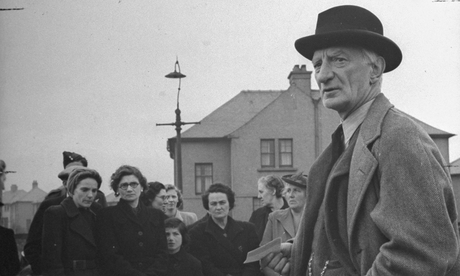
William Beveridge

William Beveridge. Confronting the ‘five giants’ he identified remains the meat and drink of politics. Photograph: Hans Wild/Time &amp Existence Pictures/Getty Photographs


5 giants bar the street to progress: want, ignorance, idleness, ailment and squalor. So stated William Beveridge in the report commissioned by the wartime coalition published in 1942 that shaped the politics of postwar Britain, most especially the Attlee administration of 1945-51 but also the Conservative governments that followed.


Want was tackled by way of a cradle-to-grave welfare state ignorance via the tripartite schooling system (grammar schools, secondary moderns and technical colleges) idleness through the dedication to total employment condition by means of the creation of the NHS and squalor by means of a programme of mass property-creating and increased standards of provision.


Confronting the 5 giants stays the meat and drink of politics, as a fast flick via the Observer demonstrates. “Labour considers raising national insurance to repair £30bn NHS ‘black hole’”, says one headline. “Christian charity hits back over Tory attacks on food banks,” says another. A third referring to the psychological well being troubles induced by versatile work patterns is headlined: “Supermarket shifts ’cause nervousness and insecurity’”.


So let’s presume that a far-sighted government took the view that a new Beveridge report was essential in response to the troubles thrown up by the Great Recession of 2008-09, just as the unique was a response to the poverty and financial stagnation of the period amongst the 1st and 2nd world wars. What would it say?


It would start by recognising that fantastic progress that has been produced. Britain is a richer, healthier, far better educated and a lot more tolerant country than it was 70-odd many years in the past. Daily life expectancy has risen by well in excess of a decade university training is no longer for a tiny elite incomes adjusted for inflation are four times higher than they were at the finish of the 2nd planet war the variety of individuals in owner-occupation has a lot more than doubled men and women no longer reside in sub-regular homes with out baths and within toilets.


But a new Beveridge would also say that there is even now much incorrect with Britain that needs to be put right. The daily life expectancy of a person born in Glasgow is 10 many years decrease than a person born in East Dorset the Uk is sliding down the league table of educational attainment nearly a million men and women are making use of food banks almost four million families could not spend their lease or home loan for much more than a single month if they misplaced their job.


Subsequent, it would inquire which of the 5 giants continue to be the most formidable barriers. Two are nevertheless alive and kicking, a third when assumed to have been slain could come back to daily life.


The dormant giant is illness. Investing on the NHS is ten instances increased than it was when it was founded in excess of the past 60 years the common increase in the spending budget for well being has been just under four%. So whilst the ringfencing of the NHS because 2010 looks generous against the deep cuts in, say, the House Office or the Ministry of Justice, it represents the greatest squeeze on assets given that 1948. This is against the backdrop of a population that is living longer and the place technological advance implies that rates in healthcare rise far more swiftly than the cost of residing typically. Britain loves the NHS and has no want to move away from a free-at-the-level-of-use system. But unless of course the public is ready to pay a lot more, the good quality of care will deteriorate. Labour’s proposed solution is an enhance in national insurance contributions specially designated for overall health and care fees.


That leaves the two giants that already loom large. The very first of these is want, as is clear from the vigorous debate about residing requirements in the Uk. Are they going up? Is there a price-of-living crisis or not? Who is benefiting from a expanding economic system?


What’s happened is this. In the previous decade, shell out prices have been historically low. Actual spend was struggling to maintain up with inflation even ahead of the economic crisis of 2007, and has fallen sharply considering that. Wages buy 10% significantly less now than they did at their pre-economic downturn peak.


Even now, it is questionable no matter whether they are in fact increasing. The government’s measure of regular earnings is a mean. If spend increases are skewed to those on the far better-paid jobs, the mean can boost even though most workers’ shell out increases significantly less rapidly than inflation. Common earnings excluding bonuses (which tend to go to people on higher incomes) are growing by 1.three% a year, which is nevertheless under the official inflation fee of 1.six%.


Some boost in earnings is to be anticipated as the economy grows and unemployment comes down. But the framework of the labour marketplace indicates that the select-up in genuine pay growth will be slow and it is most likely to get till the end of the decade – and probably longer – to get back to pre-recession amounts.


It would not get a new Beveridge report prolonged to discover the reason for the squeeze on living specifications: the imbalance of energy in the workplace. In excess of the past 25 years, the trend has been in direction of an atomised and casualised workforce that has small or no bargaining energy. The Britain of right now is a land of safe workers on excellent incomes but also of gangmasters, zero-hrs contracts, domestic servants and the self-employed scratching a living. Under the Labour government of 1997-2010, tax credits were utilized to top up lower pay out, but austerity implies they have grow to be significantly less generous. There are now more individuals in poverty who are in perform than there are who are workless.


Unless of course the state is ready to act as the guarantor of a living wage by way of the tax and benefit method, there are only two attainable outcomes. One is that the labour share of nationwide earnings will carry on to fall, top either to a reduction in aggregate demand and/or greater indebtedness. The other is that the bargaining power of labour is elevated via total employment, stronger trade unions and collective bargaining.


The other giant is housing. Owner-occupation, which rose steadily in the 20th century, is in decline. Home price tag inflation coupled with lower earnings development implies that a quarter of youthful people aged between twenty and 34 dwell with their mother and father. In the far more prosperous components of Britain, there is a mismatch between housing supply and demand.


This is not a new issue. A decade in the past, the report ready by Kate Barker for Gordon Brown mentioned 210,000 new houses a yr were required in England to avert a housing crisis. Since then 115,000 houses a year have been built.


Outcome? A housing crisis, for which the only answers are a effective regional policy that moves folks to the place the empty homes are, or builds plenty far more homes exactly where the jobs are.


The ultimate point the new Beveridge would say is this: cracks can only be papered in excess of for so long. In all the important places – the NHS, residing standards and housing – it is time for action.


What would a 2014 Beveridge report say? | Larry Elliott