Denis etiketine sahip kayıtlar gösteriliyor. Tüm kayıtları göster

29 Mart 2017 Çarşamba

Wraparound care: is it the future of the NHS? | Denis Campbell

“This is a way of working that’s so obviously beneficial that I’m not sure why we didn’t do it before. We’ve gone from uncoordinated, fragmented care that was very unsatisfactory for patients, to wraparound care that takes into account the holistic needs of the patient.” Dr Karen Kirkham, a GP in Weymouth, is describing how Dorset has been quietly implementing a different way of providing healthcare which, if it works out, might just help save the NHS.


Sitting in a side room at Weymouth’s Westhaven community hospital, Kirkham outlines an approach that is simultaneously radical and commonsensical, and also controversial, despite being backed by all those whose job is to improve the health of Dorset’s 750,000 residents. “In Dorset, necessity has been the mother of invention. We’ve taken the issue of relentlessly rising demand and proposed bold action to adapt what we do for our patients,” she adds. While all this sounds novel, it is also one of the oldest tunes in the jukebox of NHS great policy ideas.


By bold action she means integration – both of health services and also health services with social care – reconfiguration of acute hospital services and the creation of 10 “hubs” to coordinate or deliver a recently extended array of out-of-hospital services. Dorset’s push to modernise how health and social care work is so advanced that on Friday NHS England’s chief executive, Simon Stevens, will name it as one of the official microcosms of the “new NHS” he has pledged to create by 2020.


Dorset will be one of between six and 10 areas of England in which Stevens will give the green light to the local NHS sustainability and transformation plan (STP). These will be the first wave of what he still hopes will ultimately be all 44 regional STPs, each doing their bit to implement the “five-year forward view” he originally set out in October 2014. Its mission: to make the NHS sustainable as a system of healthcare by both improving quality of care and preventing illness occurring in the first place, while simultaneously somehow bridging the £22bn gap in the service’s finances expected by 2020. Stevens’s “delivery plan” this week will hail Dorset as a pioneer from whom the wider NHS can learn a lot.
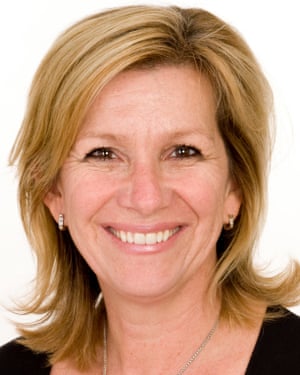


Karen Kirkham, a GP in Weymouth


Karen Kirkham, a GP in Weymouth: ‘This is so obviously beneficial, I’m not sure why we didn’t do it before’. Photograph: NHS England

Kirkham has played a key role in recent years in building agreement between Dorset’s three acute NHS trusts, one community services trust, 97 GP practices, three local councils and 30,000 clinical staff – and Dorset NHS clinical commissioning group (CCG), with which she is the assistant clinical chair – that working together is the right direction of travel. NHS and town hall chiefs across the country recognised in 2015 that they had to transform how they provided health and social care if services were, in her words, to avoid being “overwhelmed with demand” caused by the ageing population.


Dorset CCG’s Your NHS document, which explains what it admits are “large-scale changes to health and care services in both community and hospital settings”, is admirably no-nonsense on the urgent need for change. “Doing nothing is not an option, because by staying the same our healthcare would get much worse. Doing nothing would mean lower safety standards, worsening health [and] reduced survival rates,” it says.


Integrated community services are a key element of the STP’s ambition to keep people out of hospital, provide much more care in or near people’s homes and ensure that the anticipated £229m deficit in Dorset’s NHS finances does not emerge as expected by 2021. And the 10 “community hubs” are the key to making integration itself work. They are all similar in that they all coordinate the delivery of care; but while seven have beds attached for patients, three do not.


The hub for Weymouth is no more than a room at Westhaven hospital full of desks, computers and telephones. But this is where different types of care professionals – including GPs and personnel from the ambulance service, local acute hospital, social care and district nursing services – work together to take calls from fellow professionals, discuss individual patients’ needs and decide how each is cared for.


“It’s a simple idea – that when GPs need to refer a patient, for surgery or a home visit or a residential home placement, they ring one number and refer the problem to the team in the hub, and they decide what to do. It’s a one-stop shop,” explains Dr Riaz Dharamshi, a consultant geriatrician who works two and a half days a week with the hub team, including paying home visits to frail, elderly people.


Louise Clark, head of occupational therapy at Dorset healthcare NHS foundation trust, explains: “If we need to discharge someone from the local acute hospital we refer them to the hub. They arrange the care that someone needs – therapy, district nurses or mental health input, so that the person can go home safely. They wrap the care around them in a way that didn’t happen before.”


The service is aimed primarily at frail elderly people, who comprise about 80% of all hospital inpatients these days and are therefore a huge driver of the increasing costs facing the NHS as a whole. Dorset’s coastline and quality of life means it has far more over-75s and more over-85s than the average for England, with those numbers due to swell in coming years.
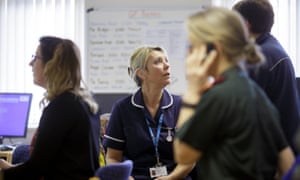


Intermediate care nurse Jackie Goldsmith discusses a patient’s case during a team meeting at Westhaven hospital


Intermediate care nurse Jackie Goldsmith discusses a patient’s case during a team meeting at Westhaven hospital. Photograph: Sam Frost for the Guardian

If one of them needs an investigation, or rehabilitation after a spell in hospital, then they go into Westhaven’s 34-bed ward. “That might be someone who has become confused or had a fall but not broken a bone,” says Dharamshi. The average age of those admitted here is 86.


A similarly joined-up, multidisciplinary approach elsewhere in Dorset, coupled with the opening last September of a frailty unit at Royal Bournemouth hospital, has seen the average length of stay for acutely frail elderly people treated in its older people’s medicine wards fall from 10.3 days as recently as April 2016 to just 5.87 days now – a difference of 4.43 days. As it costs £400 a night to keep a patient in an acute hospital, that means the average cost of treating a patient has fallen from £4,120 to £1,772.


Dr Andrew Williams, the hospital’s clinical director of older people’s medicine, stresses that the motivation for everyone working together to support medically vulnerable older people is not financial. “The project was about improving patient outcomes, not cash savings,” he says. Stopping older people becoming inpatients unnecessarily means they are much less likely to get “deconditioned” – to lose vital muscle mass due to being in hospital – which makes them more likely to fall over, lose their independence and have further complications, he adds.


There are other big benefits, too. Extra care at home means the average length of time for which such patients need support after discharge has fallen from 32 to 24 days. And this means the hospital has more spare beds, is more likely to hit its four-hour A&E target and less likely to have to cancel operations due to overcrowding.


Other elements of Dorset’s STP are certainly proving controversial: Bournemouth becomes the main acute hospital, while Poole will play the lead role for non-urgent care. As a result, Poole is set to lose its A&E unit and maternity and paediatric services. In all, 100 acute beds are due to go across the county, at least three community hospitals face the axe, while the number of beds in the remaining community hospitals will also be dramatically scaled back. Poole residents and campaign groups 38 Degrees and the NHS Support Federation are among those that have voiced concern.


But Stevens sees Dorset as a trailblazer, a crucible of how the entire NHS across England needs to work. “Dorset’s NHS has been ahead of the game in spotting that the local NHS needs to join forces to be more than the sum of its parts. They are proposing important changes for patients.


“It has been clear for a long time that the traditional divide between GPs, hospitals and community services is increasingly a barrier to the personalised, coordinated healthcare patients need. We can see in Dorset that this is the kind of practical improvement that many doctors, nurses and carers are now beginning to create.”


Wraparound care: is it the future of the NHS? | Denis Campbell

31 Ocak 2017 Salı

Biggest headache for the NHS boss is his own plan | Denis Campbell

Who would be Simon Stevens? The job he takes such pride and purpose in has recently got a lot harder. Colleagues of NHS England’s chief executive say Downing Street’s preoccupation with Brexit means officials are letting him get on with his self-declared mission of transforming the health service in England. But that is the only good news about his relationship with Theresa May and her advisers.


Until July, Stevens worked and got on well with a prime minister who did at least protect NHS funding while cutting almost everything else – David Cameron. But he now has the misfortune of dealing with May, whose curious lack of interest in the true state of the health service is almost as worrying as her capacity for self-delusion over it.


Unprecedented poor waiting times for A&E care, planned operations, ambulance responses to 999 calls and delayed transfers of care from hospital? Just normal winter pressures. Record numbers of A&E units having to divert patients elsewhere and NHS trusts being forced to declare an alert because they can’t cope? There’s only the odd problem here and there – and it’s all lazy GPs’ fault anyway. Too little money to do the job properly? The £10bn is more than the NHS asked for – an outright lie. Rarely have a prime minister and NHS boss spoken from such different scripts.


Stevens is operating in the chilliest political climate any boss of the NHS has faced since the tailend of John Major’s time in office. Will May seek to oust him? Maybe, though a vengeful Stevens publicly telling it like it is could do her incalculable damage. The sheer brio of his evidence to the public accounts committee last month – a masterclass in speaking uncomfortable truth to power – does not suggest a man who would go quietly.


But Stevens’s biggest headache is not the “winter crisis”, cancelled cancer operations or financial failure. Rather, it’s his NHS Five Year Forward View, and the lack of realisation of its ambitious goals since its launch in October 2014.


Stevens may have made bold speeches promising a brave new NHS world by 2020 through new models of care, accountable care organisations and innovative sustainability and transformation plans (STPs). But reality has failed to match rhetoric by a wide margin. Yet next month sees a “national Five Year Forward View delivery plan for the rest of the parliament” – a progress report, albeit of only limited progress.


Stevens will formally green light the metamorphoses of a small number of the 44 regional STPs into “integrated organisations”, which ultimately dissolves the split between commissioners and providers of healthcare. They will probably include those covering Birmingham and Frimley in Surrey. The cadre of belated pioneers will get extra money and staunch support to “reshape what they’re doing” in a dramatic way. He will bat away questions about what became of all the other areas’ plans – still mere “proposals”.


Stevens hopes that even the modest progress made so far in transforming the NHS will persuade May & Co that – given money and political backing – more integrated services between GPs, acute hospitals and social care will deliver an NHS that is able to cope with the pressures. But will May, bereft of her own alternative vision of the health service, see the wisdom of backing the man who dared to challenge her over it so publicly?


Biggest headache for the NHS boss is his own plan | Denis Campbell

7 Eylül 2016 Çarşamba

STPs: Radical local modernisation plans or the end of the NHS as we know it? | Denis Campbell

To some, they are bold, painful, inevitably controversial but nevertheless necessary local blueprints designed to save the NHS in England, area by area, by making it fit for the clinical, financial and organisational challenges it is facing. To others, though, they are sinister schemes that will see parts of, or even entire hospitals shut, fewer beds, the number of GP surgeries drastically reduced, NHS land sold to profiteers and private healthcare firms treating more NHS patients. What an NHS boss calls modernisation is an NHS campaigner’s road to destruction.


Either way, Sustainability and Transformation Plans (STPs), are the most important issue in the NHS and the thing that will do more than anything else to decide if it is still a viable and well-functioning healthcare system that can live within its means by 2020. They will dominate and form the backdrop to many of the speeches and debates at the NHS Expo in Manchester today and tomorrow. From an NHS point of view, they absolutely have to succeed. However, to do so, these microcosms of the NHS Five Year Forward View survival masterplan from 2014 must overcome a daunting array of very difficult obstacles.


Back in March, the NHS England chief executive, Simon Stevens, outlined the importance of STPs when he declared that: “Now is the time to confront – not duck – the big local choices needed to improve health and care across England over the next five years, and STPs are a way of doing this. Their success will largely depend on the extent to which local leaders and communities now come together to tackle deep-seated and longstanding challenges that require shared cross-organisational action.”


Six months on, England has been divided into 44 STP “footprints”. Each is a collaboration between all the statutory bodies in that area involved in health and social care – such as NHS trusts and clinical commissioning groups, and local councils, which fund social care. NHS England describes them as “collective discussion forums” and Stevens sees them as evidence of unprecedented cooperation between organisations which historically have done their own thing.


In the Lancashire and South Cumbria STP, for example, there are 31 different statutory bodies — nine clinical commissioning groups (CCGs), six NHS provider trusts, four upper-tier local authorities and 12 district councils. It is led by Dr Amanda Doyle, a GP who is also the chief clinical officer of Blackpool CCG. Its discussions also involve voluntary organisations, four local Healthwatch branches and several local committees, which represent GPs.


“We have three aims. Firstly, to improve the health of the population. On our patch we have some of the poorest health and shortest life expectancy in the country. Secondly, to improve the outcomes of care. Some of those outcomes could be improved if care was delivered in a different way, for example, if more stroke or cancer patients were treated in specialist centres,” says Doyle. “And thirdly, to make our bit of the system more financially sustainable. Although we’ve had extra investment, rising demand is outstripping that, so we need to make our population healthier so that we can in some way control the demands they put on the healthcare system.”


Doyle, like other STP advocates, is clear that achieving these objectives will involve big changes to the way NHS services are organised, and care delivered. She admits that a reorganisation of hospital services will be part of that. “It could also mean looking at the number of sites on which we do certain things and rationalising some of that. We are starting to look at all of our services to see if they are in the right place or whether we are duplicating efforts.” The local NHS’s inability to recruit enough staff to work in every department of all four of the STP’s acute hospital trusts – especially in A&E, dermatology and radiology – will mean fewer centres in key areas of care, she hints.


But will rationalisation necessarily help the NHS make the £22bn of savings it has to deliver by 2020? “There are concerns that some areas are focusing on plans to reorganise acute hospital services, despite evidence that major reconfigurations of hospital services rarely save money and do not necessarily improve care,” says Chris Ham, chief executive of the King’s Fund thinktank. Plans in some STPs to reduce the number of hospital beds are also unlikely to succeed, he believes. Nigel Edwards, his counterpart at the Nuffield Trust thinktank, says: “I’ve been visiting a lot of STPs and nobody I’ve spoken to is confident they can reduce the financial gap. One insider said to me: ‘Optimism bias abounds’.”


Ham adds: “It would be a huge shame if a vital opportunity to improve services for patients is derailed by bruising rows about ill-conceived hospital closures.” Colin Crilly, a spokesman for the Keep Our St Helier Hospital campaign group in south-west London, speaks for grassroots NHS campaigners who are profoundly worried by the emerging details of how STPs could affect hospitals. ”With the government’s annual budget [for the NHS] shrinking in real terms, the NHS is facing huge debts. STP is a quick plan to get rid of these debts by getting rid of services, wards or hospitals.”.STPs are odd entities, as Edwards points out. “They’re not organisations. They’re ‘footprints’ — lines on maps. There’s no building with a name on the door.”


It is unusal to find what are in effect high-level talking-shops expected to tackle the biggest problems in the NHS and then agree push through changes that no one pretends will be popular. The fact that they are non-statutory bodies and have no formal power – and, crucially, their reliance on reaching agreement among bodies with sometimes different agendas – could yet prove a flaw, adds Edwards. What happens if a hospital that is set to lose a much-loved A&E or maternity unit as a result of an STP decides to go to court to thwart it? The cooperation vital to the whole programme would disappear.


Perhaps the biggest risk, though, is that while the NHS has talked for years about building up out-of-hospital services, little progress has been made, as acute hospitals have received an ever-bigger slice of the cake. NHS England say that general practice, mental health and community-based services will get more and more of the cake in coming years. But will it be enough to cope with the planned massive shift of care into places that are as yet undefined and unfunded, and will there be enough staff there, in or closer to people’s homes, to enable that?


Doyle admits that, while general practice will need to expand its role, “GPs are already busy, that’s their trouble.” But she points to innovation in out-of-hospital care, such as last year’s introduction on the Fylde coast, in Lancashire, of “wellbeing support workers”, who try to keep frail elderly people as well as possible at home, to reduce their risk of hospital admission. STPs are looking to replicate good ideas like that everywhere.


The stakes could not be higher. So will STPs save the NHS?


“It’s absolutely vital that they succeed. We have to have a sustainable NHS and to do that we have to adapt how we do things,” says Doyle.


Jim Mackey, chief executive of the financial regulator NHS Improvement, says there is no option. NHS bodies need “to work together, to think boldly and to work out how change — no matter how radical — can best be achieved to meet the major challenges we face,” he says.


Despite all the dramatic rhetoric about STPs, Edwards remains sceptical. “There are a significant number of risks associated with them and the jury is still out as to whether they are going to work or not,” he points out. “ It’s too early to say.”


STPs: Radical local modernisation plans or the end of the NHS as we know it? | Denis Campbell

1 Temmuz 2014 Salı

John Ashton: "Inequality is our biggest challenge" | Denis Campbell

When the British Healthcare Journal recently asked John Ashton to describe himself in three phrases, the president of the Uk Faculty of Public Overall health, chose “visionary, outspoken, impatient”. An hour in his organization confirms all 3 traits, and “loquacious” and “political” have to have been close contenders for inclusion also. If garrulousness was an Olympic sport, he would have a gold medal. His solutions routinely but engagingly veer way off-subject, and grow to be element historical past tutorial, element individual story and portion refreshingly authentic diagnosis of the nation’s most pressing overall health ills – many of which, in his view, are not healthcare in origin.


Asked to determine the country’s most significant public well being difficulties Ashton does not cite obesity, smoking or alcohol. “One is the increasing inequalities in people’s position, income and manage in excess of their lives more than the last twenty or thirty many years. Tons of individuals are becoming left behind. Outside the wealthy parts of the country people are living miserable, quick lives, with a good deal more sick-wellness than men and women in the far more advantaged components of the country.


“Becoming a northerner, I am aware that a lot of individuals in the more advantaged components of the south-east have no awareness at all of what individuals are up against in some other components of the country. I’m speaking about men and women on the west coast of Cumbria or in parts of north Liverpool or east Manchester where nobody’s worked for two or 3 generations, they can’t put meals on the table and the youngsters can not take element in school trips, so individuals young children are expanding up as 2nd-class citizens relative to other young folks”, he stresses. All this matters, he adds, because of the massive distinctions in daily life expectancy among rich and bad up to a decade among Glasgow and Surrey, for example.


Ashton’s instruction in psychiatry before he turned to public overall health emerges when he talks, with the two passion and disappointment, about what he says is the expanding burden of mental sick-well being. He blames that on a disparate list including the “intransigent” epidemic of obesity that can be each a result in of and impact of depression, addictive behaviours, the changing roles in male-female relationships and the escalating sexualisation of young people, particularly girls.


“The condition of grownup males is of increasing concern due to the fact suicide has been going up in working-age men, specially the below-40s. There is something in the dramatically changed place of males in society vis-a-vis females and vis-a-vis the labour marketplace that is affecting men’s self-esteem and self-self-confidence as a consequence of this dislocation, with the reduction in their traditional role as breadwinners”, he says.


His main worry, although, is young individuals. Rising divorce costs, residing away from your loved ones, a lack of help for parents, widespread youth unemployment, and fact that “bringing up young children is a really lonely business” are all creating young children and younger men and women who, uncertain of their location in the globe, are increasingly troubled, he says.


“We’ve acquired youthful men and women who are self-harming, whose lifestyles will consequence in troubles later on in life – the alcohol, the drugs, the lack of self-esteem – but our kid and adolescent mental well being solutions are a disgrace. They are in crisis. We’re not stopping difficulties in young individuals and we’re not responding to them when they get them. Folks can not get witnessed, even when they are genuinely sick”.


The FPH’s annual conference, which commences nowadays in Manchester, involves a debate on what public wellness experts can do to tackle the objectification of youthful men and females, notably the latter, by means of clothes, music, specially promotional video clips, the pornography industry and the media.


“The fact that a third of ladies have now had sex by the time they are 13 is element of a sexualised culture that can often be adverse in final result, such as pregnancy and disease, but can also be measured in its impact on psychological health”, says Ashton.


He bemoans that National Institute for Overall health and Clinical Excellence tips on sex schooling for youthful men and women have gathered dust on schooling secretary Michael Gove’s desk given that 2010.


“Classroom teachers will tell you that boys are hunting at pornography on their iPhones at the age of eleven,twelve and 13. This is where they are receiving their intercourse data from, because we’re not offering them correct intercourse and relationships education.”


If only credit card companies this kind of as Visa would, on ethical grounds, cease allowing clients to shell out for porn with their cards, the multibillion pound business would no longer be so capable to do its damage, Ashton suggests.


He is effortlessly the most colourful of the senior physicians at the helm of the health care royal colleges and their constituent groups. (The FPH represents 3,300 public wellness specialists across the Uk operating in the NHS, academia, NGOs and English neighborhood government). That’s partly because no other health care large cheese would ever dress in a pink shirt, pink stripy tie and cream jacket, but also because he speaks his thoughts to a degree his peers may take into account reckless.


The Liverpool-born Labour party stalwart is an virtually identikit leftwing public wellness physician, describing his politics as “pragmatically radical”, although he surprisingly names Denis Healey alongside Tony Benn and Ken Livingstone as politicians he admires.


The Sunday Occasions was wrong to report last 12 months that he supports reducing the age of consent from 16 to 15, he insists. What he actually stated, he maintains, is that if Britain does not tackle the roots of “early sexualisation”, then legalising intercourse at 15 might be needed.


Ashton is not shy about detailing unconventional suggestions. “When you search at the way we lead our lives, the anxiety folks are underneath, the strain on time and sickness absence, mental health is plainly a significant situation. We ought to be moving in the direction of a four-day week simply because you have acquired a proportion of men and women who are functioning too challenging and a proportion that haven’t acquired jobs. The lunch-hour has gone individuals just have a sandwich at their desk and carry on functioning”, he explains.


“So we want a four-day week so that folks can take pleasure in their lives, have more time with their families, and maybe minimize high blood stress simply because folks might commence doing exercises on that further day. It would suggest that men and women may well smile a lot more and be happier and increase general overall health.”


Age 67.


Lives Cumbria.


Household Married 4 sons, two stepsons.


Education Quarry Financial institution large college, Liverpool Newcastle-upon-Tyne healthcare college London College of Hygiene and Tropical Medication (LSHTM).


Job 2013-current: president, Faculty of Public Health 2006 -13: director, public health (PH)/county healthcare officer (MO), Cumbria 1993-2006: North West regional director, PH/MO 1993-94: regional director, PH/MO, Mersey Regional Health Authority 1990-93: director, Liverpool Public Overall health Observatory 1983-93: senior lecturer/professor, public overall health, University of Liverpool 1980-82: senior lecturer, LSHTM 1975-79: senior registrar, lecturer, University of Southampton 1971-75: principal/registrar/SHO, Newcastle on Tyne &amp Northumberland 1970-71: property surgeon, Newcastle hospitals.


Public life Chairs in various health-related colleges and universities. CBE for outstanding services to the NHS.


Interests Smallholding, walking, cycling, Liverpool FC.


John Ashton: "Inequality is our biggest challenge" | Denis Campbell

8 Nisan 2014 Salı

Gay males warned on risks of "chemsex" | Denis Campbell

‘There has been a change in gay cultural, social and sexual networks.’ Photograph: Dosfotos/PYMCA/Rex


Gay men are struggling serious harm and are in danger of spreading HIV by having unprotected sex whilst underneath the influence of unlawful drugs, the 1st British examine into the expanding popularity of “chemsex” has uncovered.


Guys who use substances this kind of as crystal meth whilst getting intercourse are at threat of overdosing, being hospitalised, shedding consciousness, possessing panic attacks or convulsions, serious psychological wellness issues and sexual assault, according to analysis performed between 1 of the country’s biggest gay populations.


3-quarters of people interviewed had participated in reckless sexual behaviour although higher on medication, which ran the risk of fuelling the presently rising rates of HIV and sexually transmitted infections (STIs) amid guys who have sex with men (MSM).


The worrying findings are contained in the Chemsex report, commissioned from the London College of Hygiene and Tropical Medicine (LSHTM) by the south London boroughs of Lambeth, Southwark and Lewisham.


Though the research involved in-depth interviews with just 30 males concerned in chemsex, the fact that three out of 4 of them had engaged in sex with a high threat of passing on HIV or an additional STI has caused concern. 3 had been sexually assaulted right after passing out, and two other folks had noticed that happening or heard of it happening from pals.


Paul Steinberg, Lambeth’s HIV prevention and sexual wellness commissioning manager, mentioned that the trend in direction of chemsex is getting facilitated by a “best storm” of cheap, very easily available drugs, a burgeoning number of social and sexual networking apps and websites that enable guys to organize to meet for intercourse at private parties.


“There has been a change in gay cultural, social and sexual networks. In the 1980s and 1990s gay males would meet in vehicles, clubs and neighborhood centres. But with the rise of the web and social media apps, there has been a shift towards a technology- and home-primarily based cultural scene”, says Steinberg.


Adam Bourne, the LSHTM academic who led the investigation, says: “A vulnerable section of society is making use of new drugs in new ways that are putting them at critical danger.”


The report identified that the 3 most typically used medicines in chemsex were crystal methamphetamine, GHB/GBL and mephedrone, although some utilized cocaine and ketamine as well.


“They let you to have sex for considerably longer, which may imply you select to have sex with a lot more folks in that time. From an HIV transmission and STI transmission point of see, getting sex for longer and with far more partners signifies there’s a larger likelihood of transmission, since of skin harm on and about the sexual organs, notably if it’s condomless sex, which is typically a function of chemsex”, explains Bourne.


Far more than a quarter of individuals interviewed, all of whom had been among the 13 participants who were HIV good, had made the decision to have unprotected sex with men they believed were the same status. Worryingly, the report added: “Nearly a third of guys located it difficult to control their behaviour although underneath the influence of medication and engaged in HIV/STI transmission chance behaviour, which they subsequently regretted. These had been typically males who had pre-existing problems negotiating safer intercourse, which have been exacerbated by the presence of medication.”


In 2012, the three councils commissioned the community providers arm of nearby Guy’s and St Thomas’s NHS believe in to set up a wholesome gay enterprise and local community initiative. It includes an inspection regime for the 15 gay clubs and three saunas in the boroughs – a voluntary code of carry out, in impact. Council licensing officers, GPs, hospital medical doctors and gay men’s sexual overall health charities are involved, as is Public Wellness England (PHE). The subsequent stage is to begin talking to individuals behind the apps and websites promoting casual intercourse. But no one pretends there are easy solutions.


“Specialised sexual overall health solutions are the ideal location to help males who have sex with men and other people who are often taking these substantial hazards,” says Jan Clarke, the president of the British Association for Sexual Overall health and HIV.


The new Chemsex report is helping to shape two forthcoming essential paperwork: the three boroughs’ HIV and sexual health technique 2014-17 for their 25,000-thirty,000 gay residents, and PHE’s nationwide framework for enhancing the well being of MSM.


Gay males warned on risks of "chemsex" | Denis Campbell

18 Şubat 2014 Salı

Overall health thinktank urges further shakeup of GPs | Denis Campbell

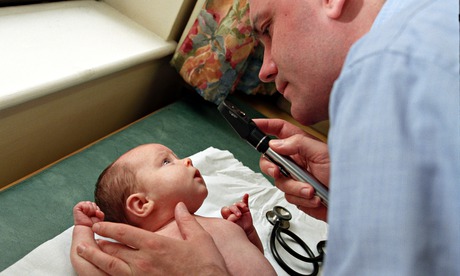
Doctor giving baby polio vaccine

The report suggests GP practices join collectively to be ready to give individuals a wider selection of experience. Photograph: Alamy


GP practices need to begin working with each other in federations and delivering far much more providers in a restructuring of healthcare that is vital to hold the NHS sustainable, the King’s Fund urges today in a report that has attracted high-level government curiosity.


Key adjustments are needed in how major care and the two hospital and local community-based solutions are funded, delivered and co-ordinated so that the health support can cope with the large pressures caused by ageing and long-phrase conditions, the thinktank argues.


Its report on the potential of basic practice comes much less than a yr right after the coalition’s unpopular and far-reaching overhaul of the overall health services in England. It accepts that it would involve “a radical departure for the NHS” and nevertheless more upheaval, especially for GPs. But it contends that without having household medical doctors hugely expanding their roles – such as a controversial resumption of obligation for out-of-hours care – the NHS will fail to cope with rising demand, years of expected tight budgets and a expanding shortage of GPs.


If implemented, the suggestions could make the prolonged-sought integration in between health and social care that ministers agree is essential to extended-term sustainability, reverse basic practice’s diminishing share of the service’s £110bn spending budget and see many providers delivered outdoors hospitals – an additional big shift that, despite the fact that widely supported, has not but took place.


“We argue that GPs should take the lead in establishing care out of hospital by taking responsibility not only for their own solutions but for a lot of other providers used by sufferers in the local community”, say co-authors Professor Chris Ham, the thinktank’s chief executive, and Rachael Addicott, a senior fellow.


Ham says: “There needs to be a radically diverse model of common practice in the potential simply because of the ageing population and shifting burden of ailment, particularly the truth that more men and women have a lot more complex demands. And this kind of people are not getting effectively served by the current model of general practice, since what they require is not what their practice can show. What they need to have is accessibility to other skills and employees in the local community, such as community nurses, physiotherapists and occupational therapists, and also social care – and at times they require access to these services 24/7 rather than throughout surgical procedure opening hours. At the second, common practice is not sustainable.”


The essential to the report is the suggestion that in between 4 and 25 GP practices join up to turn into a federation, every of which covers amongst 25,000 and 100,000 individuals. They are the bodies that would be the hub of “loved ones care networks” (FCNs). Each and every would get a population-primarily based spending budget, but from a single of NHS England’s nearby area teams and not from the 211 neighborhood clinical commissioning groups (CCGs)designed by last year’s reorganisation. This raises significant questions more than the purpose and viability of CCGs, which had been meant to symbolise GPs currently being put in the driving seat of healthcare.


Even though patients would stay registered with their personal GP, Ham says FCNs would give them access to a a lot wider selection of experience than any practice can at present provide alone.


“I feel that above time CCGs would no longer be essential to commission care as they do these days, and would wither on the vine,” Ham admits.


In her foreword to the report, Dr Maureen Baker, chair of the Royal College of Basic Practitioners, factors out that it very first floated the thought of federations a decade in the past and that some currently exist, and operate efficiently. Nevertheless, Dr Chaand Nagpaul, chair of the British Health care Association’s GPs’ committee, says basic practice does not need yet another reorganisation: “As an alternative, we must be focusing on tackling the significant workload and economic problems dealing with GP practices, and supporting them … rather than wasting sources rearranging the NHS’s presently challenging bureaucracy.”


GP Michael Dixon, president of NHS Clinical Commissioners, which represents most CCGs, says their neighborhood and clinical understanding will be critical to support and handle long term NHS changes. “I can’t see why CCGs would be redundant,” he says.


Overall health thinktank urges further shakeup of GPs | Denis Campbell

12 Şubat 2014 Çarşamba

Personnel disillusionment at new public wellness body, survey shows | Denis Campbell

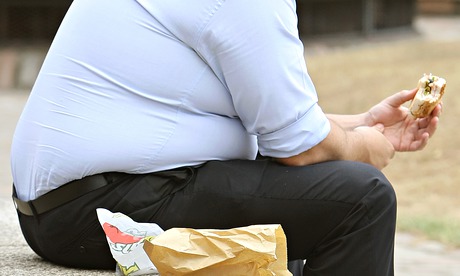
Obese man with burger

‘With 64% of grownups in England overweight or obese, and tobacco and alcohol triggering huge amounts of illness, disability and death, Public Wellness England demands to be effective.’ Photograph: Dominic Lipinski/PA


Whilst last year’s greatest-ever NHS shakeup involved a bonfire of about 170 quangos, it also led to the creation of 240 new bodies, this kind of as NHS England, the supposed prime dogs of a technique in theory “liberated” from Whitehall handle. A reorganisation that noticed public overall health return from the NHS to neighborhood government also gave us Public Well being England (PHE). “Our mission is to safeguard and improve the nation’s health and to tackle inequalities,” it says. Its priorities contain “helping people to live longer and much more wholesome lives by lowering preventable deaths and the burden of unwell-health related with smoking, higher blood strain, obesity, poor diet regime, poor psychological health, inadequate exercise, and alcohol”. Its good results is essential, not least if the NHS is to continue to be sustainable in the face of ageing, the rise in prolonged-term conditions, demand for expensive new medication and other pressures.


But the PHE’s own workers survey, released last week, exhibits it is not a pleased organisation. Just 27% really feel a powerful personalized attachment to PHE, only 32% say it inspires them to do the very best in their task and only 36% would advocate it as a great spot to operate. Possibly even much more worrying is that only 34% “feel that [its] national executive has a clear vision for the future of PHE”, just 31% have self confidence in the selections made by senior managers and 30% really feel the organisation is managed nicely. Several of the results – based on questionnaires returned by 3,073 people, 61% of the five,000-strong workforce – suggest a widespread disillusionment.


With 64% of grownups in England overweight or obese, and tobacco and alcohol causing large quantities of condition, disability and death, public health needs PHE to be powerful. Even people involved in the controversial and credibility-light Duty Deal method – a historic abrogation of government’s duty to tell vested interests what they should be performing for our advantage – do not pretend the voluntary agreements it reaches with foods and drink manufacturers and sellers, such as on food labelling, are the resolution to difficulties that deliver misery and value the NHS billions.


“The survey final results are a true indictment of the chaos launched by the unneeded, destructive centralisation in public health caused by the creation of PHE,” says Professor Gabriel Scally, right up until last yr the regional director of public wellness for the south-west and now an adviser to Labour.


He raises another situation: “Who’s in charge of public well being these days? … It is challenging to know. Is it PHE, the Department of Wellness or the chief medical officer?” He suggests it is not the CMO, who has often been meant to be the main flag-carrier for the well being of the nation, as that function has been divorced from the public well being construction and downgraded. And, Scally adds, none of the 3 most senior officials in public overall health – PHE chief executive Duncan Selbie the CMO, Professor Sally Davies, or Dr Felicity Harvey, the DH’s director standard of public health – has a background in public overall health. How significantly real clout any has, and how independent any is from ministers, are also moot factors.


Selbie acknowledges the negativity. But amalgamating five,000 staff from 130 various organisations, such as the now-abolished Wellness Safety Agency and strategic well being authorities, was not effortless, he explains. “When you are trying to generate some thing new, men and women go by way of a whole lot of trauma,” he says. Selbie listed achievements by PHE in its very first 10 months, this kind of as the creation of the world’s very first cancer registry as an aid to doctors and acquiring MMR uptake amongst ten- to 16-12 months-olds up above the 95% threshold essential to deliver “herd” immunity.


He would rather workers failed to recognize with the new entire body due to deep attachment to their outdated organisations than that they felt dissatisfied with their jobs 74% of people surveyed found theirs satisfying. He says: “I am attempting to get PHE employees to align around a dream, a future, exactly where we are having to pay as significantly focus to what is it that drives excellent wellness rather than in which we at the moment target, which is quite considerably exclusively sickness and injury.” Fine sentiments, but they must be accompanied by action, such as a readiness to float ideas unlikely to earn ministerial approval, such as far-reaching necessary reformulation of foods.


Personnel disillusionment at new public wellness body, survey shows | Denis Campbell