sclerosis etiketine sahip kayıtlar gösteriliyor. Tüm kayıtları göster

28 Nisan 2017 Cuma

How Hyperbaric Oxygen Therapy can Cure Systemic Sclerosis Ulcers

Systemic sclerosis or SSc is a disease that causes fibrosis and vascular disorder along with autoimmune changes. This disease involves fibroblast activity that causes abnormal growth of the connective tissues. SSc gives birth to a number of skin problems including ulcers, itchy skin, and many other complexities. It is difficult to conclude what actually causes systemic sclerosis. It can be considered as a multisystem disease of an unknown cause. The term “autoimmune” (mentioned above) implies that the immune system is responding against the associated tissues. Pathogenesis brings both activated B cells and activated T lymphocytes together. As an outcome, autoantibodies and cytokines affect the cells that channel the blood vessels leading to vasoconstriction and fibroblasts. Fibroblasts produce excessive collagen, a medical complexity that is called fibrosis. Fibrosis is the reason behind Digital ulcers.


Symptoms of SSc


Raynaud phenomenon is the first indication of SSc. Affected patients may find their fingers and toes white and numb. This is the primary and main indication of this disease. Following this indication, other complexities (in most of the cases skin problem) will take place.


SSc and Hyperbaric Oxygen Therapy (HBOT)


Digital and leg ulcers are really hard to handle. Many treatments have been introduced to combat these complications among which hyperbaric oxygen therapy is the most preferred one. A case series has claimed that hyperbaric oxygen therapy or HBOT is really beneficial for SSc ulcers. Bengusu Mirasoglu, from Istanbul University, and his colleagues conducted an experiment on six SSc patients suffering badly from SSc ulcers. Three out of six patients had digital ulcer while the other three had leg ulcers. All of the six patients were given hyperbaric oxygen therapy. After taking the HBOT therapy, four among the six patients had completely recovered while other two patients got near-complete healing. They did not require amputation to cure their ulcers.


A Brief History of HBOT


Hyperbaric oxygen therapy is not a new invention. It has a long history. The origin of hyperbaric therapy dates back nearly 350 years. In its infancy, HBOT treatment was conducted only to treat decompression sickness. During the late 1900s, several studies started shedding light to those indications that can be treated by HBOT. Still, the studies are going on. Food and Drug Administration (FDA) has already approved some indications including:


  • Air or Gas Embolism

  • Carbon Monoxide Poisoning

  • Gas Gangrene

  • Crush Injury

  • Decompression Sickness

  • Wound/ulcer Healing

  • Abnormal Blood Loss

  • Intracranial abscess

  • Necrotizing soft tissue infections

  • Radiation injury

  • Skin Grafts and Flaps

  • Thermal Burns

There are many other indications that are not approved by FDA yet, but several studies have established that they can also be effectively treated by hyperbaric oxygen therapy.


How does Hyperbaric Oxygen Therapy Combat SSc Ulcers?


In order to receive this treatment, you need to enter into a hyperbaric chamber. 100% pure oxygen is supplied to a hyperbaric chamber. Whenever the patients breathe normally inside the chamber, their bloodstream absorbs the pressurized oxygen with the help of the lungs. Eventually, the oxygen is carried throughout the body by the circulatory system. Overall, the patients receive up to 15 times the amount of the oxygen in comparison to inhaling air at the sea level.


Ulcers affect the blood vessels which are responsible for leaking into the tissue. It causes swelling. HBOT supplies oxygen to the affected tissues to reduce swelling. In this way, hyperbaric oxygen therapy energizes the ulcer-affected tissues and protects them from death.


Mono or Multiplace – Which Hyperbaric Oxygen Chamber is Good for SSc Ulcer?


There are two types of hyperbaric chamber – monoplace and multiplace hyperbaric chamber. In a monoplace chamber, only one person can be treated at a single sitting. Multiplace chamber is much like a submarine. In this hyperbaric chamber, multiple patients can be treated at the same time. For systemic Sclerosis ulcers, you can choose any one type of hyperbaric chamber. Both serve the same function. Choose a chamber that is comfortable to you.


Final Overview


Don’t ignore systemic sclerosis ulcers if you love your life. It can take worst form if you overlook it. Consult your doctor and take hyperbaric oxygen therapy under his/her supervision. It would be better if you start the treatment at an earlier stage.


Feel free to write to us if you have any confusion about hyperbaric oxygen therapy. Lead a healthy life and be happy.


Chloe Paltrow

Chloe Paltrow, MD, is a psychiatrist with more than 20 years of experience. She is also a researcher in the field of neurology. Dr. Paltrow sees patients with different neurodevelopmental disorders and intellectual disabilities. She has shared her knowledge in various websites and blogs like Collective Evolution, PsychCentral and Pick The Brain. Currently, she is studying how brain injury and brain disorders can be treated with hyperbaric chamber, of which OxyHealth is a leading provider.


How Hyperbaric Oxygen Therapy can Cure Systemic Sclerosis Ulcers

8 Mart 2017 Çarşamba

Multiple sclerosis treatment is debunked by researchers in Canada

A surgical treatment pioneered in Europe that was sought out by thousands of desperate people with multiple sclerosis has been categorically debunked by Canadian researchers.


“Liberation therapy” to widen narrowed veins from the brain and spinal cord was devised by the Italian surgeon Dr Paolo Zamboni, who suggested in 2009 that the neurological disease could be triggered by a build-up of iron where the blood did not flow freely.


Zamboni called this condition chronic cerebrospinal venous insufficiency (CCSVI or CCVI) and widened the veins of people with MS using stents. Many in the medical community were sceptical, and his trials of the technique did not compare people given the procedure with those who were not. But other doctors’ doubts did not stop people with MS from joining the waiting list.


In 2013, a paper was published in the Lancet medical journal by Dr Anthony Traboulsee from the University of British Columbia and colleagues, funded by the MS Society of Canada, which found that Zamboni’s hypothesis was fundamentally flawed. The researchers’ study showed that narrowing of the veins that run from the brain to the heart was as common in people without MS as in those with the condition.


The same team has now carried out a more ambitious study. They performed the vein-widening venoplasty procedure on 49 people, inserting a catheter and inflating their veins with a small balloon and a “sham” operation on 55 others, who just had the catheter insertion. Neither the patients nor the researchers knew which people had undergone which operation.


One year later, assessments involving brain imaging and doctors’ and patients’ own assessment of their symptoms, showed that there was no difference between the disease progression of the two groups.


“We hope these findings, coming from a carefully controlled, ‘gold standard’ study, will persuade people with MS not to pursue liberation therapy, which is an invasive procedure that carries the risk of complications, as well as significant financial cost,” said Traboulsee, a UBC associate professor of neurology.


“Fortunately, there are a range of drug treatments for MS that have been proven, through rigorous studies, to be safe and effective at slowing the disease progression.”


In spite of the earlier Lancet paper, people are still seeking liberation therapy, Traboulsee said. “It is less popular. But there is still an advocacy group that has a conference once a year with guest speakers such as Dr Zamboni,” he said. “There are still researchers dedicated to the topic, not just Dr Zamboni. It has been proposed as important for treatment of Ménière’s [disease] and for dementia diseases.”


Multiple sclerosis treatment is debunked by researchers in Canada

17 Nisan 2014 Perşembe

Numerous sclerosis and "miracle cures": at times it"s the hope that"ll kill you | Margo Milne

I have progressive a number of sclerosis. I’m very disabled, and I have no idea how disabled I’ll end up. That’s what MS is like. It is unpredictable, and it is various for every person. Request 100 people with MS, and you will get 100 diverse sets of signs and symptoms.


There are therapies: things that slow down progression, or even halt it in some situations. But the Holy Grail is something that will cure multiple sclerosis, fix the injury our incorrectly primed immune programs are causing to the myelin that coats our nerves, and restore us to total working.


Faced with the uncertainty of a issue that can manifest itself in many diverse approaches, progress at variable speeds, and have a number of unpredictable endpoints, it is not surprising that we are so susceptible to grasp at any suggestion of a remedy, nevertheless improbable it could sound, and even so scant the proof.


We nevertheless don’t know for certain what causes MS, even though several factors have been advised, some less probably than other people. For instance aspartame, hefty metals (which includes dental fillings), and allergic reactions have all been debunked as causative agents. Going by present research, a number of variables are really concerned, such as genetics, viruses, environmental aspects, and vitamin D deficiency.


And what of cures? Person stories, such as that of Dermot O’Connor who claims to have cured his MS through diet, exercising, and acupuncture, sadly show nothing at all. Multiple sclerosis has relapses and remissions. You get worse then far better. So it’s usually challenging to tell regardless of whether you’re feeling much better by possibility or because of anything you’ve accomplished, except if it is portion of a properly performed clinical trial.


A single theory that is acquired a whole lot of publicity more than the final couple of years is CCSVI – persistent cerebrospinal venous insufficiency. It is unusual in that it is obtained interest both from the media and the healthcare and scientific establishment. The thought runs that compromised movement of blood in the veins draining the central nervous technique leads to iron deposits around the pulmonary veins, which triggers autoimmunity and degeneration of myelin.


The examine that initial proposed the theory of CCSVI, carried out in 2008 by Paolo Zamboni, was intriguing but had a quantity of methodological concerns. It was inevitably tiny, it was non-randomised and non-blinded, participants remained on their normal remedies throughout the trial so it was extremely hard to determine the result in of any effect, and all participants have been in relapse, so had been very likely to enhance anyway.


The study found venous abnormalities in every 1 of the participants, a outcome that immediately sets suspicious Spidey senses tingling in researchers. And when Dr Zamboni had the blockages cleared making use of angioplasty, his paper quoted outcome results at six months submit-method, with most exhibiting an improvement. At 18 months, on the other hand, his participants were undertaking the very same or even worse than they had prior to the intervention. Additionally, there is a prospective conflict of curiosity in Zamboni owning the patent relating to the diagnostic tools utilised for diagnosing CCSVI, or the support his study centre has acquired from its manufacturer in the kind of tools and technical support.


But the operate certainly merited more study, to see if CCSVI did without a doubt exist, if there was a link between it and MS, and if so, whether angioplasty to clear the blockage could support MS.


News of the study soon reached the MS local community, and many men and women with MS, impressed by the reported benefits, needed angioplasty straight away. As there was insufficient proof for health authorities to fund the therapy, folks have been travelling to personal clinics in Poland, Puerto Rico, or Thailand, usually remortgaging their houses or undertaking months of fundraising to increase the 1000′s of pounds needed.


Final results were reported back on social media, often on YouTube. But, of course, person uncontrolled anecdotes do not equate to evidence. And even Zamboni himself was urging a go-slow approach, telling folks with MS to enrol on clinical trials rather than have the treatment method done privately.


And was the treatment safe? In most instances, it looks to be. But there have been incidents of attainable side effects, including intercranial haemorrhage, thrombosis, compression of cranial nerves, heart arrhythmias, and deaths, for instance of Canadian Mahir Mostic. Trials at Stanford University have been halted following one particular participant died and an additional required emergency surgical treatment to remove a stent that had migrated into their heart.


Meanwhile, analysis was being completed. And it wasn’t very good information for the CCSVI advocates. So far, no important big difference has been identified in the presence of CCSVI in folks with and without having MS. A managed and blinded sham surgery trial of the angioplasty procedure found no benefit from the intervention. Study continues, as without a doubt it must. But I’m not hopeful.


Will there be a remedy for multiple sclerosis? At some point, yes I feel there will. But I believe it will come by means of stem cell analysis. Prevention of MS, and many other diseases, will be attained through vitamin D supplementation in pregnancy.


And only right after detailed clinical trials to present efficacy and safety. Naturally.


Margo Milne is on Twitter, @margojmilne


Numerous sclerosis and "miracle cures": at times it"s the hope that"ll kill you | Margo Milne

18 Mart 2014 Salı

Numerous sclerosis sufferers may advantage from statins, says examine

multiple-sclerosis-statin-research-treatment

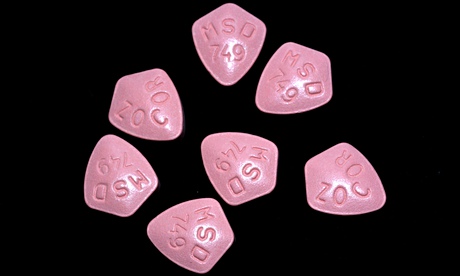
Simvastatin tablets may possibly alleviate the onset of multiple sclerosis. Photograph: Scott Camazine/Alamy


A cholesterol-lowering statin taken by large numbers of people in the United kingdom could also support individuals suffering from advanced a number of sclerosis, according to scientists.


There are no convincing therapies for MS as soon as it moves into the later, progressive phase. Early on, most people expertise what is acknowledged as relapsing-remitting ailment, in which their problem will get worse and then stabilises. But in the later phases, there is no let-up in decline and sufferers progressively get rid of muscular function and become far more disabled.


But a trial amid 140 folks in the progressive phase of the illness has presented some hope of a possible therapy to slow the charge of decline.


Researchers, creating in the Lancet health-related journal, , say they chose to attempt statins due to the fact they have been proven to have anti-inflammatory and neuroprotective effects on the nervous system.


In the trial they administered large dosage (80mg) simvastatin, the most generally used of the anti-cholesterol medicines. Half the group, randomly picked, took the statin for two many years, although the other individuals were provided a placebo.


“In the progressive stage of MS the brain shrinks by about .6% a yr. Our principal measure of good results was to decrease the charge of brain atrophy”, mentioned Dr Jeremy Chataway of University University London Hospitals and UCL, who led the study.


MRI scans of the brains of the participants ahead of the examine began and following it ended showed that these who had been given simvastatin did experience less shrinkage of the brain – by .3% a year on common rather than the anticipated .six%, a reduction of 43% when adjustments have been manufactured for the age and gender of the volunteers.


Even though it was not a central portion of the trial, which was carried out only to look at the impact on the brain, the sufferers had been also found to have tiny but important improvements in their disability scores, by comparison with the folks who had taken placebo tablets.


Chataway acknowledges that the outcomes of the brain scans, despite the fact that interesting for scientists, may not in fact translate into improvements in the condition of MS patients. But, he stated, the results meant that it would be really worth carrying out a complete-scale trial.


The trial developed on two decades of operate by Professor John Greenwood at the UCL Institute of Ophthalmology. He had investigated the likely advantage of statins in car-immune diseases this kind of as uveitis, which impacts the retina, simply because of statins’ record as anti-inflammatories.


This examine suggests, even so, that the advantageous impact may be on vascular function rather than the immune method, he added. “Following virtually two decades of analysis, it is immensely gratifying to see this operate progress into the clinic to deliver positive aspects to patients,” he explained.


MS is an autoimmune condition in which myelin, the fatty insulating materials that covers nerve fibres, is destroyed by the body’s personal defences. Nerves lacking myelin are not ready to transmit messages appropriately, major to symptoms ranging from mild tingling or numbness to complete blown paralysis.


Dr Susan Kohlhaas, head of biomedical analysis at the MS Society, explained: “There are no remedies that can end the problem from worsening in individuals with progressive MS. Scientists have worked for years to find a likely therapy that could aid men and women, and now, lastly, one particular has been located. This is extremely exciting information.


“More, bigger clinical trials are now definitely essential to verify the security and effectiveness of this treatment method, but for now, folks with MS need to be actually encouraged by these benefits.”


Statins are out of patent and therefore now quite inexpensive – a month’s provide of 20 mg simvastatin charges much less than £8, despite the fact that the treatment for MS would be at a considerably larger dose.


Numerous sclerosis sufferers may advantage from statins, says examine