polluted etiketine sahip kayıtlar gösteriliyor. Tüm kayıtları göster

16 Şubat 2017 Perşembe

"You can taste it in the air": your stories of life in polluted cities

EUROPE


Warsaw, Poland


“The air pollution problem in Poland is beyond any western standards. Despite poor conditions, Poland has done nothing to reduce used car imports, promote renewable energy, protect green areas or rationalise precaution levels. (Right now an alert is announced at 600% of the norm and the ministry for environment refuses to change that level because “they would have to announce the alert too often”.)


“Where I live (Warsaw) the air quality is very bad. The intensive development of apartment buildings in suburban areas without proper public transportation pushes people into cars and reduces green space. Over the last decade Warsaw suffered a net loss of 160,000 trees.


“Recently as more groups join the demand for better air, the city hall pretends they care, but there is no real action. I became a father five months ago and air quality has become a reason to stay indoors against our will for most of the winter. I’m a member of Warsaw’s city activist group Miasto Jest Nasze (the City is Ours), an organisation which set up Warsaw’s smog alert.” (Tymon Radwański)


London, UK


Ed H-B (@EdH_B)

3 week old #airpollution filters frm cycling in Central #London – everyone should wear masks in #protest & tweet dirty filters! #cleanairnow pic.twitter.com/b34puftPGM


February 14, 2017


Bath, UK


“Levels of nitrogen dioxide on several roads leading into the city have exceeded the EU limits for years. It’s said that people living off the southern approach road into the city are likely to die nine years younger than those living on the hill on the opposite side of the city, three miles away.” (Louise Hidalgo, Bathampton Meadows Alliance)


AFRICA


Port Harcourt, Nigeria


A school boy walks past smoke and fumes emitted from a dump in Port Harcourt.


A school boy walks past smoke and fumes emitted from a dump in Port Harcourt. Photograph: Pius Utomi Ekpei/AFP/Getty Images

“Residents of Port Harcourt became aware of a black substance falling from the sky last November. Authorities said an investigation was going to be carried out but not much happened until late January and early February when this pollution became unbearable.


“A lot of residents believed local refineries were the likely cause and took to social media to ask the state government to act. Finally, a committee was set up and a report released showing the soot is petroleum based, but the government said they couldn’t determine which activities were the cause.” (Babajide Odulaja)


If you wipe surfaces indoors and outdoors with a white towel or tissue paper, you get a black smudge. Perhaps more worrisome is that if you clean your nostrils with a white material, you come up with a jet black residue. If you walk barefooted, the soles of your feet turn black.” (Eben Dokubo)


(Update: The situation was declared an emergency this week. According to reports the state government have shut down a Chinese construction company apparently responsible for the pollution.)


AMERICAS


Santiago, Chile


Envigado, Colombia


“Air pollution is visible here on most days. You can taste it in the air. I believe it’s caused by low-quality diesel, and the high number of motor vehicles. There is no rail system and freight is transported by road. Heavy vehicles emit a thick, black exhaust that is frightening to see and lingers in the air.” (Anonymous)


Mexico City, Mexico


Los Angeles, US


“I grew up in Los Angeles in the 50s and 60s. I remember days where the air pollution was so bad your eyes would burn and it hurt – actually was painful – to take a deep breath. Combine that with the heat and a shining grey sky that beat down on you, where the soup was so thick all you could see of the sun was a diffuse bright patch in the sky, where even the grass turned brown and the trees died from the pollution, and you have a hell on earth of the sort described by Tolkein when he wrote about the wastelands of Mordor.” (EvilMidnightBomber)


“I remember walking home from my grade school in the late 60s literally crying like I had been teargassed the air was so bad. My parents said it was even worse before incinerators were banned.” (MakeBeerNotWar)


ASIA


Shanghai, China


“We celebrate when we see blue sky and share pictures with each other on WeChat. I purchased an air purifier for my home – we have no idea if it helps. We just feel secure, it’s like buying insurance: you suddenly feel good.” (Artem)


When the air pollution is bad, many people in my office develop coughs and sick days are taken. I like to walk or ride a bicycle home, but I always need to check the air quality before leaving work. Today I decided to take the bus home because the air quality reading was 150. I have also cancelled weekend plans with friends due to the unhealthy air levels. It can be very depressing.


“When the neighbouring city Hangzhou hosted the G20 and they shut down all the factories for two weeks it was amazing. Shanghai had clear blue skies the whole time. It shows if they really wanted to improve the quality of life and health of their residents they could, but they are not willing to unless a group of rich, powerful people are coming.” (Anonymous)


Beijing, China


Hong Kong


“Often, I don’t take my baby outside as I am so concerned about the effect on him. I wear a face mask on the days it is above an orange rating. My husband exercises at the gym instead of running when it’s bad. I often have a bitter taste or thick feeling on my mouth and tongue when I walk home at rush hour. This is a serious and scary problem, it’s obvious in the pollution visible on buildings, skin problems, difficulty breathing, chest pain and coughs.” (Anonymous)


Ulaanbaatar, Mongolia
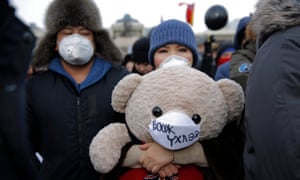


Protesters march in Ulaanbaatar on 28 January to demand government action to reduce air pollution.


Protesters march in Ulaanbaatar on 28 January to demand government action to reduce air pollution. Photograph: Davaanyam Delgerjargal/EPA

“We are a part of the #BreatheMongolia and #MongolsAreSuffering initiatives. Protests and demonstrations in Ulaanbaatar have been raising awareness of the dangerous air pollution in the city and calling upon the government for solutions to the crisis as soon as possible. Thousands of demonstrators marched holding black balloons that represent their damaged lungs caused by air pollution and hung the balloons on the fence around the government house, aiming to show that around 500 children die annually in Mongolia due to air pollution.


“It has officially been declared that air pollution in Ulaanbaatar has reached disaster levels, exceeding 120 times the safe limit; 80% of the air pollution comes from the districts of ger (traditional circular felted tents) households, where people burn coal to stay warm.


“The top three diseases that resulted in the largest number of deaths in Mongolia in 2013 were air pollution-related. Studies show that air pollution exposure also results in miscarriage, premature birth and has an impact on the intellectual and physical development of a child. We know of someone who had multiple miscarriages while living in the city and had to move out to the countryside in order to give birth successfully. The people of Mongolia deserve clean air.” (Nomi Ganbold and JaRed Cameron)


Delhi, India


Sebastian Taylor (@DilliSeb)

@guardiancities Taken last November mid morning here in Delhi. Only when this extreme did it become a (minor) political issue…for a week. pic.twitter.com/aVd0snXhuP


February 13, 2017


“I am asthmatic and air pollution makes me sick. In 2014 I packed up and left Delhi, moved to the mountains. But I have to keep coming back to the city and fighting air pollution has become a personal battle for me. I have seen healthy friends become sick in November 2016 as air pollution was at its peak. Tier two and tier three cities in India are worse though, there are no records on them and nothing to make people aware of it.” (Shibayan Raha)


“The air pollution in Delhi is actually pretty scary. I really haven’t ever experienced anything quite like it. There are days where I just have to stay inside because if I go out, I know the next day I’ll be struggling with sinus issues and laboured breathing. I have had a chronic cough since I have been here.


“Many people here, from young kids to athletic adults, to elders, all have this chronic congestive cough. We call it the Delhi chest, or the Delhi cough. Little kids with chronic respiratory illnesses are the norm here, not the rarity. And still they burn trash, run vehicles on diesel.


“I grew up in Los Angeles, and we had summer inversion layers that were probably the start of the reasoning for things like the Clean Air Act and the EPA. But the intensity of the physical symptoms I have here I have never experienced anywhere before.” (Nancy)


Guardian Cities is dedicating a week to investigating one of the worst preventable causes of death around the world: air pollution. Explore our coverage at The Air We Breathe and follow Guardian Cities on Twitter and Facebook to join the discussion


"You can taste it in the air": your stories of life in polluted cities

6 Şubat 2017 Pazartesi

The Curse Of Financially Polluted GMO Study Data – 672 Research Papers Reviewed

Even among those of us that haven’t done their research into GMO food products, there is an uncertainly about not only what they actually are, but no one seems to know about the safely of these inventions either. For that’s what they are; inventions. Not natural, but man made.


Research on genetically modified products needs to be paid for. While it’s ideal that the producers of such products should bear the cost of the research into their own products, there is a big question mark hanging over the conclusions of this type of research. For example, when a company wants to sell product, wouldn’t they want favorable results into the research of their patented money makers?


The Review Into Conflicts Of Interest In GMO Studies


In this study, the authors were looking for the extent of conflicts of interest (COI) in employment statuses only. The parameters used to assign to each piece of research were: “favorable’, ‘neutral’ or ‘unfavorable’ to the financial interests of at least one GM crop company.”


The goal of this study was to measure the extent of COIs in the field of research of GMO products and to “test the hypothesis that study outcomes for the efficacy or durability of Bt crops are more frequently favorable to the interests of GM crop companies in the presence than in the absence of COI’s.”


The authors received no funding for this research task, they were just keen to know how much shenanigans is going on inside the research field of GM products.


If every other form of COI was accounted for, the results would very likely be much higher because of the way this industry is cross linked every which way via being consultants, members of advisory boards or co-holders of patents or intrinsic or intellectual COIs.


Like Sanchez and Diels et al. we found that COI’s were widespread in the articles considered. Only about 7% of the articles contained a declaration of COI, but about one fifth of the 672 articles had at least one author from a GM crop company.”


Let me do the maths for you; that’s 134 research papers that had a COI, merely based on their employment status!


The authors of this review study propose that the GMO companies still pay for the research into their own products, but, that there should be a pool of monies mainly funded by the companies but also contributed to by governments and NGO’s that could fund research that is independent of financial stakeholders influence.


This would add a layer of confidence to the supposed scientific research surrounding GMO’s that we could all rely on. As it stands, the whole system stinks of money, with not even a whiff of duty of care.


More Conflict Of Interest


The pharmaceutical company, Merck, bought and does deliveries of Dr Paul Offit’s book, “What Every Parent Should Know About Vaccines,” to American doctors. This is another incidence where a conclusion of conflict of interest could possibly be drawn.


Do you know who Paul Offit is? He is an American pediatrician specializing in infectious diseases and an ‘expert on vaccines’ working for the CDC, of course! In addition, he’s also the co-inventor of the rotavirus vaccine. Surely CDC employees are not able to sell their own products to the industry they are charged with protecting us from? Yes they are, and yes they do.


Even CDC Employees Are Fed Up


Even the order followers at the CDC have had enough and are asking questions of their employer as to unethical behavior.


The ethics complaint by a group of 12 senior CDC scientists calling themselves ‘Preserving Integrity, Diligence and Ethics in Research’ or (CDC SPIDER)


It remains to be seen what the response to the CDC ethical complaint will be, if any.


Who Can We Trust?


As you’ve just read, the there is a ton of conflict of interest surrounding GMO studies. If we can’t trust the scientific community to stand for what is right, instead of standing for money, who and what CAN we trust?


Remember Grandma? Remember her pottering around in her garden, seemingly haphazardly tending her garden, then bringing you inside for a delicious bowl of veggie soup?


Do you ever remember her talking to you about what fabulous fruits and veggies she was growing at the moment? If you don’t remember this, then I’m very sorry, you missed out. However, some of us got the jump on living a natural and healthy life with a Grandma, just like I described. THAT’S who you can trust!


Grandma’s lessons of how to live naturally ring especially true today. Eat clean, organic whole foods. Avoid toxins and toxic environments. Avoid man made food products. Grow your own food. Nature and Grandma know best!


References


http://journals.plos.org/plosone/article?id=10.1371/journal.pone.0167777


http://thehill.com/blogs/pundits-blog/healthcare/301432-the-cdc-is-being-being-influenced-by-corporate-and-political


http://yournewswire.com/deadstream-media-ignoring-gmo-studies/


The Curse Of Financially Polluted GMO Study Data – 672 Research Papers Reviewed

22 Ocak 2017 Pazar

Bringing a breath of fresh air to the UK’s polluted cities

Featuring a sturdy leather head-strap and mask, two large tubes and a transparent backpack containing a small potted plant, designer Chih Chiu’s response to crowded, polluted cities is stark.


“My initial idea was to separate an individual from the public space,” he says.


Titled Voyage on the Planet and originally created by Chiu for his BA final project in China in 2013, the work is set to take to the streets in Space to Breathe, a two-day exhibition based at Somerset House, central London, that is hoping to propel the issue of air pollution and public health into the limelight.


Kitting out visitors with the apparatus and taking them on to the Strand, Chiu, now a joint student at the Royal College of Art and Imperial College, hopes the sight of the people donning the otherworldly masks will shake the city out of its complacency.


“When all of us are sharing this polluted air, but none of us has a reaction to it, we feel nothing [is] really seriously wrong,” he says. “But when people start to have a reaction to the polluted air, like wearing this [mask], we start to [pay] attention.”


It is time we did. Amid a growing crisis in cities around the world, air pollution in parts of London smashed through the annual limit in the first week of this year. And with poor air quality linked to dementia, heart attacks and strokes, it is taking its toll on public health.


“What people really struggle with is the dislocation in time,” says Ian Mudway, lecturer in respiratory toxicology from the environmental research group at King’s College London. “The exposures you have now could produce effects in 20, 30, 40 years’ time,” he adds, pointing out that air pollution is estimated to cause around 40,000 premature deaths a year in the UK alone.


A collaboration between curators Shrinking Space, scientists from the environmental research group at King’s College London and Cape Farewell, an organisation that pioneers the use of art to promote cultural changes to tackle climate change, Space to Breathe is an energetic mix of art, science and entertainment.


Among the weekend’s highlights, which includes a DJ set by former Pulp frontman, Jarvis Cocker, visitors will be able to don virtual reality headsets to take a tour around the Strand with the project Energy Renaissance. A 360° video, the experience explores how the area could be transformed through interventions ranging from tree planting to urban wind turbines and zero-emission buses.


Taking the ideas further, the weekend will encompass a set of panel discussions, with representatives from the Greater London Authority, the British Lung Foundation and Tidal Lagoon Power, the company behind the mooted Swansea Bay project, to share their views on the air pollution crisis and how to tackle it while, perhaps more creatively, a pollution-removing bench designed by Airlabs will be exhibited on the river terrace.


Also on show is a specially commissioned installation by sound artist Wesley Goatley based on six months’ worth of air pollution data gathered by instruments in the area surrounding Somerset House. The aim, says Goatley, is to offer visitors an innovative way to explore pollution data, while pushing back against the perception that such figures and statistics are only for specialists.


Entitled Breathing Mephitic Air, the experience involves a 360° soundscape with three different components of air pollution – nitrogen dioxide, nitric oxide and particles known as PM10s – depicted by different sounds. These sounds, the rush of traffic, a catalytic converter and the sound of a refinery are themselves linked through their relationship to a metal intricately involved in the problem of air pollution: platinum.


The sounds, notes Goatley, rise and fall in volume with the levels of the pollutant they represent, while the apparent direction of sound mimics the direction and speed of the wind when the data was recorded. “There is a very firm connection between what you hear and what the data says – you can kind of read the data through the sound,” he says, adding that the data is also depicted dynamically through a visual display.


But Space to Breathe is not only about raising awareness of air pollution: it’s also an attempt to put the public back in control. Scientists will be offering visitors the chance to try out some of the latest real-time pollution-monitoring technology, as well as revealing how web-based apps can be used to plan journeys and dodge pollution hotspots.


“We will get people not just to think about what the pollution is on the day, but to actually have a perception of what their long-term exposures are likely to be,” says Mudway. The hope, he adds, is that the experience will galvanise visitors into action, from the way they navigate cities to the cars they choose to drive, and even encourage them to lobby those in power for change.


Andy Franzkowiak, a creative producer of the exhibition from Shrinking Space, agrees. “Every single person can make a difference,” he says.


Space to Breathe takes place at Somerset House, London WC2, on 28 and 29 January


Bringing a breath of fresh air to the UK’s polluted cities

26 Ağustos 2016 Cuma

New Study Provides First Evidence That Natural Essential Oils Counteract Inflammation Caused By Polluted Air

Certain ingredients in essential oils made from plants could provide a natural treatment of liver and lung conditions caused by air pollution.  They may also help in counteracting inflammation.


This recent study evaluated the value of using specific essential oil compounds — like fennel, anise, ylang ylang, and cloves — to treat inflammation caused by the fine particles found in hazy, polluted air known to be carcinogenic.


This new study is the first of its kind.


Different Organic Compounds in Essential Oils


Plants naturally contain a variety of essential oils that consist of different compounds. Some of these compounds have antioxidant value.  They may also be able to fight inflammation.


The essential oils in some plants have a group of organic compounds called phenylpropanoids — possible anti-inflammatory substances.  A few of these substances are estragole (found in basil), eugenol (which occurs in clove bud oil), trans-anethole, (a flavor component of anise and fennel), and isoeugenol (contained in ylang ylang).


Laboratory Tests Discover Essential Oil


Lead author of this new study, Miriana Kfoury and her team of researchers, collected air pollutant samples containing fine particles.  Laboratory test samples were then introduced to human cell cultures of cancer derived hepatic cells and normal bronchial epithelial cells.


The fine particle matter induced inflammation in the cells.  They started to secrete the pro-inflammatory cytokines IL-6 and IL-8 — substances that are secreted during infections and tissue damage. Cytokin levels normally increase when our body’s immune system fights specific infections.


Next, the researchers established that the trans-anethole, estragole, eugenol, and isoeugenol all have cytotoxicity — which means that they might cause cell death when exposed to comparatively high concentrations.


Evaluation of Oil Compound Properties


In their evaluation, the researchers were able to determine the level of cytotoxicity of these oil compounds. This was important in order to establish the maximum dose that should be selected in the next step — specifically, the assessment for anti-inflammatory properties.


In the second round of laboratory testing, the researchers introduced the four compounds to the combination of cell lines and air pollutants to see whether the natural essential oil compounds could protect lung and liver cells damaged by fine particles found in air pollution.


The researchers discovered that the essential oil compounds tested decrease the levels of the two types of cytokines in the samples. The levels of cytokine IL-6 decreased up to 96 percent, and the levels of cytokine IL-8 by 87 percent.


First Evidence of Essential Oils Counteracting Inflammation


Lead author Miriana Kfoury, of the Unité de Chimie Environnementale et Interactions sur le Vivant, Université du Littoral Côte d’Opale in France and the Lebanese University in Lebanon, offers a brief comment about this new study’s findings.


“The findings provide the first evidence that natural essential oil components counteract the inflammatory effects of particulate matter, such as that contained in polluted air.”


Kfoury and her colleagues published their recent study titled, “Essential oil components decrease pulmonary and hepatic cells inflammation induced by air pollution particulate matter,” in Springer’s journal Environmental Chemistry Letters


New Study Provides First Evidence That Natural Essential Oils Counteract Inflammation Caused By Polluted Air

10 Nisan 2014 Perşembe

Kensington and Chelsea is borough with most polluted air in United kingdom

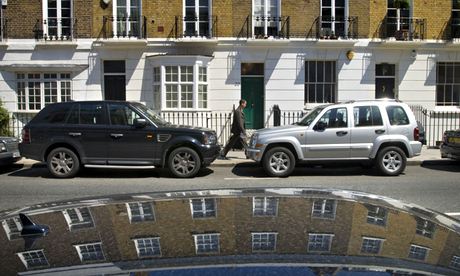
Pollution in Chelsea and Kensington : SUVs and 4x4s parked in streets

4x4s parked on a street in Chelsea, London. Photograph: IRex Functions


Kensington and Chelsea – house of the super-rich and their costly 4×4 “tractors” – has the most polluted air in the United Kingdom, with far more than one in twelve of all deaths in the London borough attributable to tiny particles of soot largely emitted by diesel engines. The only other borough with similar pollution levels is nearby Westminster, home of the political lessons who are famous for “hot air” emissions.


The statistics, collated by locality for the 1st time by Public Well being England – an agency of the Department of Wellness – recommend that London and south-east England have by far the worst air in Britain, largely due to targeted traffic levels. In London, three,389 people died of air pollution and 41,404 “lifestyle years” have been misplaced in 2010, although in south-east England, 4,034 folks died and 41,728 many years were misplaced.


The research confirms that the purest air in Britain is to be located in Scotland and locations where there are few autos and the prevailing wind blows off the Atlantic. Only eight deaths in the Outer Hebrides, six in the Orkneys and six in the Shetland Islands were attributable to air pollution. Moyle was the cleanest borough in Northern Ireland and Gwynedd in Wales. Cumbria, Northumberland and Cornwall have been the regions that had the lowest percentage of deaths from air pollution in England.


In complete, mentioned the examine, primarily based on the work of the Committee on the Health-related Effects of Air Pollutants, estimated that lengthy-term publicity to air pollution causes 28,869 deaths a year and 306,835 life years to be lost. Air pollution is now officially the largest public well being risk following smoking.


The figures had been calculated by modelling annual average concentrations of minute guy-created particles of less than two.five microns in diameter, recognized as PM2.5, and their impacts on wellness. These minuscule particles, emitted largely by diesel engines, decrease visibility and trigger the air to seem hazy when levels are raised. Simply because they are so modest, they can travel deep into the lungs and cross into the bloodstream, leading to heart and lung condition, cancer, and aggravating asthma.


The estimates are made only for extended-term publicity to particulate air pollution rather than brief-term publicity to substantial pollution episodes such as these seasoned final week across southern Britain, when dust from the Sahara mixed with regional air pollution. Because this is the very first time that the figures have been calculated on a borough-by-borough basis, it is not possible to compare them with other many years.


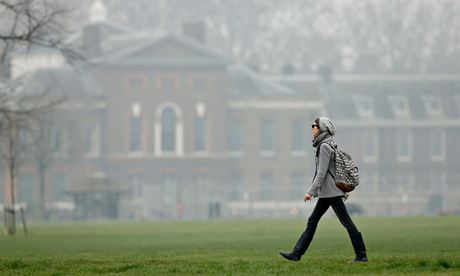
Pollution in Chelsea and Kensington : Kensington Gardens as smog surrounds Kensington Palace A woman walks via smog in Kensington Gardens, April 2014. Photograph: Suzanne Plunkett/Reuters


Britain, with a couple of exceptions in London, is within the EU legal restrict for particulate pollution but is currently being taken to court by the European commission for persistently missing targets for an additional air pollutant, NO2. This mixes with particles and other chemicals in the air to more aggravate well being hazards. Diesel fumes are known to be far more damaging to health than people from petrol engines.


A 2011 review showed that diesel-related health issues cost the NHS a lot more than 10 occasions as much as comparable issues caused by petrol fumes. Final yr the UN’s Globe Overall health Organisation declared that diesel exhaust induced cancer and was comparable in its results to secondary cigarette smoking.


“Recent ranges of particulate air pollution in the Uk have a substantial effect on the daily life expectancy of the population. In the Uk, a 15% reduction is needed by 2020,” said the report.


Surroundings groups referred to as on government to tackle the trigger of air pollution deaths. “It’s outrageous that tens of thousands of individuals die simply because of polluted air. Ending this national disgrace need to be a leading priority for politicians. Ministers and nearby authorities need to build an urgent action prepare to introduce cleaner autos and encourage the use of alternative types of transport – people won’t be ready to breathe very easily till they do,” mentioned a spokeswoman for Friends of the Earth.


Kensington and Chelsea is borough with most polluted air in United kingdom

Jar of French mountain air sells for £512 in polluted Beijing

Beijing artist Liang Kegang returned from a enterprise journey in southern France with effectively-rested lungs and a tiny item of protest towards his residence city’s choking pollution: a glass jar of clean, Provence air.


He put it up for auction before a group of about one hundred Chinese artists and collectors late final month, and it fetched 5,250 yuan (£512).


“Air should be the most valueless commodity, totally free to breathe for any vagrant or beggar,” Liang said in an interview. “This is my way to query China’s foul air and express my dissatisfaction.”


Liang’s perform is part of a gust of current artistic protest and entrepreneurial gimmickry reflecting widespread dissatisfaction more than air quality in China, in which cities frequently are immersed days on finish in dangerous pollutants at ranges several occasions what is regarded as risk-free by the Planet Health Organization. The persistent difficulty has spurred brisk markets for dust masks and residence air purifiers.


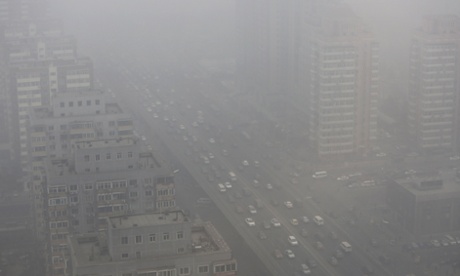
Cars drive on the Three Ring Road amid heavy haze in Beijing in February 2014
Automobiles drive on the 3 Ring Street amid hefty haze in Beijing in February 2014 Photograph: JASON LEE/REUTERS

China’s senior leaders have pledged to clean the country’s air, partly in response to a citizenry increasingly vocal about environmental troubles. But it is a daunting activity that need to be balanced with demands for economic improvement and employment vital to sustaining stability.


In February, a group of twenty Beijing artists sporting dust masks lay on the ground and played dead in front of an altar at the city’s Temple of Heaven park in a functionality artwork protest.


In March, independent artists in the southern city of Changsha held a mock funeral for what they imagined would be the death of the city’s last citizen because of smog.


“If smog cannot be efficiently cleaned up, what it will leave us is death and cities of death,” artist Shao Jiajun said.


Liang’s contribution is a short, ordinary glass preserves jar with a rubber seal and a flip-leading. It has three small, handwritten paper labels: one particular with the identify and coordinates of the French village, Forcalquier, where he closed the jar 1 saying “Air in Provence, France” in French and a single with his signature in Chinese and the date 29 March.


The auction closed on the evening of thirty March, and Chengdu-primarily based artist and entrepreneur Li Yongzheng was the highest bidder.


“I have constantly been appreciative of Kegang’s conceptual artwork, and this piece was extremely timely,” Li said in a telephone interview. “This previous year, whether it was Beijing, Chengdu or most Chinese cities, air pollution has been a serious difficulty. This piece of function really suits the occasion.”


Liang is not the only one particular to make funds from China’s air-pollution angst. Entrepreneurs also see the possible, and so do tourism officials in components of the country where skies are clear.


Chinese President Xi Jinping joked to Guizhou province delegates in the course of last month’s Nationwide People’s Congress that the scenic southwestern province could place its air up for sale. Days later on, the province’s tourism bureau announced ideas to sell canned air as souvenirs for visitors.


“Canned air will force us to stay committed to environmental safety,” provincial tourism director Fu Yingchun mentioned not too long ago.


In central Henan province, nearby tourism authorities promoting a resort scooped up mountain air and gave away bags of it in downtown Zhengzhou, the provincial capital. City dwellers greedily inhaled the air, and some stated they planned to go to the mountain resort to get more than a lungful.


Chen Guangbiao, a recycling tycoon who briefly created headlines with his abortive program to purchase The New York Instances, has been marketing fresh air in cans below his “Very good Person” brand. They sell for $ three each on China’s on the web bazaar of Taobao.


Jar of French mountain air sells for £512 in polluted Beijing