overweight etiketine sahip kayıtlar gösteriliyor. Tüm kayıtları göster

28 Şubat 2017 Salı

Increased risk of 11 types of cancer linked to being overweight, researchers warn

Being overweight could increase the risk of a host of cancers, including those of the colon, breast, pancreas and ovary, researchers have warned following a wide review of more than 200 studies.


According to previous figures from two leading charities, almost three quarters of people are expected to be overweight by 2035, with 700,000 new cases of obesity-related cancer expected over the next 20 years.


The new study by an international team adds weight to the warning, revealing that there is currently strong evidence for a link between excess body fat and an increased risk of 11 cancers: colon, rectum, endometrium, breast, ovary, kidney, pancreas, gastric cardia, biliary tract system and certain cancers of the oesophagus and bone marrow.


“I think now the public and physicians really need to pay attention to obesity with respect to cancer,” said Marc Gunter, a co-author of the research from the International Agency for Research on Cancer. “Telling people to avoid being overweight not only reduces their risk of, say, diabetes and cardiovascular disease, it also reduces their risk of many different cancers.”


Published in the British Medical Journal, the study examined evidence from 204 previously published studies which each looked at combined results from multiple pieces of research probing the link between body fat and the development of particular cancers.


Of the 95 studies which looked at obesity measures on a continuous scale such as body mass index, 12 were found to offer strong evidence of an association, encompassing a total of nine different cancers.


Analysis of these studies revealed that as BMI (weight divided by height squared) increased, so too did the risk of developing certain cancers. For men, for every 5kg/m2 increase in BMI, the risk of developing colorectal cancer rose by 9%, while among women forgoing HRT, the risk of developing postmenopausal breast cancer increased by 11%. The figures were even higher for cancer of the biliary tract system, with risk increasing by 56% for every 5kg/m2 increase in BMI.


The authors note the remaining 83 such studies were of mixed quality. While 18% were deemed “highly suggestive” of a link between excess body fat and cancer, 20% had only weak evidence while 25% had no evidence for a link.


When studies that looked at other measures of obesity were included in the analysis, the total number of cancers for which there was strong evidence of a link to body fat came to 11.


While the new study does not shed light on how excess body weight is linked to an increased risk of various cancers, a number of explanations have previously been proposed. “We know that if you are overweight it causes lots of disruption of hormonal and metabolic pathways,” said Gunter, noting that excess fat has been linked to higher oestrogen levels, higher insulin levels and increased inflammation – all of which can affect cell division.


Dr Rachel Orritt, Cancer Research UK’s health information officer, said: “This research uses very strict criteria to evaluate the evidence and confirms that obesity increases the risk of cancer, linking many of the same cancer types that have been linked before.”


Being overweight, Orritt adds, is second only to smoking as the biggest preventable cause of cancer. “Whether it’s taking the stairs or switching to sugar-free versions of your favourite drinks, small changes can make a real difference, helping you keep a healthy weight and reducing your risk of cancer,” she said.


Dr Alison Tedstone, chief nutritionist at Public Health England, added that awareness was key. “Less than half the population realise that being obese increases the risk of cancer and, with almost two-thirds of adults carrying excess weight, this is worrying,” she said.


Paul Aveyard, professor of behavioural Mmedicine at the University of Oxford, agreed that the study highlighted the need for society to take steps to reverse the rise of obesity. “It is one more reason for people to be concerned about the excess body weight that they carry,” he said. “This risk isn’t confined just to people who are really overweight. All of us who carry excess fat, and that is most of us in this country, are at some degree of risk.”


Increased risk of 11 types of cancer linked to being overweight, researchers warn

20 Ocak 2017 Cuma

Overweight patients less likely to die in hospital after heart operations

Patients who are overweight or obese are less likely to die in hospital after a heart operation than those who are a healthy weight, a study has found.


The results of the British Heart Foundation (BHF)-funded research suggest it is wrong to deny people surgery because they are overweight and that underweight patients could benefit from gaining weight prior to a heart operation.


A team at the University of Leicester collected data on about 400,000 adults in the UK and Ireland who underwent cardiac surgery between 2002 and 2013, categorising them into different weight categories, according to their BMI (body mass index).


Of those included, 11,511 patients died in hospital, including 4.4% of patients who were of healthy weight, compared with only 2.8% of those who were overweight and 2.7% in obese class I (with a BMI of 30 to 35). The study, published on Friday in the journal Circulation, found that 8.5% of patients who were underweight died in hospital.


Gavin Murphy, BHF professor of cardiac surgery at the University of Leicester, said: “We saw a 25% reduction in death by being overweight as opposed to being normal [healthy] weight. That’s a bigger effect on mortality than statins.


“It changes one of the most basic approaches behind surgery, which is that people need to lose weight before surgery. Obese patients are generally considered unfit for surgery. This study shows the very morbidly obese – with a BMI greater than 40 – did not have a greater risk. It shows that no patient should be rejected for surgery on the basis of body mass.”


The authors believe the study confirms the existence of the much-debated obesity paradox, whereby obesity can cause illnesses, such as heart disease or a heart attack but at the same time have certain protective effects.


Murphy said they found a linear association between increasing BMI and lower risk of acute heart failure or acute stroke but the relationship did not hold for all adverse outcomes post-surgery (infections, for example). How being overweight or obese protects patients who undergo surgery is unknown but the researchers plan to investigate this in future.


“If you imagine that having a heart operation is like climbing a mountain, you’re probably better doing that if you’re nutritionally nourished than if you’re under-nourished, if you’re having an energy surplus than having an energy deficit, although it’s probably a bit more complex than that,” said Murphy.


The researchers found that overweight or obese patients had greater protection regardless of age and even if they had experienced complications associated with obesity, such as hypertension, diabetes and coronary artery disease.


They also reviewed data from 557,720 further patients included in studies across Europe, the United States and Asia, finding similar results.


BHF’s associate medical director, Prof Jeremy Pearson, said: “We always recommend a healthy waistline, which significantly reduces lifetime risk of heart disease and therefore a person’s risk of needing cardiac surgery. However, this large study strongly suggests that being overweight can give patients added protection when facing major heart surgery, reducing their chance of complications or death before leaving hospital.”


A large number of NHS groups are believed to have placed restrictions on access to surgery for overweight people, although, in most cases this applies to elective procedures for non-life-threatening conditions such as hip and knee replacements.


Overweight patients less likely to die in hospital after heart operations

12 Temmuz 2014 Cumartesi

The overweight deserve aid, not sneers or malice | Barbara Ellen

Some folks are said to be emotional overeaters, in that they “eat their emotions” in the form of meals, to comfort themselves in instances of tension, and this is why they achieve fat. This website link between fat and emotions (the underlying psychological brings about of overeating) has long been cited as a significant force in understanding obesity and no one is arguing with that.


Even so, just as some body fat folks have a issue with becoming as well emotional about meals, maybe others have their very own problem becoming too emotional about body fat individuals.


Why do men and women rage against the obese so considerably? Why does the sight, or even the mere believed, of the obese excite this kind of venom, disgust and outright cruelty? The National Institute for Health and Care Excellence (Great) has just announced that it is thinking about decreasing the BMI threshold for men and women with newly diagnosed variety two diabetes for assessment and referral for bariatric (abdomen-decreasing) surgery. If this goes ahead, it could imply more than 800,000 added men and women qualifying for feasible gastric bands or similar treatments.


Maybe some folks out there correct now are gearing up to the regular response, along the lines of: “Lazy, unmotivated lardarses acquiring mollycoddled by the state after they’ve stuffed their faces and not exercised. Why ought to the state spend for that?”


No mention of how shedding excess weight (and avoiding maladies) through this kind of surgical procedure could save the NHS hundreds of thousands and for that reason be classed as comparatively expense-powerful. Nor any reference to the fact that by the time any of the added 800,000 attain the stage of requiring surgical treatment, it would be a desperate final resort, with all other avenues exhausted.


It doesn’t even make sense to rail against attempts to combat weight problems. In the west, this is our generation’s prime well being dilemma – it would be illogical not to attempt to deal with it. At other points in human background, there have been other mass overall health scares (cholera, smallpox, typhus) that also necessary to be dealt with. The prime variation is that, right here in the 21st century, excess fat can get really emotional – and not just for those who are fat.


Possibly this explains the spiteful, judgmental streak that comes out in some people, in which something that may possibly make an obese person’s excess weight reduction less complicated or more rapidly is immediately rubbished and undermined. The rationale is that, except if somebody misplaced the excess weight themselves, and panted, sweated and suffered to do so, it is not real weight reduction and it really is not “deserved”.


This is how some men and women seem to be to see the obese – wanting to push them into a relentless, practically biblical cycle of ridicule and disgust, followed by punishment and retribution and finally, if they’re quite lucky, forgiveness and absolution. Perhaps in the form of the holy grail of a weight loss spread in a magazine or newspaper? It is as if overweight people need to be 1st punished, then forgiven by society for their bodily state.


So it is with these new proposals with regards to bariatric surgical procedure. Exactly where do people get off being angry about this – pondering regardless of whether they agree with it, as if somehow an obese person’s correct to well being is debatable, rather than a offered?


It is interesting to observe the spite and judgment developing towards unknown obese folks of the future. Just as the obese are deemed to be out of management all around foods, so are some men and women getting to be out of handle in terms of their malice towards obese men and women. Ironically, it could be that individuals with fat problems are forced to be calm and grounded it really is other people close to them who get emotional and panicky about excess fat.


Perhaps it is time for these who immediately condemn plans to support the obese to take a excellent search at themselves. It could be that some of their very own feelings may be far better off “eaten”.


Waltzing Matilda or Matthew. It’s all strictly fine


The British Dance Council is proposing a new rule that would define a partnership as “one particular man, one lady”, restricting identical-sex couples to very same-sex-only categories, effectively barring them from mainstream competitors.


I smell with my minor nose peevish self-doubting straights: have been exact same-intercourse couples regarded as fine until they began acquiring good and winning trophies? If audiences anticipate to see standard male and female partnerships, then definitely it would do us all excellent to have our preconceptions shaken up? As for authorities and judges, shouldn’t they be appraising prowess, not obsessing more than secondary sexual traits?


Ballroom dancing seems the oddest of environments to get rigidly heterosexual. They will be receiving rid of the spangles following. All the male performers will turn out to be cartoon “blokes”, start off scratching their crotches throughout the pasa doble and dropping the females on the floor during the tango, yelling: “That is your great deal, the football’s started out!”


This just will not do. As the new series of Strictly Come Dancing boasts Tess Daly and Claudia Winkleman as a exact same-intercourse presenting group, possibly they could also get a identical-intercourse couple amid the contestants?


Moderation is vastly overrated


Moderate drinkers are going to have to quit currently being so smug. A review says that even reasonable drinking can be bad for the heart. This goes against preceding research, which suggested that moderate drinking could be protective of the heart. Properly, it serves reasonable drinkers proper. The “one glass of wine a night” crowd are comprehensive pains, usually displaying off about how civilised and sophisticated they are. All that savouring their drinks, inhaling bouquets, admiring vintages, getting all classy and evolved. Who do they believe they are?


I say this as a person who has become a one-glass-of-wine-a-evening drinker. Admittedly, the glass is acquiring bigger – some may possibly call them vases. Refillable vases. Even so, give or consider the odd cheeky leading-up, here I am in the one particular-glass-of-wine-a-evening zone. How did that take place?


In my defence, this has nothing at all to do with delusions of sophistication (even though it would be about time). It truly is just that I can not drink like I employed to, because I will definitely die. As effectively as not getting ready to drink immoderately any much more, I can not hack the large, filthy hangovers both. My hangovers had become a blend of Chernobyl of the eyeballs, Pearl Harbor of the gut, speaking in tongues and begging for death. In accordance to witnesses, not my ideal look, astonishingly.


So, with surly resentment, and no grace whatsoever, I joined the one particular-glass-of-wine club. On the plus side, I no longer clutch strangers in the street, whispering:”Dear God, support me” throughout hangovers. Even so, in accordance to this study, there are naff-all overall health advantages, to hearts or any other organs. Is this what we signed up for – fellow one-glass-of-wine smuggers? Moderation is going to have to up its game.


The overweight deserve aid, not sneers or malice | Barbara Ellen

26 Haziran 2014 Perşembe

Three in four in excess of-65s overweight

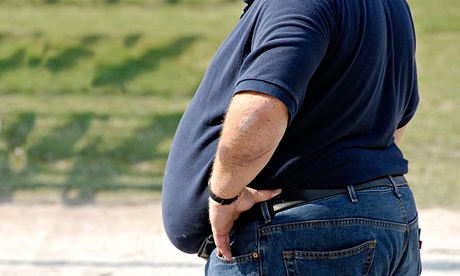
Overweight man

The typical BMI among people aged between 45 and 74 it is 28.three. Photograph: Alamy


A growing obesity epidemic amid older individuals will lead to a lot more more than-65s struggling heart problems, arthritis and breathing troubles, doctors say, as figures demonstrate nearly 3-quarters of individuals of retirement age are overweight or obese.


The knock-on impact could show so great that it may reverse the lengthy-established trend in the direction of lengthening daily life expectancy and shorten the time older people live cost-free of sickness or disability.


NHS figures show that five.eight million above-65s are obese or obese – an increase of 800,000 between 2003 and 2012.


Broken down by age groups, 73% of individuals in the 55-64 and 65-74 classes are overweight, followed by 72% of 45- to 54-year-olds and 70% of those aged 75 or above, in accordance to data from the NHS’s Well being and Social Care Info Centre (HSCIC).


The only age group in England the place the common body mass index is below 25 – the stage at which somebody is classed as obese, with thirty and above becoming obese – is sixteen-24. The typical BMI amongst the 16-24 group is 24.5, and among people aged among 45 and 74 it is 28.3.


Professor Martin Severs, consultant geriatrician at Portsmouth’s Queen Alexandra hospital and HSCIC lead clinician, stated the extent of extra fat amongst in excess of-65s would deliver about a host of health problems.


“Weight problems is going to have a whole lot of brief- to medium-phrase effects around diabetes and heart condition. And then you have acquired long-phrase problems simply because your physique will be carrying close to a whole lot far more bodyweight, you then go on to endure issues this kind of as arthritis and getting trouble breathing,” he said.


Tam Fry, a spokesman for the National Weight problems Forum, stated a lot of overweight older people were in a catch-22 scenario due to the fact health difficulties linked to their excess weight and muscle wastage meant they could not simply take physical exercise.


Ruthe Isden, wellness influencing programme director at Age Uk, stated only a tiny proportion of over-65s, like four% of over-75s, exercised sufficient.


An HSCIC report laid out how older folks account for ever-better proportions of emergency admissions to hospital, mental wellness care, outpatient visits, hospital bed use, drug prescriptions and attendance at A&ampE units.


For instance, above-65s – who make up 1-sixth of the population – use 60% of all medication dispensed and account for 54% of stays in hospital. In excess of-85s make up two% of the population and account for 18% of hospital bed days.


More positively, healthy daily life expectancy is increasing in tandem with increasing life expectancy, which now stands at 83 for men and 86 for females, up from 78 and 82 respectively in 1982.


Fewer older people are building heart illness or obtaining a stroke, partly linked to becoming the age group least probably to smoke.


A Department of Well being spokesperson explained: “Weight problems impacts all age groups and there is no magic bullet to resolve the issue. It is going to consider continued effort from all of us – government, neighborhood communities, business and men and women – to reverse this trend.”


Three in four in excess of-65s overweight

25 Haziran 2014 Çarşamba

Inform overweight men and women to diet plan, says weight problems adviser

Overweight

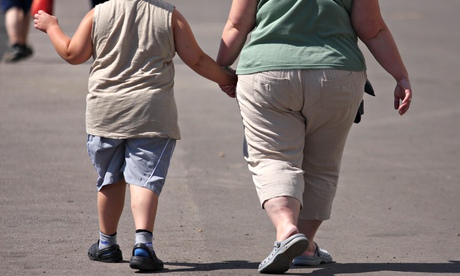
An overweight kid and mom. Photograph: Ciaran McCrickard/Rex Features


Individuals who are obese might have to resign themselves to a lifetime of strategic dieting with the aim of when each and every five years shedding at least five% of their bodyweight, in accordance to the government’s chief obesity adviser.


Susan Jebb, professor of diet and population overall health at Oxford University and chair of the government’s obligation deal with the meals and drinks market, says we require to do a lot more to help men and women by altering the foods environment, including getting rid of tempting fattening foods from prominent positions in supermarkets.


But on an person degree, the two-thirds of the population who are overweight need to be advised so by their GPs and encouraged to attempt to lose some of it for the sake of their wellness.


“I believe perhaps we are a bit as well reticent about telling them that possibly they need to go on a diet. We have no qualms in telling folks who are smokers that they ought to quit smoking, but we are reticent abut telling people to go on a diet regime. Component of the reticence comes out of the sense that numerous diet plans fail or, more accurately, many individuals who attempt to diet fail. But numerous individuals who try out to give up smoking fail. It isn’t going to imply they shouldn’t have one more go,” mentioned Jebb in an interview for a book, The Shape We’re In, published on Thursday by Guardian Faber.


Individuals who drop bodyweight in the course of a twelve-week diet plan do not put it all back on in the following twelve weeks, according to Jebb. It is a gradual process in excess of some years.


“If you consider of weight problems as a persistent relapsing situation, you could say nicely possibly every five years you have to diet plan for twelve weeks – I’m not confident that feels so untenable a place when you believe of what we are inquire folks with other continual illnesses to do, whether or not they are injecting insulin numerous instances a day to control their diabetes or whatever. Say, each 5 many years you have to have a actually concerted work to shed 5% of your bodyweight.


“Perhaps that’s the price tag we’ve got to pay out, which is not to say I am condoning fasting, bingeing, dieting, regain – of course I am not. No person sets out to shed excess weight and intends to put it back on. I am just striving to manage people’s expectations,” she explained.


Jebb co-authored a research for Excess weight Watchers which was influential in a government decision to allow GPs to refer overweight individuals to slimming clubs on the NHS. She is also paid for articles or blog posts and appearances on Rosemary Conley Tv.


She believes men and women need to have a lot more support to stay away from the temptations of unhealthy foods that is accessible everywhere and heavily marketed. “It seems to me that we have really acquired to appear at the setting and make it less difficult for individuals both to make the wholesome decision or – what we say less frequently is quit undermining their efforts by thrusting the unhealthy choice into their line of sight,” she said.


What if the end-aisle displays, so appealing to buyers, only ever contained wholesome choices alternatively of colas, lemonade and crisps, she said. Individuals kinds of interventions might be a lot more acceptable to people, she believed, than food taxes.


“I completely see we need a combine of individuals population-degree, policy-led, leading-down efforts to change our environment and we need to have men and women to recognise that they are going to have to do one thing themselves also. For me it’s a mixture of changing the setting and upskilling folks to cope with the surroundings in which they discover themselves.”


The accountability deal, which encourages foods and drink businesses to pledge to minimize the salt, fat and calories in their products, has been much criticised because it is voluntary. Organizations are selective in their pledges and some – particularly smaller ones – do not indicator up at all.


Jebb recognises the weaknesses of the deal. “Each and every single meals item carries calories. We truly want every single single meals company to be seeking at every single meals merchandise in its portfolio and saying, is this as very good as it could be?” she mentioned. But she believes it is far better than most initiatives elsewhere. “The duty deal almost certainly is not ample, but it is a wonderful deal much more than other countries. What will get me out of bed is understanding we are carrying out not a poor work and far better than most.”


On Wednesday, nutrition professionals held a briefing on the affect of sugar on health and weight problems amounts at the Science Media Centre in London, exactly where they stated families must place a jug of water on the table at mealtimes and quit acquiring colas and lemonade for their children.


Sugar-sweetened drinks, including sports activities drinks which are very substantial in sugar, are a key contributor to the weight problems epidemic and a certain problem for kids, who eat a lot more of them than grownups, say specialists.


Tom Sanders, professor of nutrition and dietetics at Kings College London, stated: “If you place a jug of water on the table, folks drink far more water,” he said. “We need to make water universally offered. You can have a tiny glass of fruit juice at breakfast, but just put water on the household dinner table – not pop.”


New scientific advice on carbohydrates such as sugar in the diet plan is anticipated to be issued by the government’s advisory committee on nutrition on Thursday.


Inform overweight men and women to diet plan, says weight problems adviser

28 Mayıs 2014 Çarşamba

United kingdom amid worst in western Europe for degree of overweight and obese folks

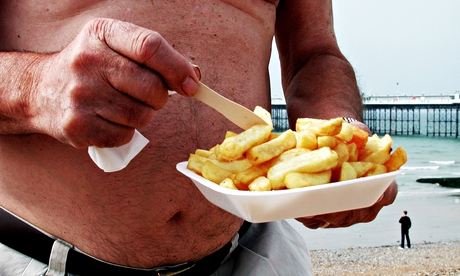
Man eating chips

67% of males and 57% of girls in the United kingdom are both obese or obese, the Global Burden of Disease review identified. Photograph: Choose and Mix Pictures/Alamy


The United kingdom has increased amounts of weight problems and overweight individuals than anyplace in western Europe except for Iceland and Malta, according to an authoritative global study that raises fresh concerns about the probably health consequences.


In the United kingdom, 67% of guys and 57% of girls are both obese or obese, according to the Global Burden of Condition review, published in the Lancet medical journal. Far more than a quarter of youngsters are also overweight or obese – 26% of boys and 29% of ladies.


The study, which makes use of data from 1980 to 2013, found that the variety of overweight and obese people in the planet had surged in the past 3 decades. About two.1 billion folks – practically 30% of the population of the planet – are obese or obese, raising the risk of diabetes, heart disease and cancers. Though the rise in obesity rates would seem to be slowing in some nations, it has but to be reversed in any.


“Weight problems is an problem affecting folks of all ages and incomes, everywhere,” mentioned Dr Christopher Murray, director of the Institute of Wellness Metrics and Evaluation (IHME) in Seattle and a co-founder of the International Burden of Illness review.


“In the last three decades, not one particular country has attained success in decreasing obesity prices, and we assume obesity to rise steadily as incomes rise in minimal- and middle-revenue nations in certain, unless of course urgent measures are taken to tackle this public overall health crisis.”


In western Europe, the Uk lags behind only Iceland, with 74% of men and 61% of women obese or obese, and Malta, on 74% and 58% respectively.


Weight problems alone – defined as a physique mass index (BMI) of 30 or far more, whilst obese is BMI of above 25 – improved by 10% in the United kingdom in excess of the past 3 decades, the review finds. There was a slight drop in the numbers of obese people among 1980 and 1986, prior to it began to rise steadily. About a quarter of the United kingdom population is now obese. The peak age for young children is among ages 5 and 9, when about 10% are obese. Amongst adults, it is at 60-64, when a third of males and ladies are obese. “In spite of the important advancements that the United Kingdom has produced in public health more than the final 30 many years, we have not been immune to this global trend,” mentioned Dr Ivy Shiue, assistant professor at Heriot-Watt University, Edinburgh, and an author of the study. “The rapid boost in youngster weight problems is notably disturbing, as becoming overweight at a youthful age can set children up for a lifetime of poor health.”


There is concern about the rising amounts of weight problems between kids in the establishing globe too, in which under-nutrition is occasionally replaced by the wrong sort of nutrition – the arrival of the substantial-fat, higher-sugar diet eaten in affluent countries. Practically 13% of the two boys and girls across the building planet are now overweight or obese, with especially high charges amongst ladies in north Africa and the Middle East.


“The rise in weight problems amid youngsters is specifically troubling in so a lot of low- and middle-revenue countries,” stated Marie Ng, assistant professor of international wellness at IHME and the paper’s lead author. “We know that there are extreme downstream well being results from childhood obesity, including cardiovascular ailment, diabetes, and a lot of cancers. We want to be thinking now about how to turn this trend around.”


Far more than half of the world’s 671 million obese men and women (as opposed to obese and obese) live in 10 populous nations. Ranked from the biggest numbers to the least, they are the United States, China, India, Russia, Brazil, Mexico, Egypt, Germany, Pakistan and Indonesia.


There are numerous countries, including Kuwait, Libya, Qatar and Samoa, the place much more than half the female population is obese. In Tonga, half the male and half the female population is obese. In South Africa, 42% of girls are obese.


“No nations had considerable decreases in obesity in the previous 33 years,” the authors publish. “This raises the question as to whether many or most countries are on a trajectory to attain the substantial charges of weight problems observed in countries this kind of as Tonga or Kuwait.”


There is evidence of a slowdown in some created nations, foremost to hope that the epidemic may possibly have peaked there, but, mentioned Murray, that is no cause for complacency. “Levelling off is just not very good sufficient,” he informed the Guardian.


“That would be like us saying it’s Ok if we end the boost in smoking. Plainly we need to bring down obesity if we want to assist individuals have healthier, much more active lives.”The paper calls for a lot more action. “Urgent worldwide leadership is essential to support nations to a lot more properly intervene against main determinants such as extreme caloric consumption, physical inactivity, and lively promotion of foods consumption by business, all of which exacerbate an already problematic obesogenic atmosphere,” the authors compose.


United kingdom amid worst in western Europe for degree of overweight and obese folks

28 Mart 2014 Cuma

Chief health care officer criticises media acceptance of currently being overweight

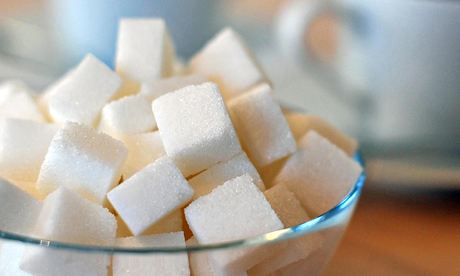
Sugar

Dame Sally Davies has outlined the value of reducing sugar consumption across the United kingdom. Photograph: Nick Ansell/PA


England’s chief medical officer has criticised outfits companies and the media for assisting to make individuals consider that getting obese is normal.


Dame Sally Davies accepted that the typical man and woman had been overweight and stated the public need to be given a sound knowing of how to alter their diet and steer clear of soft drinks with additional sugar.


“I have extended been concerned about the presentation of underweight as an best fat, particularly in the trend sector,” Davies mentioned in her yearly report.


“Nevertheless I am increasingly concerned that society could be normalising overweight. For illustration: bigger mannequins are being launched into clothes stores “dimension inflation” indicates that garments with the very same size label have turn into bigger in latest decades and news stories about obese often characteristic images of severely obese folks, which are unrepresentative of the vast majority of the overweight population.”


Davies, concerned that two-thirds of adults and 1 third of kids between two and 15 are obese or obese, mentioned that in England the typical man weighed 84kg (13st 3lb) and was 175cm tall (practically 5ft 9in). The common female weighed 70kg (just more than 11st) and was 162cm (practically 5ft 4in) tall. NHS guidance, not cited in her report, suggests a wholesome man of regular height must weigh in between 58kg and 75kg and a girl of regular height must weigh between 49kg and 73kg. She also explained that if meals makers failed to supply on guarantees to minimize added sugar then “we, as a society, may want to consider the public wellness benefits that could be derived from a regulation such as a sugar tax.”


Though she welcomed progress by the foods sector to lessen the quantity of salt in meals, there was far even more to go, she stated. She also referred to as for investigations into anecdotal proof that rapidly-food shops have been opening close to colleges to serve schoolchildren performing lunch hrs and backed Public Well being England’s briefing for regional authorities on how councils could regulate their development.


Davies, the principal healthcare adviser for the Uk government, also condemned the “unacceptably high” relative danger related with walking or cycling, saying the danger of death per kilometres was 17 instances greater for these kinds of energetic travel than going the identical distance by vehicle.


Her report, laden with political challenges, indicates disappointment at ministers’ shelving final summer season of minimum unit pricing for alcohol in England. A strategy for it to be launched by the Scottish government is currently being legally challenged by the drinks business.


Davies, concerned by a possibly massive enhance in deaths from liver ailment, welcomed the government’s move to stop alcohol currently being sold beneath the cost of duty plus VAT from next week, that means an ordinary 440ml can of beer or lager can’t be sold under 50p, although there are “floor rates” for other drinks. But she extra: “I note that modelled information suggests that charging a minimum of 45p per unit of alcohol ought to be far more powerful in lowering premature deaths.”


She said: “Retailers continue to promote alcohol employing techniques which I take into account to be irresponsible. I deplore the methods merchants use to entice buyers to obtain ever higher quantities of alcohol.”


These incorporated multi-purchase offers, offering alcohol at beneath price value and the redefining of “small glasses of wine” by bars and eating places, which had been omitting from menus the 125ml measure they have been legally obliged to provide. The substantial degree of alcohol marketing around football matches broadcast on Television was also especially regarding due to the fact of the variety of youngsters who observe, explained Davies.


Chief health care officer criticises media acceptance of currently being overweight

4 Şubat 2014 Salı

Practically two-thirds of adults in England classed as overweight by overall health entire body

Overweight person, UK

Regional councils are ideally positioned to cordinate action on bodyweight troubles in neighborhood populations, claims Public Health England. Photograph: Lindsey Parnaby/EPA


Nearly two-thirds of grownups in England are overweight, in accordance to new information from the government’s public overall health company that pinpoints the country’s most obese areas.


Copeland, in Cumbria, has the most overweight individuals in England, according to the data from Public Health England. The analysis displays that much more than three-quarters of Copeland’s population (75.9%) are overweight or obese.


Doncaster, in south Yorkshire, has the 2nd highest population of obese individuals with 74.four%, whilst East Lindsey in Lincolnshire comes third, with 73.eight%.


Public Well being England says that across the whole nation 64%, or almost two-thirds of adults, are overweight.


While the numbers fluctuate, most of the population is overweight. The lightest area is London, with 57% obese, although the north-east tops the regional league, with 68% of the population obese. The north-west is just behind, on 66%.


The agency points out that the rate of enhance of weight problems and obese seems to be slowing in the two grownups and children, but there are indications that the stabilisation is taking place in the much more affluent populations.


There are 19 district local authorities where a lot more than 70% of grownups are obese or obese, such as County Durham, Bolsover, Blackpool, Scarborough, Basildon and Thurrock.


Obesity puts men and women at enhanced threat of heart disease, stroke, diabetes, cancer and other conditions, and there is excellent concern above the likely burden on the NHS as folks get older and the toll of weight problems-associated sickness rises.


The government has offered responsibility for public overall health to the nearby authorities so that they can target on the issues that most have an effect on their populations. Public Well being England advises councils on measures that are thought to be effective.


“Nearby authorities are ideally placed to build co-ordinated action across their departments, solutions and companion organisations to tackle overweight and weight problems in the local population,” said Kevin Fenton, director of overall health and wellbeing at PHE. “Numerous nearby authorities are previously working challenging to decrease obesity amounts and these new information will assist all neighborhood regions keep track of their progress in tackling these lengthy-standing issues. Public Health England is committed to supporting neighborhood government and the regional NHS.


He additional: “Folks who are overweight or obese have an enhanced danger of creating kind two diabetes, heart illness and specific cancers. Extra fat can also affect self-esteem and psychological well being. Overall, health troubles connected with getting overweight or obese value the NHS above £5bn every single 12 months.”


But the British Heart Basis is among campaigning wellness bodies that think this is not an concern that can be left to nearby authorities to sort out alone. Many believe the government will have to carry in laws to control the marketing of unhealthy food, and there are calls for a tax on sugar-sweetened drinks.


Joseph Clift, policy manager at the British Heart Basis, mentioned: “These new figures hold a mirror in front of the country’s waistline and it reflects a really unhealthy image. Put just, as well a lot of folks weigh too much. This must be a catalyst for action at regional and nationwide level. The Westminster government needs to introduce consistent regulation for promoting unhealthy goods on Tv and on the internet to stop foods businesses exploiting loopholes.


“Local authorities need to have to be creating towns and cities in methods which encourage men and women to be a lot more active, regardless of whether that is by walking or cycling. They also want to ensure every person has accessibility to higher-good quality green spaces exactly where individuals can play sport or be energetic.”


Practically two-thirds of adults in England classed as overweight by overall health entire body