intake etiketine sahip kayıtlar gösteriliyor. Tüm kayıtları göster

24 Şubat 2017 Cuma

Children"s sugar intake equals five doughnuts a day, campaigners say

Children and young people are consuming the equivalent of 20 chocolate chip biscuits a day in sugar, according to anti-obesity campaigners.


The calculations by the Obesity Health Alliance have led to renewed calls for food and soft drinks manufacturers to make their products healthier to cut the number of dangerously overweight children. They want urgent action to reduce the amount of “hidden” sugar in many common foodstuffs.


“Most parents would never hand over 20 chocolate biscuits a day to their children, but with so much hidden sugar in our food and drink it can often be hard to know just how much children are consuming,” said Dr Modi Mwatsama, a spokesman for the alliance.


It is urging food firms to replicate the reduction in the amount of salt they put into their products in the 2000s.


Children and young people aged between 11 and 18 typically have an intake of 73.2 grams of sugar a day, far in excess of the 30g – or seven teaspoons – maximum recommended in official health advice, according to the OHA’s estimates. Those 73.2g are the equivalent of 20 chocolate chip or custard cream biscuits, 14.6 jelly babies, 5.4 slices of Victoria sponge cake or 4.8 jam-filled doughnuts.


The alliance’s figures are based on its analysis of Public Health England and the Food Standards Agency’s most recent national diet and nutrition survey, an annual study of what a representative sample of the population is eating and drinking, published last September.


It also found that four- to 10-year-olds are consuming 53.5g of sugar a day, while the figure among 19- to 64-year-olds is 59.9g daily.


Dr Alison Tedstone, Public Health England’s chief nutritionist, said that while some food manufacturers have pledged to cut the amount of sugar in their products, certain kinds of retailers – including coffee chains – need to follow suit.


“Some big industry players have taken positive early steps, but it’s the big coffee shops, pubs and restaurants we need to do the same,” she said.


Producers including Tesco, Waitrose, Nestlé, Lucozade, Ribena and Kellogg’s have announced plans to reduce their use of sugar as part of a reformulation drive ahead of the government’s sugar tax coming into force in 2018. However, many other firms have made no such commitment and may be hit by the tax.


PHE wants all food manufacturers and outlets to strip 20% of all sugar out of a wide range of products by 2020. It plans to issue a report sometime next month setting out in detail for the first time what types of foods contribute the most to people’s sugar intake and where they buy and consume them.


Sarah Toule, head of health information at World Cancer Research Fund, said that overweight or obese children are much more likely to be dangerously overweight in adulthood and thus increase their risk of developing 11 forms of cancer.


Children"s sugar intake equals five doughnuts a day, campaigners say

22 Kasım 2016 Salı

Bathtub of sugary drinks a year: cancer warning over teenage intake

British teenagers drink almost a bathtub full of sugary drinks each year, Cancer Research UK has said, urging the government to do more to improve children’s diets.


Children aged 11 to 18 consumed on average 234 cans of sugar-sweetened soft drinks each year, CRUK said.


It amounts to almost a bath full and is more than double the figure for children aged between four and 10, whose average annual intake is 110 cans.


The data stems from a report carried out by the government’s health department and the Food Standards Agency charting the population’s diet and nutrition.


The study found a drop in the amount of sugar-sweetened soft drinks consumed by children, with a more significant fall recorded in the under-10s than teenagers.


Despite the improving figures, CRUK said there was an urgent need to further reduce children’s intake of sugary drinks and threw its support behind government proposals to introduce a sugar tax.


“The ripple effect of a small tax on sugary drinks is enormous, and it will give soft drinks companies a clear incentive to reduce the amount of sugar in drinks,” said Alison Cox, director of prevention at CRUK.


“But the government can do more to give the next generation a better chance.


“The UK has an epidemic on its hands and needs to act now.”


Theresa May revealed plans in August to introduce a sugar tax aimed at tackling childhood obesity, tooth decay and type 2 diabetes.


The sugar levy was first unveiled in March by the previous prime minister, David Cameron.


The tax on drinks with more than five grams of sugar per 100 millilitres will be introduced in two years, despite strong opposition from the drinks industry.


Soft drinks giant AG Barr, maker of Scotland’s Irn-Bru fizzy drink, in September said the move towards sugar-free drinks followed “negative media coverage of the sector”.


Barr said the drinks industry’s own action to reduce sugar rendered the sugar tax “an unnecessary measure in the context of government health policy objectives”.


Only a handful of countries such as France, South Africa and Mexico have attempted such a tax.


Bathtub of sugary drinks a year: cancer warning over teenage intake

6 Mart 2014 Perşembe

Messages about lowering sugar intake unclear, say campaigners

Starbucks caramel frappuccino

A Starbucks caramel frappuccino is made up of a lot more than 44g of sugar – 11 teaspooons


One particular Starbucks caramel frappuccino with skimmed milk and whipped cream contains virtually twice as considerably sugar as the Planet Wellness Organisation says is the advisable daily intake, and a can of Coca-Cola or Pepsi has one and a half times the quantity, but campaigners fear that the message about cutting down on sugar is insufficiently clear.


In a draft updated guideline on sugar consumption, WHO recommended on Wednesday that no more than ten% of our calories ought to come from sugar, but advised much less than 5% would be preferable.


For an regular grownup consuming 2,000 calories a day, that equates to 50g of sugar – or twelve teaspoons – at the greater limit and 25g – six teaspoons – at the decrease restrict.


A kid, whose calorie intake is much decrease, would reach the limit even faster.


The Starbucks caramel frappuccino contains much more than 44g of sugar – eleven teaspoons – which is significantly above the lower limit and nearly at the upper limit, suggesting that it could be unwise to drink one particular at all.


Coca-Cola and Pepsi in 330ml cans have nine teaspoons of sugar, a 51g Mars bar has eight teaspoons and a Muller Crunch Corner strawberry shortcake yoghurt six teaspoons. There is additional sugar in numerous savoury dishes, like pasta sauce and soup, to improve taste and texture.


Aseem Malhotra, cardiologist and science director of the pressure group Action on Sugar, which developed the table of food items with added sugars at its launch in January, stated most men and women would find it difficult to determine how much sugar they are consuming, and are not assisted by labels.


Malhotra points out that several producers add with each other the WHO recommendation of 10% of additional sugars and a more ten% of intrinsic sugars – individuals from fruit and greens, which had been the subject of a separate nutritional recommendation by the WHO in 2003 to try out to persuade individuals to eat far more of them. As a outcome, Coca-Cola can say that the 35g of sugar in a 330ml can is 39% of an adult’s guideline daily advisable sum of total sugars, even although it is made up of only additional sugar.


“This is very misleading,” stated Malhotra. “I agree with the WHO recommendation, but it has to be translated into one thing meaningful for the client.”


Public Wellness England responded to the WHO announcement by accepting the 10% limit recommendation. It went even more, incorporating that it “will meticulously consider the suggestion that a additional reduction of sugar to under 5% of total energy intake per day would have further positive aspects.” The United kingdom currently has a ten% limit guideline. Surveys recommend that adults in England consume 11.six% of their calories as sugar and young children 15.two%.


The WHO recommendation is a response to the growing obesity epidemic, which is a result in of improved heart condition, strokes, type 2 diabetes and some cancers, and also tooth decay.


But the food and drink market appeared to be relaxed in excess of the guidelines. Barbara Gallani, director of regulation, science and health at the Meals and Drink Federation, said: “The primary recommendation in the draft guidance … supports the present United kingdom policy on sugars, that intake of cost-free sugars must not exceed 10% of complete vitality. Exactly where bodyweight achieve is referenced in the draft guidance, this as well supports existing United kingdom government policy and market action to lessen calories in the diet plan.


“Excess calories, no matter whether from fat, sugars or other nutrients, can result in bodyweight acquire, which is why United kingdom meals and drink producers are working to lessen calories in their items, numerous performing so underneath the United kingdom government’s Duty Deal calorie reduction pledge.” The federation pointed out that the WHO said there was greater uncertainty about the science underpinning a 5% limit.


Messages about lowering sugar intake unclear, say campaigners

5 Mart 2014 Çarşamba

Large Animal Protein Intake Linked to Enhanced Cancer, Diabetes and Mortality

The volume of protein we need to sustain optimal health has prolonged been debated.


The present day-day hunter gatherer Paleo people would perhaps suggest that a increased intake of animal protein is best. Conversely, the vegan, plant eaters would typically stage to the reduced protein approach. Confusion ensues due to the fact both methods of consuming absolutely seem to have their rewards. They both encourage the consumption of total foods, and both have the identical aim in mind – well being. 


A new review published in Cell Metabolism however may aid us shine some light on the circumstance. I’m not claiming that the outcomes of one particular singular study need to be taken as gospel, but they are very fascinating. 


The Research


The researchers mixed an epidemiological examine of 6,381 US guys and women aged 50 and above with mouse and cellular studies in an attempt to “understand the hyperlink among the level and supply of proteins and amino acids, aging, illnesses, and mortality.”


In excess of a twenty year period, it was located that in middle-aged people a higher intake of animal protein (identified in meat, dairy and eggs) is linked to increased cancer, diabetes and general mortality. Conversely, in older populations, greater intakes of protein appeared to reduce the threat of cancer and mortality, despite the fact that the diabetes danger remained.


It is crucial to note that researchers define a “high-protein” diet plan as deriving at least twenty % of calories from protein, a “moderate” protein diet consists of ten-19 % of calories from protein, and a “low-protein” diet involves significantly less than ten %.


Middle Aged Risks


Participants inside the review aged 50–65 with substantial protein intake had a four-fold increase in cancer death risk, in the course of the following 18 many years. This was supported by the cellular research and individuals carried out on mice, exactly where the progression of cancer was considerably attenuated by a minimal protein diet regime, suggesting that it could perform a potential role in cancer prevention.


The research also showed that in middle age a substantial animal protein consumption lead to a 5 fold enhance in diabetes, and a 75% boost in general mortality. The researchers recommend that higher levels of animal proteins promote increases in IGF-1 and possibly insulin amounts, and that this is a single of the principal promoters of mortality for middle-aged individuals.


Conversely, the dangers of cancer, diabetes, and total mortality have been either completely abolished or attenuated if the proteins had been plant derived, this kind of as protein from legumes or grains. Plant based mostly proteins do not demonstrate the exact same IGF-1 and insulin selling results.


The hazards for of cancer and death had been not affected when the very same calculations had been performed for fat or carbohydrate consumption, suggesting that animal protein alone is the major situation. And even a moderate consumption was shown to have an unwell impact. People who ate on typical of sixteen% of their calories from protein were even now 3 times far more most likely to die of cancer than these who ate a reduced-protein diet regime in middle age.


The Older Generations


Interestingly, the review showed that for men and women aged 65-70, a greater protein intake may possibly be favourable.  High to moderate protein consumption was linked to a 60% reduction in cancer mortality danger, and a 28% reduction in overall mortality threat in the older generation, nevertheless the diabetes threat nevertheless remained.


The researchers suggest that the increased protein needs for elderly people may be due to their lower entire body fat and BMI, which may make them more susceptible to protein malnourishment. Other factors such as inflammation or genetics could also have contributed to the sensitivity to protein restriction.


Conclusions


The researchers conclude that a minimal protein diet during middle age is probably to be helpful for the prevention of cancer, overall mortality, and perhaps diabetes by way of a approach that might involve, to some extent, the regulation of IGF-1 and insulin levels.


Nevertheless at older ages, it looks that it could be essential to stay away from minimal protein intake and progressively adopt a reasonable to large protein diet program, preferably mostly plant-based consumption to let the upkeep of a healthy weight and protection from frailty.


The researchers also conclude that “a diet program in which plant-based mostly nutrients signify the vast majority of the foods consumption is very likely to maximize well being advantages in all age groups.”


Limitations


I should mention that there were a handful of limitations to the study. The researchers suggest that use of a single 24 hour dietary recall followed by up to 18 many years of mortality assessment could have led to “misclassifying dietary practice if the 24 hour period was not representative of a participant’s normal day.” Nonetheless, 93% of the sample reported that the 24 hour time period did in reality signify a typical day.


The review may possibly have also benefited from currently being carried out above a greater sample dimension, and this is specially true when looking at diabetes threat. Nevertheless, we would count on a small sample size to decrease statistical power and make it more difficult to detect any considerable trends, therefore the capability of the study to detect trends in this research could reinforce the associations amongst protein and mortality.


I would also be interested to see the exact same test repeated on younger populations, and whether the high quality of animal merchandise consumed could also have an affect on illness risk (e.g grass fed meat, organic cost-free variety eggs and so on.). I currently consume a plant primarily based diet plan, but I know other individuals have benefited from the higher protein Paleo strategy also, so I wouldn’t want to rule it out primarily based on the benefits of one study.


As I stated, the study seems thorough and the results are very intriguing, but we are even now far from fully figuring out this complicated nutrition puzzle. We should be mindful not to leap to conclusions till even more investigations are carried out.


References


  1. Morgan E. Levine, Jorge A. Suarez, Sebastian Brandhorst, Priya Balasubramanian, Chia-Wei Cheng, Federica Madia, Luigi Fontana, Mario G. Mirisola, Jaime Guevara-Aguirre, Junxiang Wan, Giuseppe Passarino, Brian K. Kennedy, Min Wei, Pinchas Cohen, Eileen M. Crimmins, Valter D. Longo. Minimal Protein Consumption Is Connected with a Key Reduction in IGF-1, Cancer, and Overall Mortality in the 65 and Younger but Not Older PopulationCell Metabolism, 2014 19 (3): 407-417 DOI:ten.1016/j.cmet.2014.02.006


Large Animal Protein Intake Linked to Enhanced Cancer, Diabetes and Mortality

Grownups need to cut sugar intake to significantly less than a can of coke a day, says WHO

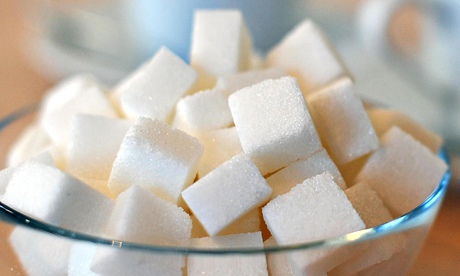
Sugar cubes

An grownup with a daily consumption of 2,000 calories need to consume only 25g of sugar, less than the 35g in a coke can, stated the WHO. Photograph: Nick Ansell/PA


Grownups in the Uk ought to aim to lower their sugar intake to 5% of every day calories if they can, in accordance to the Globe Wellness Organisation – less than the amount, for an common particular person, in a single can of Coca Cola.


In a new draft guideline, the WHO mentioned that all men and women, at each stage of lifestyle, ought to attempt to reduce the quantity of sugar they consume. It reiterated its 2003 guidance that countries should set an upper restrict of 10% of day-to-day calories from sugar – but explained the excellent reduction would be to 5%.


For an adult of regular bodyweight, with an intake of around 2,000 calories a day, 5% would equate to one hundred calories – which at 4 calories in a gram would be 25g of sugar, stated Dr Francesco Branca, the WHO’s director of nutrition for health and advancement. A regular 330ml can of cola consists of 35g of sugar.


Even at a 10% restrict, explained Branca, a can of sugar-sweetened drink “approaches the sum that is acceptable for an adult. For a little one, because a little one has a decrease vitality necessity, that could be a great deal significantly less. Consumption of a single serving of sugar-sweetened soda may truly exceed the limit of 10% of vitality [from sugar] for a child.”


Branca additional that soft drink consumption “is a single of the components that has been much more constantly associated with elevated bodyweight achieve, particularly in young children. This is an spot exactly where far more extreme action wants to be taken if this guideline is to be implemented.”


The WHO’s intervention is triggered by concern over the quickly spreading weight problems epidemic, as properly as tooth decay. There are specific anxieties about the huge consumption of sugar-sweetened drinks, this kind of as colas, lemonades and sports drinks, which give us “empty calories”, devoid of the nutrients located in some other meals.


“Right now, debate continues as to regardless of whether the available evidence of adverse health effects connected to totally free sugars intake warrants appreciable reduction in cost-free sugars intake,” says the WHO consultation document. “Consequently, it was deemed crucial to overview the existing evidence in a systematic method, and update WHO’s guidance on free of charge sugars consumption via the new WHO guideline development procedure.”


The WHO’s nutrition advice expert advisory group (NUGAG) has been mulling over the evidence for nearly two years and commissioned scientific reviews of the proof on the risks posed by “cost-free sugars” – those that are extra to our meals and drinks rather than the intrinsic sugars in fruit and vegetables – to our well being.


The evidence is clearest on dental caries, the document demonstrates. Studies display an enhance in tooth decay in kids who get more than ten% of their calories from sugar. But there was also proof that youngsters consuming much less sugar than that – under 10kg a yr, which is approximately 5% of their calorie consumption – also produced dental caries, although at reduce levels.


“Due to the fact dental caries are the outcome of lifelong exposure to the dietary danger aspect (ie sugars), even tiny reductions in danger of dental caries in childhood is of significance in later on daily life,” says the document.


The link with weight problems and ailments for which it is a danger element, this kind of as strokes, diabetes, heart illness and some cancers, is significantly less clear cut. Nevertheless, analyses of all the offered, nicely-carried out trials advised that individuals who lower down on sugar also managed to minimize their excess weight – and people who ate more sugar place on bodyweight.


Scientific studies also showed that young children who drank a lot of sugar-sweetened beverages, such as colas, were a lot more likely to be obese than individuals who seldom drank them.


The new guideline is most likely to be strongly opposed by the food and drink business and their supporters, who argue that no one particular food or kind of meals is a difficulty – all foods and drinks are fine in moderation, they say.


Grownups need to cut sugar intake to significantly less than a can of coke a day, says WHO