NHS trusts in England posted a deficit of £886m at the end of the third quarter, £300m more than the target for the end of this financial year.
NHS Improvement, which published the figures on Monday, is predicting a year-end deficit of between £750m and £850m, much higher than the £580m previously described as the highest figure the health service could afford without risking major financial problems.
NHS Providers, which represents trusts, said its members had suffered as a result of the extra cost of winter pressures and lost income from having to cancel planned operations to provide sufficient winter bed capacity. It also warned that as bad as the figures are, they have only be achieved through a series of one-off savings, unlikely to be repeatable.
Chris Hopson, the chief executive of NHS Providers, said: “Despite doing everything they possibly can, NHS trusts are £300m behind the target of reducing the provider sector deficit to £580m by the end of March. This is largely because of winter pressures.
“Trusts spent more than they planned and they lost income from cancelled operations – both were needed to create the extra bed capacity to meet record emergency winter demand. This shows the danger of planning with no margin for unexpected extra demand. We can’t expect to run NHS finances on wafer thin margins year after year and keep getting away with it.
He added: “We shouldn’t kid ourselves. The NHS’s underlying financial position is not sustainable.”
A survey by NHS Providers was also published on Monday. The poll completed by finance directors from 99 hospital, mental health, community and ambulance trusts – more than 40% of the NHS provider sector – found that two-thirds said they were only staying on track as a result of one-off savings that may not be achievable next year and beyond.
Those one-off savings totalled £340m but modelling by NHS Providers suggests they could amount to as much as £1bn across the sector.
Trusts that were behind target told NHS Providers that the two biggest drivers of their financial deterioration were caused by the 3.5% annual increases in A&E attendances and hospital admissions, when most had planned for 2% increases. The increases meant significant lost income from elective operations as trusts freed up bed capacity as well as extra, unplanned, spending on staff and more beds to cope with the record emergency demand.
NHS trusts in England have overshot their maximum deficit permissible for the financial year after just six months despite a £900m emergency cash injection from the government.
NHS Improvement (NHSI) said financial performance information from providers show they are on track to record a year-to-date deficit of £648m in the first half of the year.
The financial regulator described the figures, published on Friday, as “just £22m worse than planned” but they are some way off what health leaders have defined as an acceptable overspend for 2016-17, even by the most generous interpretation.
NHS England’s chief executive, Simon Stevens, and Jeremy Hunt, the health secretary, have pledged to ensure that trusts end the year no more than £250m in the red, while other NHS leaders have said the service can afford to record a figure of £580m without risking major financial problems.
Trusts are forecasting a deficit of £669m for the year, although that is after the £1.8bn sustainability and transformation funding, £900m of which was paid out in the first six months.
Sally Gainsbury, senior policy analyst at thinktank the Nuffield Trust, said: “More and more people need healthcare, yet the money available to provide it is tightly squeezed.
“NHSI’s report shows hospitals and other services are now forecasting a deficit of around £670m by the end of this financial year. That looks like a huge turnaround from last year’s deficit, yet is in fact flattered by the inclusion of an extra £1.8bn of emergency support pumped into the hospital sector, making the real forecast more like £2.5bn.”
NHSI said the deficit could be limited to £580m “if providers met their savings targets in full over the remaining half of the year”, but analysts and trusts expressed doubts.
The King’s Fund’s director of policy, Richard Murray, praised the trusts’ hard work on deficit reduction but warned “the second half of the year is likely to prove more challenging than the first”.
Anita Charlesworth, director of research and economics at the Health Foundation, said: “NHS trusts will have a mountain to climb if they are not to breach the end of year deficit target.”
Chris Hopson, chief executive of NHS Providers, which represents trusts, said its members were already “straining every sinew” to deliver savings.
“Significant risk remains as NHS trusts will have to increase their rate of savings in the third and fourth quarters to enable the sector to meet the target year-end position of a £580m deficit,” he said.
Hopson stressed that given the deficit reduction plan had been significantly aided by sustainability and transformation plan funding, action was needed in the medium and long term to address the “clear and widening gap between what’s being asked of the service and the funding available”.
NHSI lauded a second successive quarter in which fewer trusts reported a deficit against a backdrop of “unprecedented growth in demand”.
The chief executive, Jim Mackey, said: “No one should underestimate the challenge of turning around a very difficult financial position for the NHS. But, thanks to a phenomenal effort by staff across the NHS, we’re one-nil up at half time.”
Opposition politicians and NHS campaigners have expressed alarm after it emerged that health service bosses throughout England are drawing up plans for hospital closures, cutbacks and other radical changes to meet spiralling demand and close gaps in their finances.
An investigation by the Guardian and the campaign group 38 Degrees has revealed that the NHS at local level could be facing a financial shortfall of about £20bn by 2020-21 if no action is taken.
In an attempt to head off the crisis, NHS England has divided the country into 44 “footprint” areas, with each asked to submit a cost-cutting “sustainability and transformation plan” (STP).
The Guardian has seen the detailed plans for north-west London, while 38 Degrees, a crowdfunded campaign group, commissioned the consultancy Incisive Health to collate and analyse proposals from across the rest of England. Also collected are figures showing the projected financial deficits in 2020/21 that will have to be plugged by cost-saving reorganisations.
Projected deficits
The shadow health secretary, Diane Abbott, called the report “a damning indictment of this government’s underfunding and mismanagement of the NHS”.
She said: “It reinforces all the concerns highlighted by the recent NHS Providers report and the King’s Fund survey of trusts’ NHS finance directors. Emergency closures of vital units across the country testify to a real crisis.”
There are proposals in the Leicester, Leicestershire and Rutland region to reduce the number of acute hospitals from three to two. In the Black Country region of the West Midlands there is a proposed reduction of the number of acute units from five to four and closure of one of two district general hospitals.
More general plans include reducing the number of face-to-face meetings between doctors and patients in north-west London through the use of more “virtual consultations”, and a proposal to give patients coaching to help them manage their own conditions.
The Liberal Democrat health spokesman, Norman Lamb, said STPs made some sense in principle. He added: “However, it would be scandalous if the government simply hoped to use these plans as an excuse to cut services and starve the NHS of the funding it desperately needs.
“While it is important that the NHS becomes more efficient and sustainable for future generations, redesign of care models will only get us so far – and no experts believe the Conservative doctrine that an extra £8bn funding by 2020 will be anywhere near enough.”
However, Stephen Dalton, chief executive of the NHS Confederation, denied that the changes meant the NHS would “indiscriminately close services”.
He told BBC Radio 4’s Today programme that there had long been a reluctance by political leaders to address the NHS’s cumbersome organisation, and that local discussions were better than having a single plan for the whole country.
But Chris Hopson, chief executive of NHS Providers, which represents frontline NHS leaders, said a “glut” of hospital services could shut down.
He said: “Our members tell us that they are struggling to keep services open because of workforce shortages and they therefore face really difficult decisions about do you close down something either permanently or temporarily because you cannot staff it safely?”
NHS bosses were asking managers to identify “marginal acute services where you are trying to prop up what is really an unsustainable rota”, he said, adding: “So we would expect to see a bit of a glut of those kinds of decisions going forward because our guys have been specifically asked to identify them.”
Some of the proposals are likely to be given the go-ahead as soon as October, though consultation would then have to take place locally.
Last year’s Conservative manifesto pledged an extra £8bn a year for the NHS by the end of this parliament, as demanded by the NHS chief executive, Simon Stevens, in his 2014 “five-year forward view”. But Stevens made clear that was the minimum money needed, and radical reforms to the way healthcare was delivered would also be necessary to ensure the NHS stayed within its budgets.
A spokeswoman for NHS England said the health service needed to make major efficiencies. She said:“We need an NHS ready for the future, with no one falling between the cracks. To do this, local service leaders in every part of England are working together for the first time on shared plans to transform health and care in the communities they serve, and to agree how to spend increasing investment as the NHS expands over the next few years.
“It is hardly a secret that the NHS is looking to make major efficiencies and the best way of doing so is for local doctors, hospitals and councils to work together to decide the way forward in consultation with local communities.”
North-west London’s draft plan highlights risks to the implementation of the programme, including a failure to shift enough acute care out of hospitals, a possible collapse of the private care home market, and a failure to get people to take responsibility for their own health.
Two local authorities in north-west London, Hammersmith & Fulham and Ealing councils, have refused to sign up to the draft plans because of concerns about hospital closures. Officials claim that pressure was exerted on them to sign off an executive summary of the draft plans quickly without seeing the full document. NHS officials have denied this.
A spokeswoman for NHS North West London insisted the policies were based on evidence, saying: “There is a whole body of clinical evidence, research and best practice that clinicians are using to deliver better clinical care for patients.”
NHS bosses throughout England are quietly drawing up plans for hospital closures, cutbacks and radical changes to the way healthcare is delivered in an attempt to meet spiralling demand and plug the hole in their finances, an investigation by the Guardian and campaign group 38 Degrees has revealed.
Without the changes, the NHS at local level could be facing a financial shortfall of about £20bn by 2020-21 if no action is taken, the research suggests.
The cost-cutting shakeup is being overseen by NHS England, but is already sparking a series of local political battles over the future of services, and exposes the health secretary, Jeremy Hunt, to fresh criticism after his controversial role in the junior doctors dispute.
Last year’s Conservative manifesto pledged an extra £8bn a year for the NHS by the end of this parliament, as demanded by the NHS chief executive, Simon Stevens, in his 2014 “five-year forward view”. But Stevens made clear that was the minimum money needed, and radical reforms to the way healthcare is delivered would also be necessary to make the NHS hit its budgets.
NHS England has divided England into 44 “footprint” areas, and each was asked to submit a cost-cutting “sustainability and transformation plan” (STP).
The Guardian has seen the detailed plans for north-west London, while 38 Degrees, a crowdfunded campaign group, commissioned the consultancy Insight Health to collate and analyse proposals from across the rest of England.
The picture that emerges includes:
In the Leicester, Leicestershire and Rutland region, there are proposals to reduce the number of acute hospitals from three to two.
In the Black Country region of the West Midlands there are proposals to reduce the number of acute units from five to four and close one of two district general hospitals.
A reduction in the number of face-to-face meetings between doctors and patients in north-west London through the use of more “virtual consultations” and a proposal to give patients coaching to help them manage their own conditions without seeing a doctor.
Some of the proposals are likely to be given the go-ahead as soon as October, though consultation would then have to take place locally.
Health policy experts, doctors and campaigners say that the public are unaware of how significant the changes are going to be, and while some elements are likely to be welcomed, hospital closures tend to be highly unpopular among voters.
A spokesperson for NHS England said the health service needed to make major efficiencies:“We need an NHS ready for the future, with no one falling between the cracks. To do this, local service leaders in every part of England are working together for the first time on shared plans to transform health and care in the communities they serve, and to agree how to spend increasing investment as the NHS expands over the next few years.
“It is hardly a secret that the NHS is looking to make major efficiencies and the best way of doing so is for local doctors, hospitals and councils to work together to decide the way forward in consultation with local communities.”
North-west London’s draft plan highlights risks to the implementation of the programme, including a failure to shift enough acute care out of hospitals, a possible collapse of the private care home market, and a failure to get people to take responsibility for their own health.
Two local authorities in north-west London, Hammersmith and Fulham and Ealing councils, have refused to sign up to the draft plans because of concerns about hospital closures. Officials claim that pressure was exerted on them to sign off an executive summary of the draft plans quickly without seeing the full document. NHS officials have denied this.
A spokeswoman for NHS North West London insisted the policies were based on evidence, saying: “There is a whole body of clinical evidence, research and best practice that clinicians are using to deliver better clinical care for patients.”
Hugh Alderwick, senior policy adviser at the King’s Fund, said that while some elements of the plans were positive others were less so: “There are some concerns that NHS leaders have focused their efforts on plans for reconfiguring acute hospital services, despite evidence that major acute reconfigurations rarely save money and can sometimes fail to improve quality of care.”
Dr Eric Watts, consultant haematologist and chair of the campaigning group Doctors for the NHS, said: “We as an organisation welcome any plan that holds true to the founding principles of the NHS and gives our patients the fairest possible treatment. But from what we can already see, STPs do not bode well for the future health of the NHS itself. Plans to move services into the community have been given as a reason for reducing hospital beds for many years now but we see the beds being closed without increases in community provision.”
Steve Cowan, leader of Hammersmith and Fulham council said: “This is about closing hospitals and getting capital receipts. It’s a cynical rehash of earlier plans. It’s about the breaking up and selling off of the NHS. It will lead to a loss of vital services and will put lives at risk.” He added: “Our job is to protect the NHS and this plan is about dismantling it.”
Laura Townshend, of 38 Degrees, said: “This is new evidence that plans are being made to close local NHS services. We all rely on these services, yet we are being kept in the dark.
“These proposed cuts aren’t the fault of local NHS leaders. The health service is struggling to cope with growing black holes in NHS funding. These new revelations will be a test of Theresa May’s commitment to a fully-funded National Health Service.
A combination of growing demand, staff shortages and future slowdowns in funding increases mean the NHS is at breaking point despite a reduction in deficit compared with the same period last year, trusts have said.
The deficit in the first quarter of the financial year (April to June) was £461m, less than half the amount in the same period last year (£930m), but without emergency injections of cash it probably would have been little changed.
As well as a spending increase of 3.7% in real terms this year, trusts have been helped by the £1.8bn sustainability and transformation fund (STF), which contributed £450m to the results published on Thursday.
The funding increase is set to fall to 1.3% next year and 0.4% in 2018/19, and while demand is increasing at a rate of around 3% for many services.
Chris Hopson, the chief executive of NHS Providers, which represents trusts, said: “Our guys are saying to us we’re really struggling to make this work at the moment and we can’t see – we have only half made it work in a year of plenty – how can we do it in a year of 1.3% and 0.4% increases?
“Effectively they are coming under more and more pressure to deal with these demand increases without the money to employ staff, without the staff being available … We are now at breaking point.”
This month St Helens Clinical Commissioning Group (CCG) in Merseyside proposed a temporary ban on non-vital operations in an attempt to tackle funding problems. Hopson said more would follow.
The regulator NHS Improvement has asked hospitals to identify “marginal services”, often those led by one consultant, such as dermatology and rheumatology, which could be axed. But these cuts are unlikely to be enough and may just transfer demand – and cost – elsewhere.
Hopson said that unless funding was boosted, decisions would have to be made akin to those already made in other government departments: either cut workforce, change eligibility or stop providing certain services.
“Either put more money in or … we’ve got to make a conscious decision of what we’re going to deliver as a result,” he said. “We simply can’t go on doing everything we’re being asked to do.”
Polling by the King’s Fund, a health charity, released to coincide with the figures found that 38% of trusts were not confident of meeting the financial targets set by regulators for the end of the financial year. A third were unsure and the final third were “fairly confident”.
The charity’s director of policy, Richard Murray, said: “This is the year when the money still flowed. The growth in funding for the NHS in the next couple for years slows very sharply. What you want to do is finish this year in a good position; that’s not [what appears to be] happening here.”
There was also a suggestion that finance managers at trusts would have pulled out all the stops in the first quarter, using all available legal means to gain access to the STF.
Nuffield Trust’s senior policy analyst Sally Gainsbury said: “Access to the special £1.8bn fund which trusts desperately need to keep paying staff wages is tied to them reporting the ‘right’ figures at the end of each quarter. So although today’s results reflect a lot of hard work from managers and professionals, we should be ready for the possibility of a nasty surprise towards the end of the year.”
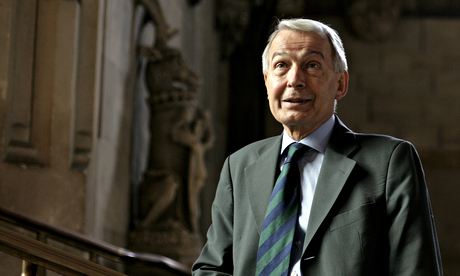
Frank Area is drawing up proposals that he says will assist to fill a looming £30bn a 12 months ‘black hole’ in NHS funding. Photograph: Martin Godwin for the Observer
A Tory minister has asked Labour MP Frank Field to meet the wellness secretary, Jeremy Hunt, to talk about his ideas for raising national insurance contributions to pay for the NHS, in a sign that the Conservatives are considering radical alternatives to plug the large funding gap.
Area told the Observer that he was approached by the minister, who explained the economic crisis in the NHS needed to be addressed and that he was right to be floating tips on how the service could be maintained and put on a sound monetary footing for potential generations.
Discipline informed the minister he would be willing to meet the health secretary, but not ahead of he had held talks with shadow chancellor Ed Balls about his proposals, which he did last Tuesday.
According to Discipline, the minister also said that the financial crisis in the NHS had been the subject of discussions at large ranges in government in recent weeks.
Discipline is drawing up proposals that he says will aid to fill a looming £30bn a 12 months “black hole” in NHS funding that will arise by 2020.
With no action, he says, a Labour or any other government would be faced with the prospect of having to make swingeing cuts across the other public providers, far deeper than envisaged so far, to maintain the NHS in anything at all like its existing form.
Field mentioned: “A Conservative minister approached me and mentioned they had been speaking about the NHS’s financial crisis and my concepts on how to deal with it inside the department.
“The minister stated it would be a very good concept to go along and talk to the wellness secretary about it and agreed that something had to be carried out.”
Some Conservatives now feel that drastic action wants to be taken on NHS funding, and regret that David Cameron has not proposed some kind of NHS tax to underpin his dedication to sustaining the present support free at the point of use. The chancellor, George Osborne, however, is identified to be strongly opposed to any move that would compromise a Tory standard election message based mostly close to the thought of decrease taxes, and is said to believe that radical alternatives can be delayed right up until the up coming parliament.
Latest figures, based on information from NHS England and the Nuffield Believe in and made by the Commons library, suggest that NHS costs alone will go from £95bn a yr now to far more than £130bn a 12 months by 2020.
As a end result, Discipline argues that a one% rise in nationwide insurance coverage, equivalent to that ordered by Gordon Brown to shell out for enhanced spending on the NHS in 2002, would be welcomed by the public if it was guaranteed that the cash would be invested especially on health and social care.
In his meeting with Balls, which he described as “extremely friendly and constructive”, Discipline explained that any rises in national insurance coverage on best of an first emergency improve, must be matched with an accompanying pledge to decrease income tax by the very same amount – which means that deep cuts would have to be created elsewhere.
The Observer revealed final month that Field’s concepts were getting fed into Labour’s policy review. Balls has been opposed to such a move, fearing it would leave Labour open to charges that it is returning to a high-tax agenda. At Tuesday’s meeting, Discipline explained how radical his proposals are – a progressive nationwide insurance base to raise revenue, to be matched by tax cuts.
Signs, nevertheless, that the Tories are interested in the Field prepare suggests they could be examining ways to outflank Labour, and depart it vulnerable on an concern regarded as one of its strongest.
Discipline stated the additional NI contributions need to go into a devoted fund that would be run as a mutual, with elected members negotiating every year’s level of contributions. “What we require is a new settlement for the NHS, an NHS mark two, that will reassure people that the most popular public support is protected for long term generations.” He is now concerned that unless of course Labour moves on the situation, the Tories will steal the thought. Area proposed the sale of council homes in 1979, only to see Margaret Thatcher take up the thought and flip it into one of her most emblematic policies.
Labour is presently committed to combining the budgets for wellness and social care but the party’s public place as a result far has been that it will not appear at a certain NHS tax.
Shadow wellness secretary Andy Burnham is wary of rising NI in a way that would mean younger men and women in function possessing to pay out the care charges of these previously of pensionable age.
He favours other options, which includes a prepare floated by Labour before the last election for a levy of 10% to 15% on people’s estates soon after death to pay out care costs. To tackle Burnham’s issues, Discipline proposes that people now over pension age would be asked to carry on to pay NI, if they wished cost-free care. Otherwise, they would have to pay below the present method.
NHS England should adhere to the example of Apple’s app store in making an environment that permits co-creation. Photograph: Robert Galbraith /REUTERS
In an article for the New Yorker, surgeon Atul Gawande recounts how the discovery of anaesthesia by Boston surgeon Henry Jacob Bigelow in 1846 revolutionised clinical practice. By the summer time of the following 12 months, Bigelow’s method had been employed in most components of the globe.
This may possibly not appear surprising, soon after all anaesthesia rendered surgery a excellent deal significantly less horrifying for sufferers and doctors alike. But contrast this with Joseph Lister’s publication of the antiseptic effects of carbolic acid in 1867. Although sepsis was the single most significant killer of surgical individuals, it took an additional generation ahead of Lister’s findings grew to become frequent practice.
Gawande’s point is that innovation is not just about new tips, it is also about how and why concepts spread. There are related stories in every business. Why have DVDs spread across the world but Blu-ray by no means truly caught on? But in healthcare, the stakes are large, due to the fact the speedy adoption of new therapies, medicines or technologies can save or improve a great number of lives.
A year on from Robert Francis’s report on the scandal at Mid Staffordshire, we are far more conscious than ever of our duty to offer high-top quality and compassionate care to every person who needs it – no matter what the other pressures. Contemplating elements this kind of as the unprecedented fiscal difficulties and the epidemic of chronic disease , it is tough to see how the NHS can remain sustainable with no altering radically.
This is why a recent report published by the innovation charity Nesta makes this kind of interesting studying. Nesta’s research focuses on the diffusion of distinct innovations among GP practices – for instance, the uptake of new medication and IT innovations.
For these of us anxious about the long-phrase sustainability of the wellness support, the spread of person technologies or medicines may seem less crucial than basic improvements in how healthcare is delivered. Nevertheless, Nesta’s work yields 3 insights into how the NHS demands to adjust.
The first is that the NHS suffers from an innovation deficit. Of the eight,563 GP practices analysed in the research, the majority did not prescribe the 5 Good advisable drugs Nesta tracked between 2010 and 2012. Similarly, the report finds that although nearly all of the surgeries’ IT programs could give appointment booking on the internet, only 36% do so in practice.
Second, the adoption of innovation is a social procedure. Some 86% of GPs reported that they recognize innovations by speaking to other doctors – by far the most crucial supply. What the neighbours are undertaking also had the strongest influence on uptake of the new medicines Nesta studied. GPs had been 32% more most likely to adopt the new medication if 4 of their ten nearest neighbours have been prescribing them.
The third insight is that scale matters. More substantial practices tended to adopt the five new medicines earlier, and single GP practices have been much less likely to be early adopters.
What do these insights suggest for wellness policy? To start with, they undermine the assumption that innovations self-disseminate, or that central advice is the only or ideal way to inspire them. Nesta’s work displays that informal networks may have a more potent result than Good recommendations. Certainly, a number of practices had been prescribing the progressive medication prior to Nice formally suggested them. This suggests we ought to invest in networks and discover how to accelerate their metabolic process.
This approach is akin to what’s known as a “platform strategy” in other industries. A nicely-known instance is Apple’s App Store, which supplies other individuals with the surroundings to create items and providers, and to co-create value. In a related trend, national bodies like NHS England need to emphasis on making the setting, infrastructure and incentives to allow providers and sufferers to co-generate better ways of delivering care.
Nesta’s perform also has likely implications for the shape of healthcare suppliers. If innovation calls for a minimal infrastructure, then this is nevertheless a lot more proof that healthcare – main care in certain – need to no longer revel in being “the world’s greatest cottage market”, to quote incoming NHS England chief executive Simon Stevens.
This is why NHS England has indicated it will move in direction of commissioning primary care offered at scale. Many hospital teams have to also challenge themselves to embrace the scale and infrastructure to innovate.
For organisations like mine, enabling the rapid diffusion of much better methods of delivering overall health and care demands to be element of the day work. Performing so will involve a adjust of mindset, away from the paradigm of operating a single organisation and towards fostering an open, adaptive and productive sector, capable of increasing to the problems of the potential.
Michael Macdonnell is head of method at NHS England and honorary fellow at the Institute of Global Overall health Innovation, Imperial University London
This report is published by Guardian Expert. Join the Healthcare Professionals Network to acquire regular emails and exclusive gives