colleagues etiketine sahip kayıtlar gösteriliyor. Tüm kayıtları göster

17 Kasım 2016 Perşembe

My colleague"s suicide showed how vulnerable medical professionals can be

I stood in front of the ambulance bay door. My badge clutched in my hand, knuckles white, jaw clenched. I questioned my attempt at returning to work on this day. I stood in front of the doors grappling with a burning feeling in the pit of my stomach. I knew then, right there, that my career in the emergency department was over.


A quiet swollen presence of pain ran down every corridor. The night before, we lost a colleague to suicide. Some of us found the body. Some of us carried out the post mortem care. Some of us stood there as family filed in to the room. Some of us made the calls alerting fellow staff. Some of us, all of us, changed forever that night.


For some vocations, a bad day at the office means: “I dropped a carton of eggs” or “I broke the copier”. Some are more serious of course: “I really messed up a haircut” and the infamous “I crashed the company car”. In medicine, however, a bad day usually means, “We lost a toddler”; “A young family lost their baby”; “She will never walk again”; and “Time of death …”. The list could go on and on; the point is, the magnitude at which we affect the world of each individual person in healthcare is far different than most jobs. We take on the world, we attempt heroic measures, forgetting, we are indeed, so very human.


We study for years, sometimes decades, focusing our skill, perfecting it, to heal, to save, and to comfort. The team we do all these things with becomes a sort of family. You are all present on the worst days together. You share the sorrow, the shock, and the deep regret that everything you have dedicated your life to studying has failed you. You failed together. You failed in the worst way, but you have one another. You can share that dark humour, the memory of this fleeting moment. You can share together the memory of watching the doctor whisper something comforting, or that nurse hold the deceased family member’s hand. Each of you knows what it feels like, to pronounce a patient dead in one room, and in the very next room, moments later, help a three year old change into a hospital gown so that they can be evaluated thoroughly. You do all this with a smile on your face, never for a second letting on that in the next room, a tragedy they can’t imagine has just unfolded.


Eventually, it eats little holes in your soul. Sometimes there are nightmares, other times you stand in a quiet trauma room and feel the presence of every lost soul standing behind you as you scrub down a stretcher. Bigger and bigger it creeps, into you, never though are you afforded the right to go and lament to your friends over drinks, or weep at your place of worship. Never can you post on public media and share your sorrow. Never can you truly convey what it feels like to have dedicated your life to becoming an expert, but when you have a bad day, someone dies. You cannot ever make someone, who isn’t sunken knee deep into the profession, understand what that means.


The kinship you establish with those with whom you share this camaraderie cannot be duplicated. They are a family that knows all your secrets of trauma and sorrow. There is something indescribably comforting in having these people know you at your worst moments, exhausted, angry, and sad.


The secrets within the hospital walls bonding us together are the same web, that when one of us succumbs to the beast of depression, is torn apart forever. None of us knows what cost our colleague and dear friend their life, it was never made clear. But our family, if you will, was severed to the core, doing the thing we did well together, without them, to them.


I still practise, in a different forum. I think of emergency department life every day. Now I realise how human each of us really is, there are no superheroes among us. Now when my team is becoming saturated, I actively seek out ways to alleviate that pressure, for myself, and for my team. On good days someone gets to live another day, but this doesn’t make the really bad days any easier.


  • In the UK, the Samaritans can be contacted on 116 123. In the US, the National Suicide Prevention Hotline is 1-800-273-8255. In Australia, the crisis support service Lifeline is on 13 11 14. Hotlines in other countries can be found here. If you would like to contribute to our Blood, sweat and tears series which is about memorable moments in a healthcare career, please read our guidelines and get in touch by emailing sarah.johnson@theguardian.com. If you’re a healthcare professional affected by the issues raised in this article, help and support is available from Support 4 Doctors.

Join the Healthcare Professionals Network to read more pieces like this. And follow us on Twitter (@GdnHealthcare) to keep up with the latest healthcare news and views.


My colleague"s suicide showed how vulnerable medical professionals can be

2 Eylül 2016 Cuma

Senior colleagues condemn junior doctors" plan for five-day strikes

Senior doctors have voiced strong opposition to the series of five-day strikes planned by their junior colleagues, warning that the action will cause real problems for patients, the service and the profession.


In a surprise statement on Thursday evening, the Academy of Medical Royal Colleges – which brings together doctors’ professional bodies – distanced itself from the doctors’ union, the British Medical Association, which has called the strike. The academy was “disappointed at the prospect of further sustained industrial action by junior doctors”, it said in a statement after several agonised hours of deliberation.


“We are acutely aware that the NHS is under extreme pressure at the moment,” it said. “Patient safety and quality of care must be the priority. We know there are genuine concerns about the contract and working arrangements but we do not consider the proposed strikes are proportionate.


“Five days of strike action, particularly at such short notice, will cause real problems for patients, the service and the profession.”


On Wednesday it was announced that junior doctors will go on strike from 12 to 16 September – the longest period of action yet announced by doctors in their protracted dispute over terms and conditions that the health secretary, Jeremy Hunt, would like to introduce. On Thursday the BMA announced additional dates for proposed walkouts, on 5, 6, 7, 10 and 11 October, 14-18 November and 5-9 December


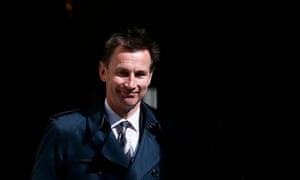
Health secretary Jeremy Hunt


Junior doctors have long been in dispute with health secretary Jeremy Hunt over conditions of a proposed contract. Photograph: Stefan Wermuth/Reuters

However the BMA is split over whether to support the five-day strikes called by junior doctors, with many of its senior members considering the action unethical and fearful that patients will be harmed.


At a special meeting of the ruling council of the BMA on Wednesday some experts argued that the action was unethical because of the risk to patient safety, the Guardian has learned.


Such was the importance of the meeting that some council members changed their holiday plans to be there. Following a highly charged discussion, the BMA council voted by 16 to 12 to support the junior doctors’ industrial action.


The opposition of senior doctors raises questions over whether the industrial action can go ahead as planned. The opposition of the royal colleges may persuade some junior doctors not to take part and they may also lose the support of some senior doctors who were expected to cover for them during the strikes.


The Patients Association’s chief executive, Katherine Murphy, said the organisation was “gravely troubled” at the “catastrophic impact this will have on so many patients and their families” as winter approaches. “Many patients may be very unwell or vulnerable and so we cannot predict the distress or pain this will cause to everyone this will affect,” added Murphy.


Katherine Murphy


Katherine Murphy, chief executive of the Patients Association, said the organisation was concerned about the impact of the strikes, especially during winter. Photograph: Martin Argles for the Guardian

Earlier in the day Hunt said in a series of broadcast interviews that junior doctors would be inflicting “the worst doctors’ strike in NHS history”. The minister told Sky News: “Patients will be asking why it is that the BMA, who only in May said ‘this deal is a good deal for doctors, a good deal for patients, it’s good for the NHS, it’s good for equality’ are now saying it is such a bad deal that they want to inflict the worst doctors’ strike in NHS history.”


Theresa May, accused the BMA of playing politics, reiterating her confidence in Hunt during a visit to the Jaguar Land Rover assembly plant in Solihull.


“Jeremy has been an excellent health secretary, he is an excellent health secretary and this deal is about a deal that is safe for patients and I think it’s crucial if you look at what we’re doing as a government with the NHS,” the prime minister said. “We’ve got record levels of funding into the NHS, we’ve got more doctors now in the NHS than we’ve seen in its history and this is a deal that is safe for patients.


“The government is putting patients first, the BMA should be putting patients first – not playing politics.”


Most senior doctors condemn Hunt for his continuing threat to impose a contract on them that they say does not recompense them for Saturday shifts and will jeopardise patient safety, because of the excessive hours they will be asked to work.


Earlier in the day, the president of the Royal College of Physicians of Edinburgh, which has members across the UK, called on the government to negotiate but made it plain he opposed the strikes. “The safety of our patients and the wider NHS workforce remains paramount and this long-running dispute benefits no one,” said Prof Derek Bell.


“We are concerned that the industrial action proposed will have a significant impact for patients and all healthcare professionals in the NHS. The timing of the proposed industrial action – so soon after the August changeover with many junior doctors new in post and heading towards the winter months – and the sustained nature of the action will heap pressure on a health system that is already struggling to deal with existing pressures and rota gaps. The proposed notice will also make it extremely difficult for hospitals to arrange cover. We hope that this action can be avoided.”


Dr Mark Porter, chair of the BMA council, said the decision to announce five consecutive days of strike from 12 September was taken after “long and difficult debates”. He said Hunt had left junior doctors with no alternative but to strike again. “The reason the strikes have been announced is the continued reluctance of the secretary of state for health to do anything other than impose a new contract on junior doctors, a contract in which junior doctors have demonstrated repeatedly that they do not have confidence.”


Opinion among doctors who responded to a Guardian call for comment was very divided, with some saying the strike action does not go far enough but others against it, even though they support the junior doctors’ cause. “It is the Department of Health, not us, [which is] endangering patient care by trying to impose an unsafe contract that is also unfair. I’m hopeful that the public understands this – I became a doctor to care for people and it is in the interests of protecting my ability to do so that I’m going to be going back out on strike,” said a 32-year-old anaesthetist.


But a 28-year-old junior emergency medicine doctor said: “Appalling. I’m shocked that the new leadership of the BMA is taking such a damaging step. I can see why they may want to strike – and I’d be OK with a one day walk out – but this is insane.”


There is likely to be close scrutiny of the turnout for the first strike, which begins on 12 September. The last walkout, which was the first full withdrawal of labour, saw 78% of junior doctors fail to report for duty on 27 April, although this would have included some absent for other reasons such as illness.


That was down on the previous strike for the period of 6 to 8 April when emergency care was provided while 88% were on strike, according to NHS England.


There was also a drop in public backing for the action as a result of the full withdrawal of labour, according to an Ipsos Mori survey for BBC News. It found 57% of adults supported the strike at the end of April compared with 65% the previous month. The proportion who blamed both sides for the dispute was also up.


The action on 26 and 27 April saw around 13,000 operations and 113,000 outpatient appointments cancelled. Extrapolating those figures over five days and then multiplying by four to account for the strikes planned each month until the end of the year, the Department of Health is predicting that up to 125,000 operations and over 1 million outpatient appointments could be cancelled as a consequence of the latest wave of walkouts.


This article was amended on 2 September 2016. Professor Derek Bell is president of the Royal College of Physicians of Edinburgh, not the Royal College of Surgeons of Edinburgh as a previous version stated.


Senior colleagues condemn junior doctors" plan for five-day strikes

30 Ağustos 2016 Salı

GP labelled hypochondriac criticises colleagues after dying from cancer

A GP who died from a rare form of kidney cancer has warned of the difficulties doctors face in getting treatment for themselves, in an emotional blog published posthumously.


Dr Lisa Steen described her anger at colleagues for failing to go the extra mile to help identify the disease and for dismissing her as a hypochondriac, in the essay published on BMJ.com.


The 43-year-old mother-of-two from Cambridge wrote of spending “two years wandering in the wilderness of the medically unexplained” before finally being diagnosed in July 2014, by which time the cancer had spread to her bones. She died in February.


She wrote: “I do not know how long I’ll live. It probably won’t be for many weeks. But right now I am glad to be alive. I am grateful for the expensive drug which is holding back the cancer.


“I am angry at being left in the medically unexplained wilderness and I did not like the way my colleagues looked at me, when they believed me to have health anxiety.”


Steen said hers was a cautionary tale for all health professionals who get ill, and for doctors treating other health professionals.


Affected by myriad symptoms, she eventually attended her GP in August 2012. Various tests failed to lead to a diagnosis and her condition was put down to health anxiety.


Steen, who was a GP for the drug and alcohol service Inclusion, wrote of her frustration at trying to describe her symptoms to doctors, and trying to diagnose herself.


She tried to explain that the symptoms might be connected to a benign carotid body tumour she had had when she was younger.


Her attempts to get investigatory tests and treatment were thwarted, she said, because of a “fear of looking even more ‘anxious’ or suffering from ‘health anxiety’, aka a hypochondriac”.


Eventually, embarrassed by being off work with no diagnosis, she returned to work. “I still knew there was something wrong, but it seemed fruitless going to see specialists. It was so humiliating, feeling like a goldfish with no voice. Watching doctors’ faces glaze over at the multitude of symptoms. Trying to fit it all in with work and looking after my family.”


After two years and prompted by weight loss, a routine ultrasound revealed a mass.


Steen wrote: “If any one of the doctors I saw had gone another mile, they would’ve stumbled upon it.”


But, she said: “they were reluctant to lay their hands on and examine a fellow medic”. And on her part, she said: “I was too embarrassed about my ‘psychiatric’ condition, too confused by not having the whole answer ready.”


She added: “My story is a cautionary tale to all of us health professionals when we get ill. Illness is somehow not the done thing. It upsets our ‘them/us’ belief system, which helps us cope with the horror of what we see.


“Mine is a cautionary tale to those treating health professionals, and those of us who are unwell – doctors do get ill, they don’t always know what is wrong with themselves. Give them a class A service because it is actually harder getting treated as a doctor than a layperson.”


Her husband, Raymond Brown, told the Telegraph: “They didn’t seem to be taking her too seriously, particularly because she had been diagnosed with health anxiety, she was being looked at as a hypochondriac.”


He added: “She just wants doctors to be aware when they are treating doctors to give them really good treatment and they have to be aware they are a patient and they don’t know everything. They need to be treated like a patient, not like a doctor.”


GP labelled hypochondriac criticises colleagues after dying from cancer