Stage etiketine sahip kayıtlar gösteriliyor. Tüm kayıtları göster

31 Ağustos 2016 Çarşamba

Junior doctors to stage five consecutive days of strikes in September

The British Medical Association has announced a new wave of strikes by junior doctors in England this month – the first since its members rejected the government’s final offer on their new contract.


Junior doctors are to stage five days of strikes with “full withdrawal of labour” between 12 and 16 September, the British Medical Association has announced.


There will be a full withdrawal of labour, including junior doctors working in emergency departments, between 8am and 5pm on the days in question.


The industrial action will further test the NHS, already said by trusts to be at breaking point due to increasing demand for services, staff shortages, and insufficient funding.


There have been five previous walkouts in the dispute, all this year. The longest lasted for two consecutive days, and the first all-out strike – including junior doctors working in emergency departments – was held in April. More than 100,000 operations and outpatient appointments have been cancelled as a result of industrial action to date.


In May a compromise deal was agreed between the BMA and Jeremy Hunt, the health secretary, but last month members of the doctors’ union voted against accepting it by a margin of 58% to 42%. As a result, Hunt is pushing forward with plans to impose the contract on junior doctors – those below the level of consultant – in October.


About 37,000 BMA members, or 68% of the 54,000 trainee doctors and final- and penultimate-year medical students who were eligible to vote, took part in the ballot on the settlement.


Dr Johann Malawana, then chair of the BMA’s junior doctors committee, had recommended the revised terms and conditions as the best deal junior doctors could get, but resigned after the ballot results were announced, and was replaced by Ellen McCourt.


The Department of Health accused the BMA of putting confrontation before cooperation in order to score political points. A spokesman said: “As doctors’ representatives, the BMA should be putting patients first not playing politics in a way that will be immensely damaging for vulnerable patients. What’s more, the BMA must be the first union in history to call for strike action against a deal they themselves negotiated and said was a good one.


“Whilst there are many pressures on the frontline, funding is at record levels, with the highest number of doctors employed in the history of the NHS. Co-operation not confrontation is the way forward to make sure patients get the best treatment and the NHS is there for people whenever they need it.”


Junior doctors to stage five consecutive days of strikes in September

12 Ağustos 2016 Cuma

Non-Hodgkins Lymphoma, Stage 4 — How One Young Woman Reversed It in 4 Months

Stage 4 Non-Hodgkins lymphoma is not supposed to be this simple to reverse, is it? We make no claims, we’re just reporting what happened, which was confirmed by a family member.


What is shocking is that Non-Hodgkins lymphoma usually only appears in those in their 60s or older. This case occurred in a 34 year old mother of three.


Stage 4 is a designation for a cancer that has metastasized, in this case to all of her lymph nodes, and beyond to an organ or two.


In doing some research on non-Hodgkins lymphoma, we find that immune-suppressive drugs appear first on the list of causes. Did she use them? No, she didn’t (although her chemo drug (Rituxan), interestingly, has an immune-suppressive effect). Why, one wonders, would an immune-suppressive effect be useful in treating a cancer of the immune system?


The Mayo Clinic Website tells us that prior infections with HIV and Epstein-Barr are risk factors, as well as the bacteria Heliobacter pylori, which is often thought to be the cause of ulcers. (These were not a factor in this woman’s case.)


Pesticides and herbicides are believed to play a role in causing Non-Hodgkins lymphoma. Toxic chemicals are poisons and shouldn’t cause any surprise when they are linked to the causation of a cancer of our lymphatic system which is a partner with our immune system that protects and detoxifies poisons we come in contact with.


So, we know what we need to avoid, but — once we get Stage 4 Non-Hodgkins Lymphoma — how might we get rid of it, in a natural way?


Here’s what one woman did:


She did some research on the Internet and talked to a friend who had successfully beat his own cancer.


She stopped the chemo treatments after her second session. 


She started a mostly Raw Organic-Only Diet.


Here’s the regimen she used:


“No dairy, no gluten, no eggs, NO Sugar!


Waiting in between meals — no food combining!


1tbs of apple cider vinegar (with the “mother”) twice throughout day


Wake up to 1 ounce of wheatgrass juice followed by raw vegetable juice of choice — either greens, carrots, or beets.


To each juice I added lemons, ginger, turmeric root, and lots more.


2 hours later I’d have Ezekiel bread with avocado, tomatoes, and whatever other veggies you like.


3 hours later I’d blend the juice of  young Thai coconut with the meat and add whichever fruits I like. My favorite combo is bananas, dates, cinnamon, almonds, flax powder.


These are the supplements I took: probiotics, Vitamin D,  Multi-vitamins, Curcumin (tumeric capsules).


2 to 3 hours later you can have a huge salad of your choice. Then again, 2 hours later, another fresh raw juice — at least 18 ounce or more.


For snacks in between you can eat all kinds of nuts or fruits.


You can make fruits a meal as well.”


Here are some more useful tips this cancer survivor offered, which are good health tips we’ve seen elsewhere…


“No eating 3 hours prior to bed.


You can drink teas with dates if you feel like having something sweet but, No sugars!!!


Ezekiel bread has gluten but I was allowed because it’s mostly grains.


4-6 months of this program is completely raw, depending on each case


Then you can eat cooked foods every other day, such as organic brown rice, quinoa, salmon, soups, brown rice pasta etc… “


After four months of nothing but this diet, there was no sign of the cancer.”


It should also be noted that things happen for a reason and warnings from our body usually precede them, if we are listening. Out of our billions of cells, many are being replaced every moment of the day and night. Some of these might mutate and begin to develop into a cancer tumor. This is usually in response to the presence of some level of toxins in our body or some other stressor.


Fortunately, our body has natural systems to attack and destroy mutated cells before they begin to cause us trouble. Naturopathic doctors tell us that, if we supply our immune system the nutrients it needs to do this important work, it is quite capable of doing the job. The problem is, they say, that our modern food and eating habits are not supplying ALL the nutrients our body is known to need on a daily basis.


As I understand it, when our body reaches its limit of toxicity and stress, cancer begins to take over. The process used here to apparently reverse it is to remove as much of the toxicity that our food choices may be causing and give our cells super nutrients in mega-doses, in a raw, organic form, together with high-ORAC spices like turmeric — and some supplements, for good measure.


Imagine how you would feel if you ate this way all the time!


Author Paul Kemp successfully resisted being pushed into becoming a doctor, but instead has made the study of how to live a long, healthy life without intrusive medical interventions a primary goal. At age 67, he is winning and loving it!


Non-Hodgkins Lymphoma, Stage 4 — How One Young Woman Reversed It in 4 Months

26 Haziran 2014 Perşembe

Complete siblings are far more violent to every other than half or stage siblings, review finds


Half and unrelated siblings, this kind of as step, fostered or adopted siblings, used significantly less violence with much less severity, it was uncovered.


In households created up of each blood-connected and unrelated siblings, people surveyed used much more violence in the direction of their relevant – total and half – brothers and sisters, even employing weapons such as heavy objects and knives, the research by Dr Roxanne Khan, Dr Vanlal Thanzami and Jennifer Bowling from University of Central Lancashire concluded.


“This research centered on the ‘Cinderella Effect’ that, according to evolutionary theories, suggests that stepchildren are far more most likely to encounter neglect or abuse than these related by blood. We wished to check out no matter whether this was the case amongst complete, half and unrelated siblings,” Dr Khan mentioned.


“Contrary to what we anticipated, this research did not help the ‘Cinderella Effect’ taking place within siblinghood.


“Sibling relationships are very complex so we assume a variety of other aspects could have influenced our outcomes.


“It could be the case that full siblings count on much less retaliation for using violence towards their blood brothers and sisters, in contrast to the uncertain revenge of half or unrelated siblings, and this could make clear the friction.”


The group asked to 315 brothers and sisters, aged 16 to fifty five, how they fought with their siblings and about the severity of the violence.


Participants supplied data about 456 complete siblings, 123 half siblings and 39 unrelated siblings.


The findings will be presented at the British Psychological Society Division of the Forensic Psychology annual conference in Glasgow on Friday, June 27.


Complete siblings are far more violent to every other than half or stage siblings, review finds

25 Haziran 2014 Çarşamba

Why Some Athletes Bite: Luis Suarez Takes Center Stage

As word spread about Uruguay’s Luis Suarez biting the shoulder of Italy’s Giorgio Chiellini yesterday for the duration of a Planet Cup match, supporters have been surely caught off guard.  However, as shocking and disgusting as this behavior was, this became the third episode in four years that Suarez has been accused of biting one more athlete.


Biting in sports activities is certainly not common–we can don’t forget Mike Tyson biting off a chunk of Evander Holyfeld’s ear in 1997–but it reminds us of the animalistic actions that sports activities competition can ilicit in specific men and women who are susceptible to aggression.


Whilst most achieved and elite athletes have the capability to management their emotions in frustrating situations and practice impulse handle, some athletes unfortunately resort to such actions in these substantial-pressure, large-stakes competitions.


images


Harnessing sheer anger and disappointment in a constructive way is how most athletes can carry their game to a new level.  Intense, substantial level competitions this kind of as the Planet Cup and other sporting occasions that convene periodically such as the Olympics create this kind of heights of emotional anxiety that people athletes who are susceptible to aggression-this kind of as Suarez-plainly have problems channeling their anger in this kind of conditions.


Eventually, humans biting other people reminds us of our ancestral connection with primates–and how though evolution and improvement of organized cultures and societal norms–such behavior became unacceptable.


Unknown


Health-related Implications of Human Bites


Our mouths are host to almost 200 species of bacteria, and so the concern for building a bacterial infection right after a bite is a genuine concern.  Staphylococcus and Streptococcus are commonly accountable for infections as properly as other so-called anaerobic bacteria which thrive in reduced oxygen problems.  A notably concerning anerobic bacteria in human bites is Eikenella corrodens, which can lead to persistent infection as effectively as abscesses. The significance of thorough wound cleaning, irrigation and debridement is critical to prevent a wound infection. Tetanus immunization need to be up to date as properly.


If the obvious bite is much more consistent with an abrasion–with no violation of the epidermis or any broken skin—prophylactic antibiotics are not vital assuming the damage does not involve the joints, hands or feet or any  framework containing cartilage.  (the ear). Regional Local wound care with a lot of soap and warm water and  antibacterial ointment will suffice.


Specific types of bites are higher risk and prophylactic antibiotics are recommended. These contain bites to the hand as well as those that break by means of the superficial layer of skin–known as the epidermis– along with bites that involve joints and structures which contain cartilage.   All Bites to the hand are at large chance for infection and ought to be offered antibiotic prophylaxis. The importance of neighborhood wound care in these circumstances is paramount and a health-related expert must be consulted in these situations.


It is possible to transmit both Hepatitis B and C, as well as Syphilis and TB via human bites.  In uncommon cases, it is also attainable to transmit tetanus as nicely.   And, even though it is not frequent, studies and situation reviews have documented transmission of HIV by means of human bites.


Although the HIV virus is contained in the saliva of these impacted by the disease, it is existing at significantly decrease amounts in contrast to the blood stream.  In addition, there are actually distinct inhibitors in the saliva that make the virus non-transmissible or ineffective in the majority of situations. Therefore, the danger of transmission of HIV by means of human bites is really low.


Why Some Athletes Bite: Luis Suarez Takes Center Stage

8 Nisan 2014 Salı

This May Hurt a Bit: diagnosing the NHS on stage

This May Hurt a Bit

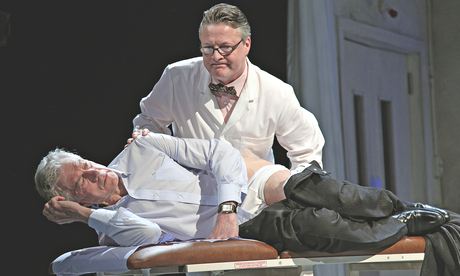
Comedy in a time of crisis … This Could Hurt a Bit. Photograph: John Haynes


The 12th of July has often produced a feeling of dread in me. I grew up in Ulster, in the seaside town of Bundoran near the border, and I even now remember the influx of holidaymakers we would have on that date – all in search of to escape the north on the biggest marching day of the yr, and the violence it could set off.


  1. This Could Hurt a Bit

  2. Traverse,

  3. Edinburgh


  1. Starts 8 April

  2. Right up until twelve April


  3. Box workplace:
    0131-228 1404

  4. Tour particulars


In 2006, the 12th fell on a Wednesday and marked the beginning of a heatwave in London, exactly where I now dwell. It was also the day my husband, the theatre director Max Stafford-Clark, had a stroke that would change each of our lives for ever. I nonetheless shudder when I recall the knock on the door that evening.


Max had rung me at 6 to say he was on his way house. By seven, there was nevertheless no signal. Half an hour later on, I opened the door to a paralysed and gabbling Max, supported by 4 concerned neighbours who had located him collapsed in the lengthy corridor foremost to our Holloway flat. I mentioned: “Max, you’ve had a stroke. I am calling an ambulance.” He was coherent ample to beg me not to, but was too poorly to take critically. I was all of a sudden overwhelmed by the distinct likelihood that he wouldn’t make it.


My neighbour Justine named 999, whilst I told him I loved him and tried not to fall apart. Despite repeated calls to the ambulance services, it took more than an hour for them to arrive. When I asked the paramedics what had taken them so extended, they mentioned they had ”just acquired the get in touch with”. I discovered out later this possibly meant Max’s case was deprioritised as a lot more urgent calls came by means of.


Ben, the junior physician on call that evening, advised me he wasn’t confident what physical and psychological capacities Max would be left with – if he survived. One of the paramedics held my hand and explained: “Love, you’re going into shock – and you do not want to end up in hospital when you want to be with Max.” I pulled myself collectively, and so started our journey into the subterranean planet of the seriously unwell.


At midnight, Max was moved from A&ampE to a standard ward that was a vision of purgatory. The cries of “nurse, nurse” went on all through the night. I quickly identified that this persistent entreaty was the song of the ward. The young porter, who up coming morning pushed Max’s bed to the stroke/geriatric ward, mentioned: “So who did he utilised to be?” After six months in hospital, Max returned residence somewhat much better, but disabled and partially blind. Above the previous eight many years, we have met and continue to meet incredible and committed NHS workers. We are deeply grateful for their care and focus.


In 2006, the total state of the NHS had been strengthening, but I was aware of the pressures on some of the hospitals we frequented: a lack of workers tools currently being ancient, broken or each cleanliness on wards leaving one thing to be sought after. The services clearly needed support and consistency – not one more destabilising reorganisation.


This Might Hurt a Bit, my touring play about the NHS, not too long ago opened at the Octagon in Bolton. It arrives at a time when the NHS is dealing with its biggest crisis – the coalition government. I was astonished when they pushed through damaging and unpopular reforms without an electoral mandate following promising, till they had been blue in the encounter, “No more leading-down reorganisation” – therefore producing a reorganisation so vast that, as former NHS chief David Nicholson stated, “It could be seen from outer room.”


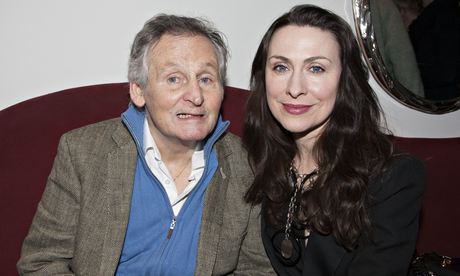
Max Stafford-Clark and Stella Feehily last year Max Stafford-Clark and Stella Feehily final 12 months. Photograph: Dan Wooller/REX


This Could Hurt a Bit is not a play about Max’s time in hospital, even though the truth that we use the NHS frequently does give us insight into what individuals encounter. Early drafts of the play reflected this individual element, but they were soon superseded – right after I interviewed medical professionals, nurses, managers, porters, campaigners and academics, studied materials about healthcare markets and PFIs, and study about the shenanigans of the Conservative, New Labour and coalition governments, who have all experimented with, in their own way, to promote off the greatest remaining public institution in the world.


The play is a comedy drama about a politically divided family members who are drawn with each other when Iris, the 91-12 months-old matriarch, is rushed to her nearby, overstretched hospital with a disturbing neurological dilemma. But it also seems at the wellness and social care bill of 2013 and the harm it brought on. Though This Might Harm a Bit is a political play (since it truly is unattainable to publish about the NHS in any other way), it also depicts the humanity of the institution, and how we require it when we are at our most vulnerable and desperate. The identical medical professionals care for us regardless of whether we are millionaires or penniless – an extraordinary act of social solidarity.


I do not present a ideal NHS due to the fact, as has been nicely-documented, it can offer an uneven services and has allow some folks down terribly. But in spite of the drip-drip of undesirable information, the NHS is not broken, as the coalition would have us feel. In fact, it is a miracle. There are 53 million folks in England – the NHS sees around one particular million folks each and every 36 hours. The vast vast majority of them are getting effectively-served. If we want to keep a overall health support that protects us, we cannot sit back. As Iris says at the close of the perform: “We mustn’t give up, Gina. We need to battle. There is even now time.”


• Michael Billington’s evaluation of This Might Hurt a Bit


This May Hurt a Bit: diagnosing the NHS on stage

3 Nisan 2014 Perşembe

Bill Gates: world need to stage up battle towards neglected tropical illnesses

Bill Gates believes the globe can and need to step up the fight towards a group of tiny-known and prolonged-neglected tropical diseases, that collectively do as significantly harm as HIV, malaria or tuberculosis.


In an unique interview with the Guardian, the founder and former boss of Microsoft explained the funds has to be discovered, even in the existing difficult economic climate, for very efficient programmes, such as the mass delivery of drugs that can avert diseases such as schistosomiasis and trachoma.


“I think we’ll be capable to increase the funds. It’s variety of like vaccines – you’d really feel awful if you didn’t increase the cash,” he stated. But, “it may take us a couple of many years to get up to where we are carrying out all these mass drug administration programmes at the intensity we’d like to.”


Everyone recognises the damage done by HIV, but few realise the burden of sickness and disability induced by the group of illnesses recognized by the billionaire philanthropist, which are transmitted mainly by parasites, flies and worms. One particular in 6 men and women globally is at threat. And by contrast with the huge 3, significant strides in direction of controlling some of the illnesses are taking location.


“If this was a single illness and the entire burden was attributed to one particular disease, it would be correct up there with the big conditions,” stated Gates. “As a group … the human burden [in terms of disability] is pretty gigantic. I place this entire programme up there with what’s going on with malaria, what’s going on with TB, what’s going on with HIV – it is some thing that folks ought to be quite fired up about the progress which is been made.”


Gates was speaking from Paris, where he was taking portion in a meeting to search at the progress manufactured against ten neglected tropical ailments in the final two years. In January 2012, Gates convened an unprecedented meeting of the CEOs of 13 key drug businesses – usually rivals – as effectively as international wellness organisations and governments in London, who all signed a declaration, pledging to do what they can to control or remove them.


Gates mentioned he was “super-content” with the progress so far. The pharmaceutical organizations have increased their donations of existing medicines that can avoid some of the illnesses and are helping to investigate potential new medicines for diseases exactly where there are inadequate therapies.


“We’re super-pleased with what they’ve carried out on two fronts – the drug donation front, where they’re ramping up the capability and helping with the logistics, to get this things delivered, and the second is on the diagnostic and drug front to search at in which we even now have gaps.


“The best information story we have here is that we have a new diagnostic for sleeping sickness and we have a drug that, though it is in a phase two [trial], seems to be quite promising as an oral treatment for this.”


Sleeping sickness, or African trypanosomiasis, spread by the bite of the tsetse fly, is fatal with no remedy. A quarter of these contaminated are kids. Diagnosis at the moment requires a lumbar puncture, and if the patient is lucky enough to get a single, they will require intravenous medication for days. In some locations, there is nothing at all greater than an arsenic-derivative, which kills 5% of these taken care of. But with the new diagnostic test and probably a pill, the prospects are transformed. Authorities are now for the very first time talking about getting rid of the disease by 2020, rather than just controlling it.


There is a clear elimination purpose for just one of the illnesses – guinea worm, which the Carter Foundation has targeted on for numerous many years. “We’re down I feel to 148 circumstances final year and it truly is in Mali and there were a few cases in Chad and south Sudan. So we’re very close on that. It truly is turned out with the unrest in Mali and South Sudan they are not going to make the unique date for it and so we’re possessing to put much more into that,” stated Gates.


But real eradication is difficult and not usually appropriate. “For most illnesses you never want to try out and do eradications, due to the fact eradications are really difficult and you end up investing a whole lot on the last tiny variety of circumstances and only if you genuinely think you can do well and you are stopping it from coming back, then it gets very worthwhile, as it is in the situation of polio,” explained Gates, who has put substantial money and hard work into the attempt to rid the planet of polio. “So we’re quite mindful about when we get individuals riled up to think correct, true eradication.”


Greater drugs could modify the outlook for young children contaminated by roundworm, hookworm and whipworm – the 3 most widespread of the soil transmitted helminths – and also for onchocerciasis. Current medication only destroy the juvenile type of the worm.


“It signifies you have to maintain coming back and catching the hatched worms again and yet again and once again for a great deal of many years. If you can destroy the grownup worm, which is the human reservoir and it would assist a whole lot,” explained Gates.


There are now R&ampD agreements with drug firms to investigate. In the meantime, country programmes have in the last couple of many years been created to dose kids and adults with medicines not for a single ailment, but for all people lively in their area. That expenses thirty cents a particular person, said Gates – not thirty cents per man or woman, per disease.


A lot more funds was announced in Paris, like $ 50m (£30m) more from the Bill and Melinda Gates Foundation, $ 50m from the Children’s Investment Fund Foundation and $ 120m from the Planet Financial institution.


The Planet Health Organisation’s director-common, Margaret Chan, explained: “The great progress we have seen in excess of the previous two years is proof of the electrical power of partnerships and the generosity of companies that created commitments below the London Declaration.


“Together with the governments of endemic nations, we are quick approaching the aim of controlling or eliminating numerous of these ancient causes of human misery. This is a professional-bad initiative that is improving the lives of a lot more than a billion folks.”


Nonetheless, Julien Potet, neglected ailments adviser of the Médecins Sans Frontières access campaign, said that whilst they have been glad the campaign was attracting interest to some neglected conditions, others were still forgotten – such as yaws, which can lead to disfigurement and disability, however can be cured with a single dose of the antibiotic azithromycin.


WHO had struggled to get donations from a significant drug firm. Potet stated: “An additional illustration is snake bite, which is listed as quite neglected by WHO. [The drug organization] Sanofi has accomplished a excellent task of donations for sleeping sickness but have told us they have been seeking at stopping production of anti-venom for Africa.”


Donations, in MSF’s view, are not often the greatest way forward, he added, especially as small drug organizations can not often afford to make them.


Bill Gates: world need to stage up battle towards neglected tropical illnesses

25 Mart 2014 Salı

Guideline Up to date Concerning Role Of Sentinel Lymph Node Biopsy In Early Stage Breast Cancer

New suggestions with regards to the use of sentinel lymph node biopsy in patients with early stage breast cancer were issued by The American Society of Clinical Oncology (ASCO) and published in the Journal of Clinical Oncology on March 24.


ASCO organized a group of authorities in medical oncology, pathology, surgical oncology, and radiation oncology to update the 2005 suggestions.  Basing its recommendations on overview of available evidence, the committee carried out a systematic assessment of the literature published from February 2004 to January 2013 in Medline.


Published data from current clinical trials–an update from the preliminary guideline in 2005–now supports using the less invasive diagnostic method in a bigger group of individuals. The new guideline supplies far better care for ladies with early stage breast cancer since they can steer clear of the much more invasive axillary lymph node dissection, which caries with it a better threat of issues.


English: Micrograph showing a lymph node invad...

English: Micrograph exhibiting a lymph node invaded by ductal breast carcinoma and with extranodal extension of tumour. The dark purple (center) is lymphocytes (part of a regular lymph node). Surrounding the lymphocytes and extending into the surrounding body fat (leading of image) is ductal breast carcinoma. H&ampE stain. See also Image:Crc met to node1.jpg – met to a lymph node in colorectal cancer. Image:Lymph node with papillary thyroid carcinoma.jpg – met to a lymph node in papillary thyroid carcinoma. (Photograph credit score: Wikipedia)


“The up to date guideline incorporates new evidence from far more current scientific studies — nine randomized managed trials and 13 cohort research since 2005,” mentioned Armando Giuliano, MD, FACS, co-chair of ASCO’s Specialist Panel that up to date the guideline. “Based on these studies, we’re saying much more patients can securely get sentinel node biopsy with no axillary lymph node dissection. These recommendations assist figure out for whom sentinel node biopsy is proper.”


blue stained sentinel lymph node (axilla)

blue stained sentinel lymph node (axilla) (Photo credit score: Wikipedia)


Axillary lymph node dissection (ALND) requires removing the vast majority of lymph nodes beneath the arm on the very same side as the breast tumor and examining the lymph nodes for indicators of cancer spread.  However, the ALND may potentially lead to prolonged-phrase side results including numbness in the arm along with ache and lymphedema, a issue that causes swelling—the consequence of accumulation of lymphatic fluid in the tissues.


Sentinel node biopsy (SNB) has been a important phase towards improving the quality of life of breast cancer sufferers. The lymph node or group of lymph nodes the cancer 1st reaches when it spreads throughout the lymphatic system is referred to as the sentinel node.


In SNB, a portion of the lymph nodes are eliminated and evaluated for evidence of cancer spread. Typically, if sentinel nodes are cost-free of cancer cells, the basic message is that the remaining lymph nodes will not have cancer. Side results can take place with SNB, but they are significantly less common than with ALND.


The guideline updates 3 recommendations primarily based on proof from randomized controlled trials:


one.  Women without sentinel lymph node (SLN) metastases need to not receive axillary lymph node dissection (ALND).


2.  Most women with 1 to two metastatic SLNs arranging to receive breast conserving surgical procedure with whole breast radiotherapy must not undergo ALND.


three.  Women with SLN metastases who will obtain mastectomy might be provided ALND.


The guideline also updates two groups of recommendations based mostly on cohort research and/or informal consensus:


1.  Women with operable breast cancer and multicentric tumors, and/or DCIS who will have mastectomy, and/or had prior breast and/or axillary surgical treatment, and/or had preoperative/neoadjuvant systemic therapy may be supplied sentinel lymph node biopsy (SNB).


2.  Women who have huge or locally innovative invasive breast cancers (tumor size T3/T4), and/or inflammatory breast cancer, and/or DCIS, when breast-conserving surgery is planned, and/or are pregnant should not acquire SNB.


Guideline Up to date Concerning Role Of Sentinel Lymph Node Biopsy In Early Stage Breast Cancer

20 Şubat 2014 Perşembe

What is The Very first Stage In Transforming American Overall health Care?

The Inexpensive Care Act is developed to improve the nation’s supply of well being insurance coverage coverage. Meanwhile, America’s aging population is increasing the demand for well being care providers.


As a result, our nation is most likely to encounter a doctor shortage as in depth in final week’s post “Doctor Debate: Too A lot of American Physicians or Too Handful of?”


But this dilemma can’t be solved merely by training a lot more doctors. If the U.S. chose to tackle the improved demand for medical care by adding medical doctors, offices and hospitals, the costs would be unaffordable. And even if we determined to do it anyway, it would be a decade just before these newly skilled physicians would be obtainable to satisfy today’s growing demand.


The only tenable alternative: Alter the way doctors practice. Do much more with what we have. And do it far better. Here’s how:


Rebalancing The Ratio Of Professionals And Principal Care Providers  


In common, the far more medical and surgical specialists in a local community, the larger the frequency of procedures carried out, the better the complexity of interventions they recommend, and greater the complete price of wellness care. The Dartmouth Atlas has constantly demonstrated these relationships and their consequences.


Check-up

The initial stage in transforming wellness care is to re-examine the position of America’s physicians. (Photograph credit: Army Medicine)


In most industries, extra supply leads to lower charges. But in overall health care it leads to supply-induced demand.


The dilemma is that not only do these borderline interventions considerably increase value, but this extra healthcare care fails to translate to greater overall health outcomes, as effectively.


A single want only seem back on Atul Gawande’s 2009 piece “The Price Conundrum” for insight into the skewed value/high quality equation in health care. By means of this lens, we now know that physicians in some geographies complete a lot of much more spine surgeries and hysterectomies than in other individuals. Nevertheless their sufferers really do not reside any longer or any greater.


In truth, the U.S. ranks 1st in the world in the proportion of specialists to primary care doctors but nowhere close to the top in measures that deal with the good quality of outcomes.


Rebalancing the ratio of specialists to main care providers is an vital 1st stage towards strengthening high quality even though managing costs.


Increasing the amount of major care residency spots while proportionately decreasing the quantity of specialty education positions would be a viable start. But at the exact same time, we need to have to make the practice of major care a lot more eye-catching for health-related students. To do that, we will need to have to shift the two the pay out scale for the principal care physicians and the way principal care doctors practice. The very good news is that the two are achievable.


Main Care Companies As Drivers Of Enhanced Outcomes And Decreased Expenses


Primary care doctors are the very first level of make contact with for men and women with undiagnosed health concerns. These physicians also offer continuing care for particular continual health-related situations.


And for individuals with complicated health care problems, primary care doctors can bridge information across diverse organ techniques, steering clear of the probability of individuals “falling via the cracks” as they are handed from one expert to the subsequent.


What is The Very first Stage In Transforming American Overall health Care?

3 Şubat 2014 Pazartesi

Study: US abortion price drops to lowest stage in decades

The US abortion fee hit its lowest level in decades in 2011, according to a report released on Monday.


The abortion fee declined steadily from 1990 to 2005, plateaued by means of 2008, then began a regular decline again by means of 2011, when the abortion rate was sixteen.9 per 1000 girls aged 15-44, according to a review by the Guttmacher Institute (pdf), a thinktank that supports abortion rights.


Researchers did not investigate the trigger of the decline, but said the increasing popularity of long-phrase birth manage techniques like IUDs and the latest recession could have been contributing factors. The review surveys a time period just prior to anti-abortion activists ramped up a state-by-state campaign to enshrine new restrictions on abortions into law.


“The circumstance we’re in now is we’re in flux we’re in really precarious legal limbo if court decisions go 1 way or the other and it could have an completely devastating impact on abortion accessibility,” mentioned Carole Joffe, a sociologist at the University of California San Francisco’s Bixby Center for International Reproductive Health.


From 2011 to 2013, states enacted 205 abortion restrictions. Some have worked tougher than other individuals to make it a lot more tough for clinics to operate or for females to actually have abortions, however. In Texas, at least twelve abortion clinics have closed considering that October because of a controversial new law, which attracted worldwide focus when state senator Wendy Davis staged an 11-hour filibuster in an try to block its passage. In Mississippi, Governor Phil Bryant said in January that his objective is “to end abortion” in the state, which has just one abortion clinic, a facility that the government attempted to close in 2012.


“In excess of the previous three many years, we have noticed an unparalleled assault on abortion rights at the state degree, and these new restrictions are creating it tougher for girls to entry providers and for companies to preserve clinic doors open,” Elizabeth Nash, state issues manager at Guttmacher, mentioned in a statement.


The decline in the abortion fee corresponds with a 9% decline in the US birth price in between 2008 and 2011, suggesting that females are acquiring pregnant significantly less. One particular important element in this drop could be the latest economic downturn, as a lot of research tie unemployment trends to fertility costs.


Even though authorities have lengthy regarded the US to be a poor supplier of contraception in contrast to other Western industrialized nations, Joffe said these charges indicate the nation may be bettering on that score. “When Americans are actually, actually motivated simply because of hard financial occasions, they do handle to locate ways to be more competent contraceptors,” Joffe mentioned, noting that the reduce birth price during the economic downturn parallels decrease birth rates during the Great Depression.


Guttmacher researchers and specialists speculated that the improve in availability of long acting reversible contraception, or Larcs, aided reduced the abortion charge and could continue to do so as the Inexpensive Care Act expands coverage of birth handle.


“The report concludes that accessibility to a variety of birth control strategies is enjoying an essential function in lowering unintended pregnancy and decreasing the want for abortion,” said Planned Parenthood president Cecile Richards in a statement. “This report comes just as some politicians and companies are trying to make it harder for females to get birth management by chipping away at the historic advantage in the Affordable Care Act that requires insurance ideas to cover birth control without having a copay.”


4 states increased the fee of abortions: Alaska, New Hampshire, West Virginia and Wyoming. Maryland and Montana had been the only states to present no modify.


Anti-abortion groups claimed the examine downplayed the position of “public debate” in contributing to the decline. “The legislative efforts of the correct-to-lifestyle movement, and significantly, the resulting national debate and educational campaigns surrounding professional-life legislation ought to not be minimized when discussing the decline in abortion numbers,” National Right to Existence president Carol Tobias explained in a statement.


To collect the information, Guttmacher surveyed all known abortion companies in the US. About 1,200 facilities responded, like some clinics that had shuttered and required contacting former administrators. The information was supplemented with with state well being company data, which can be incomplete due to the fact states have differing reporting laws.


Study: US abortion price drops to lowest stage in decades

21 Ocak 2014 Salı

Yes, teach employees resilience – but they will still have a breaking stage | Stefan Stern

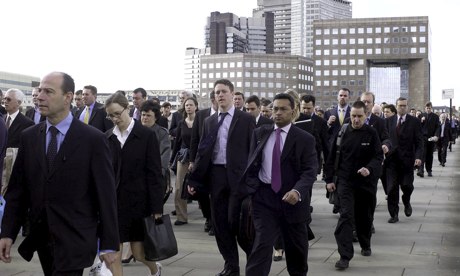
Workers cross London Bridge

The rat race … ‘What actually adds to tension and a sense of powerlessness at function is a reduction of autonomy, either as a end result of bad perform organisation or the impossibility of being capable to talk up.’ Photograph: Martin Godwin for the Guardian


This “worldwide race” organization is no laughing matter. It really is as if the organisers of the London 2012 Olympics want us all to stay in instruction. The language of fitness and athleticism is everywhere: we have to be flexible, we have to be agile, we have to be nimble.


And now, it looks, we have to be resilient as well. The civil support is the latest organisation to assistance “resilience training” as a way of helping personnel deal with the pressures of function. Ursula Brennan, everlasting secretary at the ministry of justice, informed the FT that colleagues could advantage from developing coping capabilities in today’s tougher climate.


Who could be against resilience, or better fitness come to think of it? The healthier employee may possibly be much more resistant to colds and flu, and will have the energy to hold going when others begin to tire. Economists proceed to fear about the persistent poor productivity in the Uk. A lack of resilience could have some thing to do with it. No matter whether you are on a late or early shift, there is operate to be done and targets to be hit. That means being prepared and ready to carry out.


But what are we really speaking about when we use the word “resilience”? Calmly increasing above the every day irritations of the workplace is one particular issue. Suppressing anxiousness in an attempt to seem in handle is another. If the demands getting produced on individuals are unreasonable then making an attempt to stay resilient may be unwise. Everybody has a breaking stage, no matter how stiff their upper lip.


Paul Farmer, chief executive of the mental wellness charity Mind, says that resilience can be a valuable term when it refers to ways of boosting your psychological wellbeing. “Speaking about mental health is still a taboo in many workplaces,” he says. He supports “any training which can equip staff with the abilities they need to assist seem after their own mental wellbeing”.


There is a caveat, nevertheless. Resilience need to not be observed as a way of putting up with anything. “No one need to be expected to cope with ever-escalating demands, extreme workloads and longer operating hrs,” he says.


What really adds to stress and a sense of powerlessness at perform is a loss of autonomy, either as a end result of bad perform organisation or the impossibility of currently being ready to communicate up. And while it might appear refreshing to hear a senior civil servant discussing the need for a much more open culture and far better two-way communication amongst bosses and personnel, if in practice this isn’t going to take place then tension amounts are likely to rise.


If only there have been a big piece of investigation into workplace wellness performed in excess of numerous years to supply the proof we need to know how to organise our operate much better. But of course this investigation does exist: it is the decades-lengthy research led by Sir Michael Marmot into the health of… civil servants.


What Marmot has shown is that it is status and control that matter much more than resilience, cognitive expertise or attitude. It might be tough at the leading, but it is considerably tougher reduced down. “The high-status individual has a great deal of demand,” says Marmot, “but he or she has a great deal of control, and the mixture of large demand and lower handle is what’s stressful.”


So even though we should be encouraging workers to create skills to aid them cope with workload pressures, which will include “framing” tactics and developing a much more resilient outlook, it is the duty of leaders to organise operate in a way that does not harm people’s well being.


Well being at perform turns out to be another revealing indicator in the biggest story of our occasions: inequality. As Marmot says: “Wellness inequalities that are judged to be avoidable by affordable means and are not prevented are incorrect, they are unjust, they’re unfair.” Tell the boss, if you dare.


Yes, teach employees resilience – but they will still have a breaking stage | Stefan Stern

15 Ocak 2014 Çarşamba

Virtual actuality theatre puts first-hand experience of brain harm centre stage

In 2007, Jane Gauntlett was preparing for a job in theatre when she was violently mugged and fell into a coma for 3 weeks. She suffered a traumatic brain damage (TBI), the lengthy phrase legacy of which includes epileptic seizures and brief phrase memory and communication difficulties.


“When I woke from the coma I had no notion how serious the damage was. I was adamant that I was to become a freelance theatre producer,” says Gauntlett, who had completed the Royal Court Theatre’s Youthful Writers Programme even though doing work previously for mental well being charities. At first, she stayed on track, gaining encounter with interactive theatre makers at Battersea Arts Centre and making demonstrates in Edinburgh, London and Margate.


However, work was disrupted by epilepsy. Worse than the seizures themselves was the alarmed reaction of colleagues, and this was compounded by the humiliation of not being in a position to remember and talk as freely as she as soon as had in the course of the inventive approach.


Daily life will in no way be the same 


The very first step toward accepting her lifestyle post-damage was to volunteer as a mentor for youthful folks with related concerns. She worked to facilitate understanding in between people she mentored and these who could in no way relate to the daily knowledge of TBI, which can be frustrating and scary. People whose injuries leave no physical trace face the biggest challenge, given that their difficulties are so effortless for other folks to overlook. Gauntlett says the young folks had to accept that existence would in no way be the very same because “communication with families, friends and strangers was frequently challenging.”


It was this imperative for empathy in between people with and with no brain injuries that gave Gauntlett her route back into theatre. But to achieve her goal, she had to look past the spacial and relational conventions of functionality. The outcome was a piece called In My Shoes which lacks anything a single may recognise as actors or an audience and is also non-website distinct. In fact, the immersive and single-consumer knowledge relies mainly on technological innovation.


Daily life becomes theatre with the help of technology


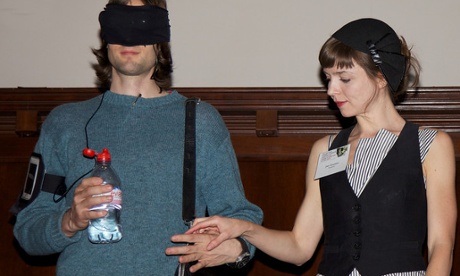
The piece recreates the producer’s own disorientating knowledge of waking up in Slough right after a seizure, with no notion how she received there. The audience – or rather the a single person encountering the display – is put “into Gauntlett’s shoes by wearing Vuzix 920 Eyewear, wrap-all around video glasses, and earbuds connected to an iPod Touch which deprive them of their personal, familiar senses. Virtual reality takes more than and is augmented more by the manipulation of touch, taste and smell, even though exactly what transpires should probably be saved for the efficiency itself.


“We have our eyes peeled for technology that will improve our experiences – we want to keep up to date,” says Gauntlett. “In My Sneakers experiments with substitute strategies of communication. My aim is to place audiences as near to becoming in the sneakers of a stranger as I can, I use virtual actuality computer software, touch, taste, sound &amp smell to make it as real to lifestyle as attainable.”


The achievement of the 1st incarnation – reactions run the gamut of emotion but are by no means underwhelmed – led to the evolution of the piece. Gauntlett formed a collective called Sublime and Ridiculous, to share the perform of exploring a assortment of complicated, delicate or controversial subjective realities. They have so far put hundreds of inclined participants into the shoes of a folks with post-traumatic pressure disorder, bi-polar disorder and stroke, as nicely as these of a paramedic and a trans-gender person. They have strategies to adapt the piece and its technology to investigate the perspectives of an astronaut, a politician, a dominatrix and a murderer.


Though Gauntlett had no prior knowledge in the discipline, engineering is now integral to her function: “I am fascinated by how rapidly factors are evolving and have my eyes peeled for new inventions. In My Footwear is an ever-expanding collection of audio and audio-visual experiences and I am keen to expand it, and for it to evolve utilizing cutting edge technologies as it gets to be available.”


Different versions of My Shoes have been performed by the Sublime and Ridiculous collective in New York and London. Photograph: Amy Hart
Different versions of My Shoes have been carried out by the Sublime and Ridiculous collective in New York and London. Photograph: Amy Hart

Technological innovation is part of theatre’s long term


In spite of this kind of a unique genesis and manufacturing, she is quick to stage out that the symbiosis of theatre and tech is frequent in contemporary functionality. “Interactive theatre plays a big part in the fringe scene,” she says, even though elsewhere, engineering is employed to deepen knowing in other distinct contexts: “Large tech Kabuki theatre in Japan uses transportable monitors [for the audience to study] subtitles in order to better understand an artform that is frequently hard to comprehend.”


As effectively as illuminating intensely private experiences, Gauntlett hopes this kind of advances will lead to more international collaboration and theatre that is accessible to a lot broader demographics. Nevertheless, she says: “I don’t feel theatre’s survival and relevance depends on embracing technological advances.” The point is there is space for every thing, and technological innovation-driven theatre will acquire momentum as technological innovation turns into ever a lot more integral to people’s day-to-day lives.


Such innovation, she says, “is at times frowned upon by critics. However, if the operate is excellent it should not matter.”


Sublime and Ridiculous will carry out In My Shoes at Battersea Arts Centre, London on eight February 2014, as component of Freshly Scratched


Virtual actuality theatre puts first-hand experience of brain harm centre stage