Rethink etiketine sahip kayıtlar gösteriliyor. Tüm kayıtları göster

12 Nisan 2017 Çarşamba

Time for a rethink on GP numbers | Zara Aziz

General practice is in a state of crisis. Despite the promises and the optimism of proposed plans to reform primary care over the next five years, the reality on the ground offers little comfort.


The GP Forward View (GPFV) published 12 months ago promised us 5,000 more GPs by 2020. So one year on, where do things stand? Yes, there was a rise in GP trainee recruitment in 2016 (167 more trainees than in 2015), but overall, GP numbers are falling. According to the latest NHS England figures, 92 practices closed in 2016, up 114% on GP surgery closures in 2014. While 34 merged with other practices, the remainder shut completely. And the number of GPs fell by more than 400 between October and December 2016 alone.


While the lure of jobs abroad, early retirement and locum jobs explain some of these figures, there is a growing crisis in retention. In the south–west, a survey of more than 2,000 GPs, published today, has found that around two in five GPs intend to quit within the next five years. More than half report low morale.


Poor retention is also both a cause and effect of staff shortages and escalating workload (with 12- to 14-hour days). A recent British Medical Association poll showed that 84% of GPs find their workload unmanageable. Reduced take-home pay, particularly for partners as practice costs increase, is also a factor, as is red tape. There is more paperwork than ever before, as work is shifting from secondary to primary care. Resources are stretched and rationing more widespread. I see a greater influx of patients, a faster turnaround from earlier hospital discharges, more limited access to outpatient referrals and longer waits for elective surgery. A significant amount of work also goes into preparing for Care Quality Commission visits, with the bulk of the responsibility on the shoulders of practice managers and partners. And where the government has given primary care more funding on the one hand, it has taken away with the other by cutting investment in other areas or linking it to extending access or seven-day services.


The effect on patients of this shortage of GPs is stark. The scale of practice closures meant that 265,000 patients had to register with a new surgery last year and now often face travelling further to see a doctor. Yet the government is still keen to develop super-practices of 30-50,000 patients, despite GPs and patients not being in favour of these models that reduce continuity of care and autonomy. It feels like we are being pushed towards privatisation and a salaried GP model, stripped of the sense of ownership for our practices and responsibility that we feel for our staff, premises and patients.


As one of the antidotes to the retention crisis, the practitioner health programme (PHP), commissioned by the government for GPs, was rolled out earlier this year and in only four weeks it saw the number of GPs it was commissioned to see for the whole year. The PHP has cited stress, burnout and post-traumatic stress disorder as some of the commonest problems faced by GPs, often from “practice meltdown”.


One year on from the GPFV we have seen little change when it comes to improving the working lives of GPs, who may be independent contractors but nevertheless work for the NHS and provide a crucial and cost-effective service.


Retention schemes to keep over-55s in work by allowing them to work more flexibly, or giving “golden hellos” to trainees to work in under-doctored areas are all a drop in the ocean. The PHP is certainly welcome and well overdue. But it would also make sense to increase core funding of general practice to reflect the explosion in workload. This will improve retention and recruitment. As things stand, it seems a herculean task for the government to rescue something it has little understanding of or empathy with.​ It may be time to go back to the drawing board.


Time for a rethink on GP numbers | Zara Aziz

24 Ağustos 2016 Çarşamba

Rethink Your Water: Deep Ocean Water Rehydrates Better, Faster

The ocean. Probably not where your mind goes when thinking of an infinitely renewable drinking water source. The ocean contains salt water, which isn’t suitable for drinking, right?


As it turns out, there’s a unique kind of ocean water that is ideal for drinking: deep ocean water. Desalinated deep ocean mineral water is naturally pure, and a robust source of naturally occurring minerals and electrolytes, which are essential for our bodies’ everyday functions, especially when it comes to hydration.


You may already know there is a direct correlation between hydration status and exercise performance. As you become more dehydrated, your performance declines, including decreased endurance, and muscle tightening and cramping. Now imagine adding heat stress into your exercise routine. Heat stress, coupled with exercise-induced dehydration, aggravates performance decline.


A recent human hydration study conducted at the University of Arizona, in which my colleagues and I evaluated the impact of post-exercise hydration on student athletes, revealed that desalinated deep ocean mineral water not only rehydrated participants twice as fast compared to a carbohydrate-based sports drink or mountain spring water, but also significantly improved recovery of lower body muscle performance. Even though the carbohydrate-based drink contains a larger amount of minerals and electrolytes, we attribute deep ocean water’s greater impact on rehydration and muscle recovery to its unique blend of these materials, not their quantity.


To measure the impact of each liquid’s rehydrating properties, we asked well-hydrated student athletes to exercise on a stationary bike surrounded by heat lamps until they lost 3% of their starting body weight due to dehydration (that’s a 3-5 lb. water weight loss for a 150 lb. person). This typically took about an hour for men, and slightly longer for women, to achieve. The participants then received desalinated deep ocean water, mountain spring water or a carbohydrate-based sports drink for rehydration. We tested their salivary osmolality, a biomarker measuring the rate of rehydration through saliva, as well as the performance of their lower body muscles.


Although many studies have tested the ability of sports drinks to help exercise performance and recovery, our study was the first to compare deep ocean water’s  potential for rehydration after exercise against other fluids. We felt it was critical put participants into a controlled environment, and empirically measure hydration status and exercise performance.


The deep ocean water used in our study comes from the Global Conveyor Belt, a deep ocean current comprised of melted glacial water that travels the depths of the world’s ocean, collecting a natural balance, and specific blend, of minerals and electrolytes not found in any other hydrating beverage. This particular blend is unique because of where the water is sourced, 3,000 feet below the ocean’s surface off the coast of Kona, HI.


More studies are on the horizon to explore deep ocean water and its properties on rehydration, mental capacity and beyond.


This study was supported by an Independent Science Award from the National Institutes of Health (NIH) to Dr. John P. Konhilas. The deep ocean water used in the study was Kona Deep, the first of the new category of deep ocean water now available for consumption in the continental US.


Sources: http://jissn.biomedcentral.com/articles/10.1186/s12970-016-0129-8


Author: Dr. John P. Konhilas, PhD., Associate Professor of Physiology at the University of Arizona.


This study was published in the Journal of the International Society of Sports Nutrition.


Rethink Your Water: Deep Ocean Water Rehydrates Better, Faster

1 Ağustos 2016 Pazartesi

"Worst case of chickenpox" sparks call for vaccination rethink

A mother whose two-year-old son spent five days in hospital fighting a severe case of chickenpox has called for anyone who wants them to get vaccinations on the NHS against the disease.


Sarah Allen urged ministers to rethink eligibility for immunisation, under which only those looking after children with a weakened immune system, for example because they are undergoing chemotherapy, can receive it.


Allen, a nursery manager in Cambridgeshire, spoke out after doctors said her son Jasper’s chickenpox was the worst case of the usually mild illness they had ever seen. The toddler became so ill last month that staff at Hinchingbrooke hospital in Huntingdon, Cambridgeshire, put him on an intravenous drip and gave him antibiotics, antiviral drugs and morphine.


Allen claims that Jasper was initially denied treatment when her GP practice refused to let her see a doctor. “When I first called our local GP’s surgery, I spoke to the receptionist to make an appointment for Jasper, but when I told her it was chickenpox, she said to me, ‘Every mother thinks their child has bad chickenpox.’ I knew I wasn’t being a neurotic mother. I have two children and have run a nursery and seen hundreds of kids with chickenpox before, so I knew this wasn’t normal.


“When Jasper was admitted to hospital, it was scary, but I was also relieved I was actually being taken seriously and that they were doing something about it. We couldn’t hold him for three days because he screamed every time we touched him.” Jasper’s chickenpox was so severe that he has had scans of his heart to ascertain whether he has suffered any long-term damage as a result, she added.


Immunisation against the disease is not part of the government’s childhood vaccination programme. Jabs are given only to adults and children who are in close contact with someone who is either immuno-suppressed or would otherwise be at risk if they got chickenpox.


Related: What’s the real reason Britons aren’t offered the chickenpox vaccine? | Jenny Rohn


Public Health England, which oversees NHS vaccination schemes, indicated that no change of policy was imminent. A spokesman added: “The expert advisory body the Joint Committee on Vaccination and Immunisation is currently undertaking a review of a childhood vaccination programme against chickenpox in the UK, based on the available scientific evidence, including consideration of the cost-effectiveness of any programme. This review is likely to be concluded next year.”


Cambridgeshire Community Services NHS Trust, which runs the children’s inpatient ward at Hinchingbrooke, where Jasper was treated, said in a statement that: “We can confirm Mrs Allen’s statement that Jasper Allen was treated on our children’s inpatient ward for five days with a severe case of chickenpox.”


Cambridgeshire and Peterborough clinical commissioning group, which oversees GP services in the area, said it could not comment on any individual patient’s treatment. It has not received a complaint from Allen about her local GP surgery refusing her an appointment. In a statement, it said: “Chickenpox is usually a mild illness from which most children recover on their own. Symptoms include a high temperature, aches and pains, and a rash of blisters. These usually pass within a week or two, and the blisters dry up and fade.


“The best treatment is to use soothing creams and/or appropriate doses of paracetamol to ease any discomfort, while keeping your child hydrated by giving them lots to drink.


“It is highly advisable that parents and carers keep a watchful eye on children who have chickenpox, as complications, although rare, can develop, especially in children who are very young, are on other medications, or who may have a weakened immune system.”


"Worst case of chickenpox" sparks call for vaccination rethink

1 Temmuz 2014 Salı

Our sperm donor system is impotent. Time for a rethink | Kate Brian

Sperms of the human body, 1000x phase contrast

‘Patients are typically faced with a choice among a lengthy wait for a United kingdom donor or starting up remedy proper away, with a selection from a wide selection of overseas donors.’ Photograph: Alamy


It was a programme I presented for BBC Radio four, The New Viking Invasion, about our escalating use of donor sperm from Denmark, which sparked the recent debate about the shortage of donors in the United kingdom. Despite some rather excitable coverage, there is no proof that this is element of a wider trend for Scandinavian chic, traceable to a really like of Nordic design and Television detective dramas. Rather, our growing reliance on imported sperm has more to do with a gap in our system which is currently being effectively filled by slick and effective Danish sperm banking institutions.


These days, it is not just heterosexual couples with fertility troubles who are utilizing sperm from donors, but also much more and far more single girls and lesbian couples who want to start families. We can’t meet our national demand, and about a quarter of registered sperm donors come from overseas. The Danes, who can supply a broad selection of donors from specialist sperm banking institutions, are supplying an ever-rising proportion of our sperm imports. In contrast to fertility clinics in the United kingdom, the Danish sperm banks just deal in donor sperm and do not offer you other fertility treatment options.


Since the programme was aired, a number of United kingdom fertility clinics have been fast to level out that they can provide locally recruited sperm donors. Unfortunately, it is not often straightforward for folks who want to use donor sperm to get this info, as there is no co-ordinated system to connect sufferers with the clinics which have Uk sperm donors offered. Utilizing an overseas donor could not at first appear to develop any issues, but the longer-phrase impact could be an situation. Each and every Uk donor is constrained to commencing ten households here an overseas donor will have the identical limit in the United kingdom, but his sperm might be sent about the globe and be utilized to start off families in a lot of other countries – and there are no global limits on the amount of households an person donor can generate.


Fertility clinics in the Uk operate in a hinterland where the boundaries in between personal and NHS remedy are blurred: several private clinics have contracts to treat NHS individuals, although their NHS counterparts may possibly be treating large numbers of patients privately. With everybody competing for patients and contracts there is little incentive to share. It is not surprising that clinics may be reluctant to refer a patient to a unit which has United kingdom donors accessible, as this would suggest shedding the patient to one more clinic. Alternatively, sufferers are frequently faced with a decision in between a lengthy wait for a Uk donor or the alternative of beginning treatment method correct away, with a option from a wide selection of overseas donors.


Recruiting sperm donors can be pricey and time consuming, as only a single in each and every 20 men who decide on to do so will make the grade. Not only do they have to have substantial good quality sperm, they must also pass well being checks and go via exams to rule out the threat of passing on any diseases. If they are productive they will get £35 for each and every donation, but it is the want to assist other folks, rather than the cash, which motivates most donors.


Most fertility clinics simply will not have the time or assets to set up donor recruitment operations. There is no cash to be produced from screening the 95% of prospective donors who will be deemed to be unsuitable soon after going by means of the method. For each personal fertility clinic, donor treatment method is a reasonably tiny component of what they do, and it can be difficult to make recruiting donors cost-efficient unless you are working on a relatively large scale.


There have been suggestions that one remedy to the shortage of donor sperm in the United kingdom would be to let males to donate beyond the existing lower off age of 40, but that is assuming that the problem could be resolved by widening the pool of males who are eligible to donate. The adjust to the principles surrounding donor anonymity in 2005, which meant that donor-conceived men and women have the proper to locate out identifying specifics about their donor, has also been blamed for our shortages, but it is usually accepted amid fertility experts that this is not the actual lead to. Perhaps what we actually need to have if we are to minimize our reliance on overseas donors is a a lot more radical answer. Whether or not that is a co-ordinated method, with regional centres sharing the expense of recruitment, some central source of info detailing availability for these who need to use donors, or even one particular large nationwide sperm financial institution, it truly is clear that change is necessary.


Maybe if fertility clinics have been able to perform together as portion of a nationwide support rather than competing towards a single yet another, we would create a technique that could meet patients’ needs.


Our sperm donor system is impotent. Time for a rethink | Kate Brian

24 Haziran 2014 Salı

Abbott willing to rethink $seven Medicare co-payment, says AMA president

The Abbott government is prepared to rethink the design of its proposed $ 7 GP co-payment, the Australian Health-related Association (AMA) has declared, after a meeting in Canberra on Wednesday.


In a possibly significant shift on a budget measure that was most likely to encounter Senate defeat, Tony Abbott and his overall health minister, Peter Dutton, are explained to have signalled their willingness to consider different designs at a meeting with the AMA leadership at Parliament Home.


The AMA president, Brian Owler, described the meeting as “constructive” and said the prime minister and the health minister had listened to the organisation’s worries about the influence of the proposed new charge on vulnerable patients.


“I feel the message that was clear today was a dedication on behalf of the prime minister and the minister to look at substitute designs, something that we have not heard prior to, or since the price range was announced, and I believe that’s a really optimistic move,” Owler explained at a press conference right after the meeting.


Asked to confirm the government had indicated it was prepared to modify the GP co-payment, Owler stated: “The prime minister and the minister produced it relatively clear in the meeting that they have been willing to appear at different models and contemplate those on their merits.


“Obviously if there is a model that is acceptable to the AMA that we’re capable to assistance I’m hoping the government will support that model, and so I believe for the 1st time [there"s] an indication at least that there’s a willingness to revisit the model that they’ve place forward in the budget.”


Guardian Australia is seeking comment from Abbott and Dutton’s offices about the government’s stance on likely adjustments.


The government’s proposed GP co-payment, due to commence in July next 12 months, was set to encounter Senate defeat given the opposition by Labor, the Greens and Palmer United. The government has repeatedly defended the measure, saying the money raised would go into a healthcare analysis future fund. But the co-payment has attracted widespread community concern and spurred reports that some individuals were already placing off visits to the GP fearing the fee had previously begun.


Owler explained the prime minister and the minister had shown a “willingness to work with the AMA to come up with a answer that protects vulnerable folks, that supports common practice and makes certain that we assistance issues like preventive well being care and persistent condition management”.


He mentioned the AMA agreed that there have been men and women in society who could contribute to their overall health care, noting that twenty% of GP providers already attracted a co-payment and it was often bigger than $ 7. But the AMA could not help a cut to the Medicare rebate and was worried about the effect of the fee on vulnerable groups.


Owler explained the AMA also did not support making it possible for state and territory governments to charge co-payments for emergency division visits. He said the concept was “impractical” and he did not want to force individuals to make a decision whether their chest pain may possibly be a heart attack or merely indigestion.


“What we want to do is operate with the government to come up with a model that not only promotes overall health care and promotes the health of our sufferers but protects those that are most vulnerable,” he explained.


“We have to make certain that we protect those most vulnerable in our society and we should make positive that funding is maintained for standard practice which is about maintaining people out of costly wellness care.”


Abbott willing to rethink $seven Medicare co-payment, says AMA president

10 Haziran 2014 Salı

Statins for folks at low threat of heart condition requirements rethink, say top physicians

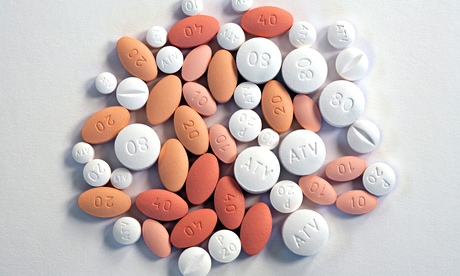
Statins

Anybody with a ten% or higher danger of establishing cardiovascular illness in the following ten years must be eligible for treatment method with the cholesterol-busting drug statins, says the Wonderful draft proposal. Photograph: Alamy


A group of physicians, like the head of a single royal school and the former head of one more, is calling for a rethink on an NHS proposal that people at low risk of heart illness should be prescribed statins.


Sir Richard Thompson, president of the Royal School of Physicians, and Clare Gerada, a past chair of the Royal College of GPs, are two of the eight signatories of a letter to the Nationwide Institute for Health and Care Excellence (Good) and the wellness secretary, Jeremy Hunt.


The signatories are concerned that up to 5 million healthy men and women will be “medicalised”. The Wonderful suggestions, which are nonetheless in draft kind, propose that anyone with a ten% or better chance of establishing cardiovascular ailment in the subsequent ten many years need to be eligible for treatment method with the cholesterol-busting medicines.


But the appeal was firmly rejected by Great. “Cardiovascular ailment [CVD] maims and kills men and women by way of coronary heart disease, peripheral arterial disease and stroke. With each other, these kill one particular in three of us. Our proposals are meant to stop numerous lives currently being destroyed,” explained Prof Mark Baker, director of the centre for clinical practice at Wonderful.


The eight physicians say they do not think the advantages of statins outweigh the side-effects. The doctors point out that all the trial data comes from pharmaceutical organization trials, which have not been place in the public domain. “The overdependence on industry information raises considerations about achievable biases. Comprehensive evidence shows that market-funded trials systematically generate more favourable outcomes than non-business sponsored ones,” they create.


Wonderful says the draft guideline does not propose that GPs immediately prescribe tablets. Baker says doctors and individuals need to investigate the alternatives for stopping smoking, dropping excess weight, eating much more healthily, consuming less alcohol and turning out to be much more energetic.


“The independent committee of authorities found that if a patient and their physician measure the chance and determine statins are the proper decision, the evidence clearly exhibits there is no credible argument towards their safety and clinical effectiveness for use in men and women with a 10% risk of CVD more than 10 years,” Baker mentioned.


“Simply because the price tag of statins has fallen, it is also cost-effective to use them to minimize the chance of cardiovascular illness at a reduced threshold than Wonderful has previously recommended.


“This advice does not medicalise hundreds of thousands of healthier individuals. On the contrary, it will aid prevent many from turning into ill and dying prematurely. We recognise that powerful views are held by some on the two sides of the argument about the best way to use statins, but our task is to reach a balanced judgement. Worries about hidden information and the bias that the pharmaceutical industry may or may not have are important problems and need to be resolved. Wonderful is element of the energy to do that but just as the signatories to the letter will have completed in their expert careers, we need to have to act in the best interests of sufferers on the basis of what we know now.


“Last but not least, it really is really worth noting that other countries, most notably the US, have looked at the same evidence and reached similar conclusions about the prescription of statins.”


The other signatories of the letter are Prof Simon Capewell, clinical epidemiologist at the University of Liverpool, Prof David Haslam, chair of the National Weight problems Forum, GP Dr Malcolm Kendrick, cardiologist Dr Aseem Malhotra, Dr JS Bamrah, health care director of Manchester Psychological Wellness and Social Care Trust, and Prof David Newham, director of clinical investigation at the Mount Sinai School of Medicine in New York.


They say they are also concerned that GPs have misplaced self confidence in the medicines for low-risk sufferers, citing a survey by Pulse magazine and a resolution of the common practitioners committee of the British Health-related Association, which known as on Good to refrain from recommending statins for this group “unless this is supported by evidence derived from complete public disclosure of all clinical trials’ information”.


The letter is published as the British Medical Journal convenes an inquiry into the publication of two papers – one of them written by Malhotra – on statins, which manufactured claims for the scale of side-effects which have been later publicly retracted.


Statins for folks at low threat of heart condition requirements rethink, say top physicians

15 Ocak 2014 Çarşamba

Rethink the Pink Aims at Assisting Girls Restore & Protect Their Well being

The annual Women’s International Summit for Overall health runs for forty days January by way of March and grows in reputation every single 12 months. In 2014, Want presents the Rethink the Pink summit (affiliate website link), starting on January 29 and aiming at raising awareness about women’s health. “Why run for the remedy?” the summit organizers request, giving a distinct kind of approach that entails standing up to the cause of cancer instead. The summit will handle achievable causes of breast cancer, this kind of as circulation-cutting underwire bras, toxic cosmetics and even radiation from mammograms. Wish promotes holistic approach to overall health, sustainable consuming and attractiveness care that’s more normal.


The Girl behind the Undertaking


Tera Warner is the creator of Physique Enlightenment system promoting healthful lifestyle for women and the organizer of Want. A lot more than 100,000 ladies are component of the BE network, which encourages them to boost their self-really worth as opposed to managing excess weight. Warner was a keynote speaker at numerous conferences, addressing this kind of concerns as excess weight loss, entire body image, normal detox and more. By way of her plan, she encourages females to get far better sleep, consider a lot more walks and consume normal meals.


Rethink the Pink Speakers


Wish brings with each other several excellent speakers, like medical doctors, nutritionists, activists, cancer survivors and holistic therapists. Right here are the profiles of just some of the speakers you will discover at the Rethink the Pink summit.


Ruth Heidrich


Dr. Ruth Heidrich is a nutrition and workout specialist and a daily life-prolonged runner, who was diagnosed with breast cancer much more than 30 many years ago. Right after the surgical treatment, she decided towards radiation and chemotherapy, turning to a vegan diet as an alternative. In addition to getting to be cancer totally free, she was also capable to overcome arthritis and enhance her bone density thanks to this technique, despite the reality that osteoporosis runs in her household. She wrote numerous books on the subjects of senior fitness, working and raw foods, and lectured at many universities.


Veronique Desaulniers


Dr. Veronique Desaulniers believes that your DNA is not your destiny. She maintained wellness practices since 1979, concentrating on women’s wellness in specific for the final 10 years of her occupation. She retired following getting diagnosed with breast cancer, and utilized a organic method to overcome the disease. Her holistic suggestions consist of neutralizing electromagnetic pollution in one’s residing room, as nicely as paying out more attention to emotional elements such as forgiveness.


William Davis


Dr. William Davis is the writer of Wheat Stomach and a company believer that to become more healthy, individuals need to exclude all wheat from their diet programs. He says that as many as 80% of all sufferers he sees these days are either diabetic or pre-diabetic, and backlinks a great deal of these circumstances to wheat flour creating substantial increases in blood sugar amounts. He promotes wheat elimination combined with other dietary concepts as a way of preventing heart condition.


Click right here to sign up fo the Summit.


Sources for this post incorporate:


Rethink the Pink Aims at Assisting Girls Restore & Protect Their Well being