Remote etiketine sahip kayıtlar gösteriliyor. Tüm kayıtları göster

20 Şubat 2017 Pazartesi

Study Shows That Remote Workers Have Increased Risk for Burnout

Burnout is not a foreign concept for the workforce. Things like stress, lack of sleep, and repetition can all contribute to burnout, reducing productivity and diminishing quality of life. Interestingly, a new report reveals that burnout is much worse for those who work from home.


How Burnout Affects Remote Workers


UniqueIQ research showed that remote workers were among the most likely to suffer burnout. There are many factors that contribute to this problem.


For one thing, work-from-home employees are more detached from society. They spend hours without anyone around while they work on different tasks. Countless studies have revealed that social interaction is essential for mental health, and remote workers often find themselves deprived of such stimulation.


Freelancers are also more likely to put in extra hours than they might in an office, especially when there are looming deadlines. Their schedule is flexible, and the lines between working and personal time are often blurred. Productive, focused work at home is often more difficult to manage than at the workplace because you can usually fit more work into an hour at home. As a result, it’s easier to overwork yourself.


More research shows that when average in-office workers spend more than 50 hours per week in the office, their productivity declines. For freelancers, productivity decreases even faster, at 35-40 hours because of the extra focus required.


The average person can’t sustain this style of overworking for too long, and their health can suffer. They exercise less, eat out more often, choose unhealthy snacks, sleep odd hours, and have less social interaction.


Stop Burnout Before It Occurs


Burnout is obviously a problem and it needs a solution. Employees will see a drastic decrease in quality of life and companies will see less productivity if they continue to let their employees overwork themselves.


“Failing to recognize this need for wellness in the workplace, and the benefits that can be enjoyed from implementing appropriate strategies, could be detrimental to many companies in the future,” reports Eileen Brown of ZDNet.


Companies can’t sustain employees who become unproductive and make a lot of mistakes. For their health and job stability, employees should recognize the signs of burnout and develop some strategies to combat it.


Use Your Resources


Technology makes working from home possible, and it also eases the process. Take advantage of the tools available to make work faster and decrease working hours.


For example, certain communication tools can reduce stress and help you better organize your schedule. When it’s easier to communicate with your employers and collaborators, you’re less likely to experience burnout.


Solicit Flexibilty with Your Employers


Oftentimes, your employers are unaware that you’re getting more work than you can handle. Simply asking for some flexibility can make all the difference.


“Home working must be strategically implemented with the correct procedures in place in order to ensure the happiness and wellness of staff is maintained,” reports David Lynes, director of UniqueIQ.


“It is important for management to keep a close eye on the working routine of those that operate from home in order to become aware of those that may be at risk of burning out, but understandably this is difficult without any physical presence.”


Exercise and Socialize


Take care of your body physically and mentally. As you do this, you’ll realign your priorities to target better health, even if it means stretching out a deadline.


Spend time with people daily. You might talk on the phone with friends or go out to eat regularly with someone you’re close to. If you join a gym, you’ll have an opportunity for socialization and exercise at the same time. You can connect with people in fitness classes or go with a friend.


By taking time for yourself, your mental capacity will heighten, translating into more productive work.


Study Shows That Remote Workers Have Increased Risk for Burnout

25 Şubat 2014 Salı

Remote manage – why the government has hit pause on the Care.information project | Esther Addley

Jeremy Hunt

Jeremy Hunt: he advised the Commons that it was appropriate for the organisers of the new Care-data scheme to delay its introduction. Photograph: Richard Gardner/Rex


Sharing overall health data is immensely essential, Jeremy Hunt reminded MPs. It was by learning lots of people’s healthcare information that medical doctors learned thalidomide was hazardous, that MMR was proved to have no hyperlink to autism, that we found smoking triggered cancer. And that was why the government had rummaged down the back of the sofa, identified the remote manage, and pressed pause on its prepare to gather the nation’s GP data.


It had been “completely proper” for the organisers of the new Care.information scheme to pause its rollout, the well being secretary informed the Commons. This would let them to put the kettle on, nip to the loo and win round the public to the prospect of their intimate medical info getting uploaded to a central database to be shared with outside bodies managed by men and women who seemed not completely clear what they were up to.


They like to get tiny comfort breaks at the Division of Health. You will recall that, in 2011, following extreme opposition from overall health experts, this government’s health bill was also paused to let a “listening workout” that led to the re-drafting of the bill. (Individuals who listened especially closely might even have heard the subsequent tap on the shoulder of Hunt’s predecessor Andrew Lansley, and Cameron’s whispered “You happen to be fired”.)


Labour leapt at the initial mention of “the pause”. “When we had a pause prior to, the result was a very great Overall health and Social Care Act!” countered Hunt. Shadow well being secretary Andy Burnham set his face to “scoff”. When Hunt was appointed, he had declared it his mission to have a information revolution but “the only revolution he has designed,” stated Burnham, “is a developing public revolt” towards the Care.data scheme.


This plainly could not stand. The opposition weren’t the only ones who could fling somewhat lame, pre-rehearsed insults across the dispatch box. “The shadow secretary of state searches for NHS crises with about as much achievement as George Bush looking for weapons of mass destruction!” stated Hunt, rather proud of that 1. Burnham flapped a copy of the “useless glossy leaflet” that suggested folks on their correct to opt out, the 1 the government explained had been obtained by each home but demonstrably had not.


Hunt flapped back: it was a bit wealthy for Labour to complain about the approach for opting out when the previous government hadn’t provided an opt-out selection at all. Happily, a number of hours later the opposing sides discovered typical ground, when MPs on the cross-party overall health choose committee united to deliver a spirited kicking to the Department of Well being, NHS England and the Wellness and Social Care Details Centre, the bodies overseeing the Care.information rollout. Why had the process been commenced with no any code of practice in place, asked Conservative Charlotte Leslie. “It appears like you have got a half-constructed machine.” Labour’s Rosie Cooper explained she had opted out of the scheme “Why? Simply because I never believe in you and I will not contemplate myself a commodity to be bartered close to by you.” By no means thoughts pressing pause, sounds like somebody needs a screwdriver and basic operating guidelines.


Remote manage – why the government has hit pause on the Care.information project | Esther Addley

21 Ocak 2014 Salı

Remote monitoring of rest apnoea remedy in France raises issues

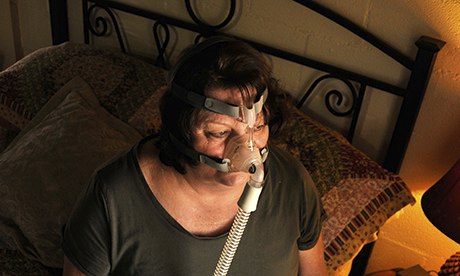
Sleep apnoea mask

French sleep apnoea sufferers with breathing masks chance having therapy funding withdrawn if remote monitoring determines they are ‘non-compliant’. Photograph: Alamy


Considering that last October folks in France treated for rest apnoea syndrome have been subjected to remote monitoring: medical information is getting recorded, transmitted (normally by means of the internet) and interpreted elsewhere, perhaps major to choices on subsequent remedy. The protests of numerous patients’ associations have gone unheeded.


Remote monitoring, along with other prospects this kind of as teleconsulting, is component of a new branch acknowledged as telemedicine. Although it may possibly be right here to keep, it raises numerous inquiries.


Rest apnoea syndrome is a disorder characterised by pauses in breathing (apnoea) or intervals of abnormally shallow breathing (hypopnea). If these episodes arise too usually they could trigger sleepiness in the course of the day (responsible for accidents at work and on the street) and heart issues (high blood pressure, coronary thrombosis). Among one million and 3 million patients endure from the syndrome in France.


The primary therapy involves wearing a mask at night, to breathe air beneath constant optimistic airway pressure. The required devices are loaned to individuals and installed in their houses by contractors, the price currently being refunded by the social security method.


The number of patients acquiring this treatment is steadily escalating and costs have soared, reaching €440m ($ 575m) in 2011. Early in 2013 the French government published a decree requiring electronic sensors to be fitted and information to be transmitted to check use of the devices. If usage falls beneath a specified degree, patients will be rated as “non-compliant”, with the probability that expenses will no longer be reimbursed. For the very first time in France coverage of overall health expenses is conditional on sufferers wearing the mask during sleep.


The implications reach significantly additional than monetary issues raised by treating rest apnea. It is the very first time that remote monitoring has been enforced to verify patient compliance. Several organisations attempted to cease the decree and an appeal was lodged with France’s Conseil d’Etat, the highest administrative court, but to no avail.


No a single has any idea of the consequences of fiscal sanctions for bad compliance. To assist sufferers getting problems following prescriptions, the global medical community and wellness authorities have promoted remedies based on decision autonomy and incentives. Twenty many years in the past, therapeutic patient schooling was launched to involve sufferers in their own treatment method and to respect their freedom of choice. Remote monitoring, with its mixture of electronic surveillance and punishment, is a quite distinct strategy. It is also unclear how considerably say medical professionals will have when confronted with monitoring benefits or, if prescriptions are justified, how they will be capable to aid sufferers.


With remote monitoring the authorities are waving a stick at non-compliant sufferers, but is there a carrot? Telemedicine experts hope treatment method can be improved by monitoring rest patterns. But at what cost and with what advantages stays to be observed.


A rigorous evaluation will be needed above the following 12 months or two, involving patient organisations. Will they be offered a hearing, or will the authorities be the only ones to have a say?


Dr Nicolas Postel-Vinay is a practitioner at Georges Pompidou hospital in Paris


This story appeared in Guardian Weekly, which incorporates material from Le Monde


Remote monitoring of rest apnoea remedy in France raises issues