Prisoners etiketine sahip kayıtlar gösteriliyor. Tüm kayıtları göster

1 Mart 2017 Çarşamba

Prisoners with serious mental health problems face urgent treatment delays

Almost 75% of prisoners are facing delays in being transferred to NHS hospitals to receive urgent treatment for serious mental health problems.


Prisoners in England who need to spend time as an inpatient in a mental health unit are meant to be taken there within 14 days of doctors admitting them. But new official figures show that barely one in four of the prisoners who received such care last year were transferred within the supposed maximum two weeks.


Labour MP Luciana Berger, who obtained the figures through a parliamentary question, warned that the already fragile mental health of prisoners needing hospital care could be badly affected by them being denied speedy care.


“In the outside world we would never expect someone to wait as long as two weeks to get appropriate care, and we know that prisoners are at much higher risk,” she said. “With every day that goes by their condition is likely to worsen, so the delay will have a hugely detrimental impact on their mental health.”


Figures released by the Department of Health show that 412 prisoners were transferred to hospital from jails in England within 14 days during 2015-16, or 26.5% of the total. However, far more – 1,141 (73.5%) – had to endure delays of longer than that, health minister Nicola Blackwood confirmed.


“This ubiquitous failure would never be tolerated in the outside world,”, Berger will tell MPs on Wednesday, in a Commons debate she has secured on suicide and self-harm in English jails.


Berger, the president of the Labour Campaign for Mental Health, said she did not know if there was a causal link between the delays and the record number of suicides – 119 – that occurred in English prisons during 2016. “It is likely to be a contributing factor, but it is just another issue, among many, which paints a very bleak picture of the inadequate support provided to people experiencing mental illness in our prisons,” she said.


2016 also saw a record number of incidents of self-harm in jail – 37,784 in all, up from 7,000 on the previous year.


In community settings, detentions under the Mental Health Act often take just a few hours. But the process takes longer with prisoners. Those who are due to be transferred wait temporarily in their jail’s hospital wing but, Berger added, those units are not equipped to give prisoners with serious mental health problems the proper care they need.


Berger will use the debate to accuse ministers of presiding over a “shocking and shameful rise in suicide and self-harm” in jails. “Most prison psychiatrists don’t feel able to deliver a basic level of care,” she will say. “Mental health services in prisons are at breaking point.”


The Ministry of Justice declined to comment directly on the figures. A government spokeswoman said: “We are committed to making prisons places of safety and reform and giving prisoners the support and treatment they need to help turn their lives around.


“All prisons have established procedures in place to identify, manage and help prisoners with mental health issues. Increased support is now available to those at risk of self-harm or suicide, especially in the first 24 hours, and we have invested in mental health awareness training for staff.”


Prisoners with serious mental health problems face urgent treatment delays

7 Şubat 2017 Salı

China may still be using executed prisoners" organs, official admits

An official in charge of overhauling China’s organ transplant programme has said the country may still be using organs from executed prisoners in some cases, even though there is technically zero tolerance for the practice.


The admission by Huang Jiefu, a former Chinese deputy health minister, came as human rights activists and medical ethics experts voiced strong objections to his inclusion at a Vatican summit designed to tackle illicit organ trafficking.


The activists said that by giving Huang a platform, the Vatican risked giving China’s practices an air of legitimacy. Huang told reporters on Tuesday that the controversy was “ridiculous” and repeated assertions that the use of organs from prisoners is now “not allowed”.


“There is zero tolerance. However, China is a big country with a 1.3 billion population so I am sure, definitely, there is some violation of the law,” he told reporters at a conference in Rome.


Pope Francis has called illicit organ trafficking a form of modern slavery. At the start of the conference on Tuesday participants painted a bleak picture of the scale of the problem, with patients who are desperate for life-saving procedures flocking to countries like Egypt, India, and Mexico to buy organs cheaply.


Huang, who has long been a controversial figure in the world of transplantation, said trafficking could be stemmed through the creation of a global task force headed by the World Health Organisation.


But experts have questioned Huang’s assessment of the situation, saying China probably still systematically uses the organs of executed prisoners in order to meet an overwhelming demand.


Last year, China’s alleged use of prisoners’ organs was debated at an international conference after two doctors said it was premature to declare China an ethical partner in the international transplant community.


Nicholas Bequelin, the east Asia director for Amnesty International, said it was known at the time that the vast majority of organ transplants in China came from executed prisoners.


The number of prisoners China executes annually is a state secret, but Bequelin said estimates ranged from 3,000 to 7,000. He said experts had cast doubt on Huang’s claims that China had outlawed the practice. “They haven’t stopped the practice and won’t stop. They have a need for organ transplants that far outpace the availability of organs,” Bequelin said.


Details of the process are grim. Bequelin said China did not adhere to World Health Organization recommendations on how doctors should determine whether a person is legally dead. In some cases, organs have been removed before the prisoner would be considered medically dead by international standards.


“The timing of the execution is – we think – sometimes dependent on the need of a particular transplant surgery. You will execute this person at this time on this day, because that is when the patient has to be ready,” Bequelin said. “It is very secret and there is not a lot of reliable information.”


The Vatican has released new bioethics rules that say organ transplantation must involve the free consent of living donors or their representatives and that in ascertaining the death of a donor, it must be diagnosed with certainty, especially when a child is involved.


China may still be using executed prisoners" organs, official admits

2 Kasım 2016 Çarşamba

Prisoners "should get same healthcare as general population"

Prisoners should receive the same level of healthcare as people in the general population, a health watchdog has said as it released new guidelines for the wellbeing of inmates in a drive to improve the situation.


Prof Mark Baker, the director of the National Guideline Centre, which is funded by the National Institute for Health and Care Excellence (Nice), said that it had become clear that healthcare provision in prisons was often poorer than in the general community and not sufficient to meet the needs of prisoners.


“Something had to be done, I think, about defining what healthcare should look like in custodial settings,” he said.


From 2006 NHS primary care trusts commissioned healthcare for prisoners, with the responsibility for prisons in England transferring to NHS England when it was set up in 2013.


Baker said that adequate healthcare provision for prisoners would reduce pressure on community services later. “If their health needs are not properly cared for while they are prisoners, then their demand on the NHS afterwards is going to be that much more difficult to handle,” he said.


The recommendations, issued for prisons in England, include carrying out a healthcare assessment on arrival – with questions on physical health, mental health and alcohol and substance misuse, testing for TB within 48 hours of entering prison, and offering tailored advice on issues such as exercise, diet, smoking and sexual health. The guidelines also highlight the need for confidential testing for hepatitis B, hepatitis C and HIV.


Some of the recommendations, says Baker, are subtle, but important. “HIV testing is offered, but it should be done in a way which encourages people to take it up, rather than avoid it, which is sometimes the case now,” he said. Other recommendations include ensuring that condoms, dental dams and water-based lubricants are easily and discreetly accessible to prisoners. “Condoms are made available in prisons but currently you have to make an appointment with a doctor, whereas outside prison that is not the case at all,” said Baker.


The new guidelines also focus on the growing pressures of an ageing prison population, with older inmates more likely to have multiple conditions and a higher risk of chronic illnesses such as diabetes and heart disease. What’s more, said Baker, “they are sicker and more likely to have complex health needs than people of an equivalent age who are living in the community”.


According to recent figures, there are more than 4,400 prisoners aged 60 or over in England and Wales, nearly three times that in 2002, making it the fastest growing prisoner age group.


Inadequacies in monitoring chronic diseases, and in making sure that care is continuous when prisoners are moved between custodial settings such as prisons or courts, or are released, need to be addressed, said Baker.


“Doing that and maintaining that continuity is not only good for the health of the prisoners,” he said. “But it is much better for the operation of the prison system as a whole and reduces the burden on both the prison service and the NHS in having to deal with emergencies that could have been avoided if chronic disease management had been good enough.”


Mark Day, head of policy and communications at the Prison Reform Trust, welcomed the new guidelines. “People in prison should receive the same treatment and care as they would in the community, but too often their health needs go unrecognised and unmet,” he said. “With an ageing prison population and rising numbers of deaths, both natural and self-inflicted, behind bars, ensuring that people get the physical, mental health and social care they need is vital.”


Day added that new guidelines on mental health, currently in draft form, are also much anticipated.


“The new Nice guideline is an important and welcome step towards achieving parity of healthcare for people in prison,” he said. “We hope the forthcoming guideline on mental health will do the same for the high proportion of people in prison with a mental health need.”


Adam Horner, national lead nurse from Care UK, which provides healthcare for people in around 30 prisons, said: “Whilst we haven’t yet had an opportunity to review the guidelines in full, we welcome their publication. We are certainly seeing a growing number of older prisoners with long-term conditions such as heart disease, cancer and dementia.”


Prisoners "should get same healthcare as general population"

14 Eylül 2016 Çarşamba

Rise in prisoners moved to mental health hospitals

More prisoners are being diagnosed with mental health problems requiring hospital treatment, official figures obtained by the Guardian show.


The number of male prisoners being transferred to hospital under the 1983 Mental Health Act grew by more than 20% between 2011 and 2014 in England and Wales, said the Ministry of Justice (MoJ) in response to a freedom of information request.


Campaigners have called for more people with mental health problems to be treated in hospital rather than sent to prison, and some cautiously welcomed the figures.


However, there was concern that they also show the use of hospital orders – court orders that allow defendants to be sent for medical care instead of receiving a prison sentence – has declined by more than 25% since 2011 for men and remains at a similar level among women.


Levels of suicides and assaults in prisons are at record highs, and incidents of self-harm have increased sharply.


In the period covered by the figures, the greatest increase in transfers to hospital under section 47/49 of the 1983 act was among men aged 21-39. In 2011, 442 people (398 men and 44 women) were transferred, which rose to 522 (483 men and 39 women) in 2014, the latest year for which data is available.


In these cases, people may be returned to prison if their mental health improves.


Meanwhile, the use of hospital orders, under section 37 of the act, fell from 464 in 2011 to 341 in 2014 for men, and went up from 81 to 83 for women.


Number of male inmates transferred from prison between 2011 and 2014
Number of hospital orders between 2011 and 2014

Linda Bryant, director of criminal justice services at Together for Mental Wellbeing, said: “While we welcome figures showing more prisoners being treated in hospitals, it could be that people maybe do not have a significant mental disorder when they go into prisons – but the prison environment might exacerbate those conditions to the extent that they might need to be transferred out.”


Andrew Neilson, the director of campaigns at the Howard League for Penal Reform, said it would be concerning if mental health problems were not being picked up earlier. “If things were working, you would imagine there is potential that hospital orders would go up … [The data] suggests people are not getting picked up in the way that they should be, earlier on in the process,” he said.


The former director of the Prison Reform Trust Juliet Lyon said: “If you’re thinking about someone that’s got mental health needs, it’s hard to imagine a less conducive environment to getting better than a prison. There’s a tension with what’s currently happening in our prisons: the lack of activity, the shortage of staff, the appalling rise of suicide and self-harm, and violence in prisons. “I think the only way really to effect change is to establish the last resort principle that you use prison as a place of absolute last resort in the justice system.”


The father of one man who killed himself in prison said his son had mental health problems and should have been dealt with differently.


Mark Saunders, 48, a bus driver from Basildon, Essex, said the family had been promised several times that 25-year-old Dean was in a “secure, safe” space before he killed himself in a cell at Chelmsford prison in January.


The family believe he should have been detained under the Mental Health Act. “I would have given my life to save him,” he said of his son, who was married and had a child. “And then you have to hand him over and trust them. And you trust them to continue that care. But they didn’t.”


Dean Saunders was arrested on suspicion of attempted murder after an incident in which he injured relatives who were trying to prevent him from stabbing himself. Mark Saunders, who was among the injured, had not wanted his son to be sent to prison and felt that he needed help.


Saunders was initially on constant suicide watch in prison after he told a doctor he planned to kill himself.


“He should not have come off constant watch, he should not have been put in Chelmsford in the first place,” said Mark Saunders. “But once he was there, they had a duty of care and they had all of that information at hand.”


The MoJ said: “Every day, our healthcare staff provide support to thousands of prisoners at risk of self-harm or suicide, frequently saving lives through timely intervention.


“But we must improve the way mental health problems are dealt with in the criminal justice system. That is why we are investing £1.3bn to transform the prison estate, while also training staff to respond effectively to prisoners experiencing suicidal, self-harm and mental health issues.”


According to statistics released by the MoJ, there were 34,586 incidents of self-harm in UK prisons last year, an average of one every 15 minutes. There were 105 apparent “self-inflicted” deaths in prisons in the 12 months to June 2016, an all-time high and a 28% increase on the year before.


Andy Bell, the deputy chief executive of the Centre for Mental Health, said there were big pressures on people in the prison system, including “those working in it and those imprisoned in it”.


Bell said a national scheme was being rolled out that aimed to treat people before they entered the criminal justice system. In an acknowledgement of the damaging effect that prisons can have on mental health, Liaison and Diversion services are supposed to identify offenders with vulnerabilities at first contact.


In a report released in January, the prisons ombudsman, Nigel Newcomen, found that 70% of the prisoners who killed themselves had one or more identified mental health requirements and noted “too many examples of poor communication and disjointed care”. Estimates by the Prison Reform Trust suggest that the majority have three or more mental health needs.


The former shadow mental health minister Luciana Berger said: “Our mental health services are struggling to cope with the growing demand and professionals are under increasing pressure. The government must translate their rhetoric into reality and make mental health the urgent priority it needs to be.”


In the UK, the Samaritans can be contacted on 116 123.


Rise in prisoners moved to mental health hospitals

9 Temmuz 2014 Çarşamba

Pensioners to prisoners: how telecare can deal with tough to attain patients

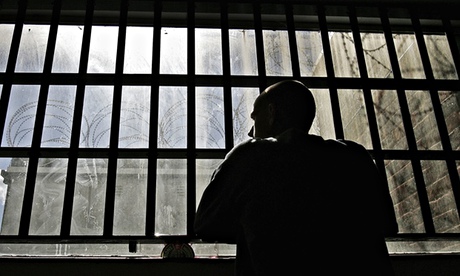
Man looks out of prison window

Airedale NHS foundation trust now offers a remote advisor-led service to 15 prisons. Photograph: Peter Macdiarmid/Getty Pictures


Final winter, 93-yr-previous Ernest Towers had entry to arguably 1 of the most transformational resources in healthcare, when his North Yorkshire care house, Sutton Lodge, was linked to Airedale NHS basis trust’s telemedicine service.


For numerous older individuals, unplanned admissions to emergency departments – or even regimen hospital appointments – can be hugely disruptive. The hyperlink to Airedale’s telehealth hub, staffed by nurses knowledgeable in acute evaluation, offers Towers with on phone specialised health-related care close to the clock, albeit by means of video hyperlink.


Rachel Binks, nurse consultant for outreach and critical care at the believe in, argues that higher definition cameras and screens, linked by the NHS’s N3 network, offer a very clear see of the patient. “We can see regardless of whether they are obtaining a problem, say with their breathing, and we can use other products like telemonitoring to assess them,” she says.


Airedale supplies telemedicine to 107 nursing and residential houses, and this yr it is expanding its services with links to a more 180. It has also kitted out 75 patients in their very own residences, typically men and women with continual obstructive pulmonary condition and heart failure.


According to the trust’s figures, in the 12 months from April 2012 telemedicine lowered hospital admissions by 35%, A&ampE attendances by 53% and bed days by 59% for men and women in nursing and residential care houses. The findings for people with long-phrase situations are related: 45% fewer hospital admissions, a 60% reduction in A&ampE attendances and a 50% minimize in bed days.


And it claims that feedback from individuals and carers is good. Michael Hebden, manager of Sutton Lodge, says: “We can often contact if we have doubts or queries about our residents. We have utilized it for tips on breathing complaints, a head damage, rashes and chest infections.”


The service reaches across England, as far south as Dartford and as north as Carlisle, and has come a extended way because it started eight years ago with a extremely distinct type of clientele. Airdale’s healthcare director at the time, Dr Richard Pope, saw telemedicine as a way of tackling wellness inequalities and treating hard to reach individuals. Pope was instrumental in initiating videoconferencing consultations with prisoners at Total Sutton maximum security jail.


Rebecca Malin, Airdale’s deputy director of method and organization development, says: “In people early days, because we have been only delivering the services to a handful of prisoners, it brought about scheduling problems. Five prisons does not produce enough referrals to run a total clinic.”


Airedale now gives a remote advisor-led services, such as full trauma, orthopaedic and dermatology clinics, to 15 prisons, which includes Whitemoor in Cambridgeshire which started out generating referrals in April 2014.


The capital outlay for technological innovation is funded by local spot teams, produced in April 2013 by NHS England with duty for contracting and delivering providers for prisoners. Malin points out that the reduction in escort and bed view costs is important. “The minimum value for an escort is £200 and there is really no upper limit if you have a substantial protection prisoner. And if they are super higher protection, then you are into helicopters and guards.”


She says about 50% fewer prisoners have to be escorted to hospital as a end result of telemedicine and that the positive aspects go beyond value cost savings. “If you are a patient in the waiting room it is disruptive to see somebody coming in under guard.


“And then there is the privacy and dignity of prisoners, not currently being paraded by means of an outpatient division in handcuffs.”


Delivering remote care efficiently relies on a resilient technical infrastructure, preferably backed up by e-patient records. Malin says that in spite of the reliance on broadband, there has only been one instance of a care property in which connectivity was also bad to run the service.


A next step for Airedale is to give telehealth for finish of life care. Following pilots, it is rolling out 30 telemedicine units, which will go into the properties of men and women in the last number of months of life.


Malin says the believe in did not at first set out to give telemedicine for finish of daily life sufferers, but feedback from the pilots has been quite positive. 1 woman stated it gave her the confidence to deliver her promise of caring for her husband and allowing him to die in his personal residence.


Are you a member of our on the web community? Join the Healthcare Professionals Network to receive standard emails and exclusive delivers.


Pensioners to prisoners: how telecare can deal with tough to attain patients

3 Mart 2014 Pazartesi

Prisoners See Themselves as Morally Superior to Non-Prisoners

It looks that even individuals who have been incarcerated fall prey to the notion that they are greater than other folks. New analysis from the University of Southampton has located that those in prison think themselves to be kinder, much more moral, more self-controlled, and much more generous than non-prisoners.


According to the study published in the British Journal of Social Psychology, prisoners also didn’t uncover themselves to be less law abiding as people outside the prison walls. In fact, they regarded as themselves equally law abiding.


According to Professor of Social and Personality Psychology and Director of the Centre for Analysis on Self and Identity at the University of Southampton Constantine Sedikides, this is 1 of the most compelling findings in assistance of self-enhancement to date.


Sedikides found it particularly exciting that the prisoners did not self-enhance by obtaining themselves to be superior in power or toughness, but as an alternative on professional-social traits. In effect, they ignored the reality that they have been in prison in order to increase their vision of themselves.


The research necessary 79 prisoners from south England to fill out a survey rating themselves in comparison to both other prisoners and regular members of the local community. The survey covered nine social traits: morality, kindness, trustworthiness, honesty, dependability, compassion, generousness, self-control, and adherence to the law.


Interestingly, the prisoners rated themselves to be superior to most neighborhood members on all traits, with the exception of adherence to the law. On that query, they rated themselves as becoming equal with the regular neighborhood member.


In accordance to Sedikides, these final results show just how sturdy the motivation toward self-enhancement is. It is psychologically critical for folks to think about themselves to be justified, no matter what the reality of their recent scenario is.


Of course, prisoners aren’t the only people who tend to enhance their self picture. Most of us do just that and put up formidable defenses towards any person who doubts us.


If you like this post, then like my Facebook Web page to maintain up with all my creating.


Prisoners See Themselves as Morally Superior to Non-Prisoners